Find Your Perfect Mattress with Our Guides

How to Arrange Bedroom Furniture for a Perfect Layout


Before you even think about moving a single nightstand, let’s talk about the secret to a bedroom layout that just works. As your neighbors with over 65 years of expertise, our team at Watts Furniture knows it's all about creating a smart blueprint. This is the difference between a restful sanctuary and a room that feels cluttered and frustrating.
We’re going to walk you through how to map your space with the same expert guidance our design professionals use, starting with the simple stuff: measuring your room and noting every door, window, and outlet. This quick sketch is your roadmap to success.
Start with a Smart Bedroom Blueprint
Think of this as your foundational step. A simple map helps you sidestep common frustrations, like realizing a dresser blocks your closet door or that the bed you fell in love with is just a little too big. It lets you visualize the flow and ensures every piece—from a custom Bassett bed to an American-made Kincaid dresser—fits just right.
This initial planning stage is more than just grabbing a tape measure; it's about setting the stage for a bedroom that supports your lifestyle. Whether you're in LaGrange, GA, or surrounding communities like West Point or Hogansville, this trusted method provides the clarity you need to get it right the first time.
Why a Blueprint Matters
This is the exact process our experts at the Watts Furniture Interior Design Center use to take the guesswork out of the equation for our neighbors all across Troup County. A proper plan prevents costly mistakes and ensures you invest in furniture built for generations, not just a few seasons. It lets you see potential problems on paper before they ever happen in your home.
For instance, a quick sketch immediately reveals if you have enough clearance to open dresser drawers. These are the little details that are easy to overlook but critical for daily comfort. To get started, check out our guide on how to measure furniture accurately for your space.
The most successful room designs begin not with buying furniture, but with understanding the space itself. A simple floor plan is your most powerful tool for creating a balanced and functional room.
Our design team offers complimentary in-store advice to help you translate that blueprint into a beautiful reality. This hands-on guidance is how we provide true customization that reflects your home, not a mass-produced catalog.
Placing the Bed: Your Room's True North
Think of your bed as the anchor of your bedroom. Where it goes sets the tone for everything else, defining the room's entire feel. Getting this right is the first real step in mastering your bedroom layout.
Most designers recommend the 'commanding position'—placing the bed on the wall opposite the main door. This setup lets you see who’s coming in but keeps you just out of the direct line of sight, which instantly makes a space feel more secure and relaxing. It’s a small tweak with a big psychological payoff.
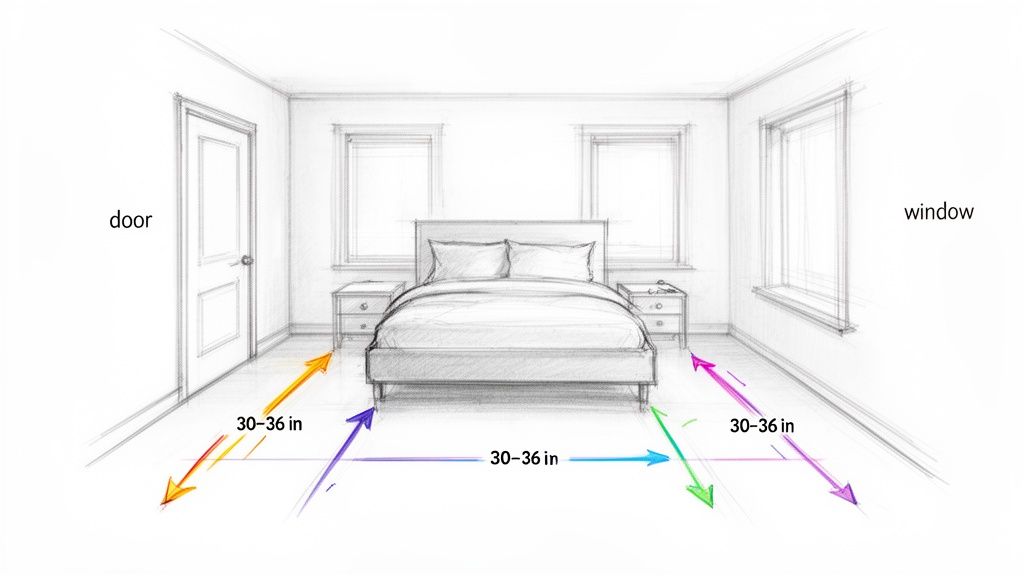
This classic placement makes your bed the undeniable star, drawing your eye and establishing a clear focal point. From there, every other piece of furniture naturally falls into place around it.
Common Bed Placement Scenarios
But what if your room is a little quirky? Multiple windows or an odd door placement can feel like a puzzle, but there’s always a smart solution.
- Between Two Windows: Centering your bed here creates a beautiful, natural symmetry, framing the headboard perfectly.
- Against an Accent Wall: Placing your bed against a bold wall makes a strong design statement, turning the bed into a deliberate piece of art.
- In a Corner: While less common, this can be a clever fix for small or unusually shaped rooms. It can free up a surprising amount of floor space, but be aware that making the bed might get a little trickier.
No matter where you place it, the goal is to have enough room to move freely. A well-placed, high-quality bed becomes more than furniture; it’s a centerpiece that invites you to rest and recharge.
As a rule of thumb, our design team always recommends leaving at least 30 inches of clearance on the sides and foot of your bed. This gives you comfortable walking paths and keeps the room from feeling tight or cluttered.
Finding the Perfect Foundation
Of course, a beautifully arranged room means nothing if you’re not getting a good night's sleep. The right mattress is just as crucial as the bed's placement. We proudly carry premium collections from Serta and Beautyrest, because your bedroom’s focal point should deliver on both style and incredible comfort.
Our trusted local team in LaGrange, GA, offers complimentary in-store advice to help you choose a bed and mattress that fits your room’s scale and unique comfort needs. It’s how you can avoid the 'guesswork' of online shopping and make a confident choice.
Once your bed is perfectly placed, it's time to bring the whole look together. For more ideas, check out our guide on accessorizing the bed of your dreams.
With your bed set as the anchor, it's time to bring in the supporting cast: nightstands, dressers, and seating. These pieces turn a bedroom from a simple place to sleep into a functional, personal sanctuary. The goal is to add utility without creating clutter.
Start with the nightstands. Pick nightstands that are roughly the same height as the top of your mattress. This makes it easy to reach for a lamp or your phone and creates a clean, seamless visual line that makes the entire bed area feel more intentional.
Next up is your main storage workhorse: the dresser. When you find the right wall for it, make sure you leave at least 30-36 inches of clearance in front. This is a non-negotiable for practical, everyday use, giving you enough room to comfortably open drawers without feeling boxed in.
Creating Functional Zones in Your Bedroom
Beyond the basics, think about how you can create distinct zones to support your daily routines. For homeowners from Hogansville to Pine Mountain, this is where a bedroom layout truly becomes your own.
- A Cozy Reading Nook: A comfortable La-Z-Boy recliner tucked into a quiet corner with a small table and a floor lamp can become a private escape.
- A Dressing Area: Placing a full-length mirror near your dresser or closet creates a dedicated spot for getting ready in the morning.
- A Practical Landing Spot: A simple bench at the foot of the bed offers a perfect place to sit while putting on shoes.
The best layouts are the ones that anticipate your needs before you even realize them. By creating these simple 'zones,' you're designing a room that actively works for you.
This thoughtful approach is exactly how we help our clients. We believe in true customization that reflects your home, not a mass-produced catalog. For instance, our American-made Bassett collections can be tailored with specific dimensions and finishes to perfectly suit the zone you're creating. If you're still looking for the right storage piece, our guide on what to look for when buying chests and dressers is a great place to start.
Ensuring a Harmonious Look
The final touch is making sure all these supporting pieces work together. They don’t have to be a matching set, but they should absolutely complement each other. This is where a little expert guidance can make all the difference.
At the Watts Interior Design Center in LaGrange, we offer complimentary in-store advice to help you pull fabrics, finishes, and styles together. Our team can help you select pieces that create a harmonious, polished look, ensuring your bedroom is the beautiful sanctuary you deserve.
Creating Balance with Scale and Flow
Have you ever walked into a bedroom and just felt… off? More often than not, the culprit isn't what's in the room, but the scale of it all. This is the secret sauce of interior design—getting the proportions just right so your space feels balanced, intentional, and harmonious.
When pieces are too big for the room, the whole space feels overwhelming. On the flip side, furniture that’s too small can get lost, making the room feel unfinished. The goal is to hit that sweet spot where every piece feels like it belongs.
This sense of balance is a huge deal. The global bedroom furniture market was valued at around USD 266.15 billion in 2024, and the fact that beds alone make up almost 37% of that tells you how central that one piece is. As more of us focus on creating homes that are true sanctuaries, getting the scale right has become more important than ever. You can explore more about these bedroom furniture trends to see how designers worldwide are thinking about this.
Mastering Visual Weight and Traffic Paths
One of the first rules any designer learns is to create clear traffic paths. A good rule of thumb is to keep at least 30 inches clear for major walkways, like the path from your door to the bed and on to the closet.
But it's not just about physical space; it's also about visual weight. Think about a heavy, solid wood Kincaid dresser—it has a lot of presence. To balance that out, you could pair it with a bed frame that has airy, visible legs. These lighter elements keep one side of the room from feeling heavier than the other.
The best-designed rooms don't just look good—they feel good to be in. Balancing the scale of your furniture is the key to creating a space that is both visually pleasing and effortlessly functional.
How Expert Guidance Makes a Difference
Trying to figure out scale on your own can be tricky. That’s where our complimentary in-store design advice at Watts Furniture really helps our neighbors here in LaGrange, GA.
Our team has years of experience helping people select pieces that are perfectly scaled to their unique rooms. We can show you how different materials and styles change a room's visual weight, guiding you toward a combination that feels harmonious. It’s a great way to learn how to mix and match patterns and styles for a balanced look without all the guesswork.
Practical Layouts for Any Bedroom Size
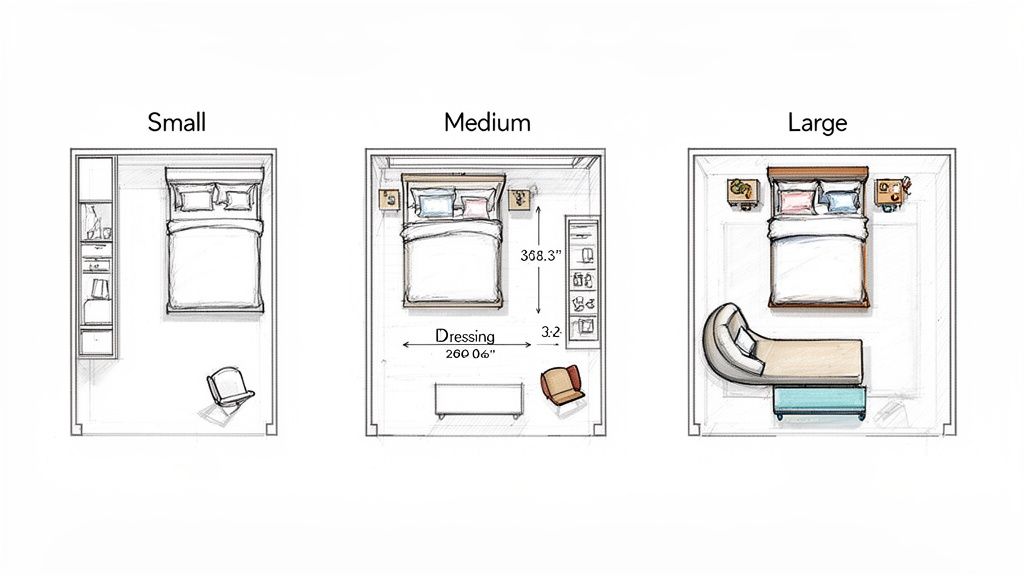
Every bedroom has its own personality, from a cozy nook in downtown LaGrange to a sprawling primary suite in Troup County. The real trick is learning to match your furniture arrangement to the room's actual dimensions, turning limitations into design opportunities.
What feels spacious in a large room will just feel cramped in a smaller one. Let's break down some practical solutions that work for your specific space. This is a core part of our Premium Design Service, where we create full-scale layouts to ensure every piece fits perfectly, with the deposit credited back toward your purchase.
Layouts for Small Bedrooms
When space is tight, every single inch matters. Your goal is to get the most function out of the room without making it feel crowded. Our advice? Think vertically and look for pieces that can pull double duty.
- Put the bed against the longest wall. This simple trick almost always frees up the most floor space and gives the room a clear, natural focal point.
- Go for floating nightstands. Wall-mounted shelves are fantastic because they keep the floor clear, which instantly makes a room feel more open.
- Choose tall, narrow storage. A tall chest of drawers offers plenty of storage but takes up a much smaller footprint than a wide, low dresser. For more ideas, our guide on stylish solutions for small bedrooms is packed with them.
In a small room, every piece of furniture should earn its keep. A storage bed or a bench at the foot of the bed gives you a place to sit and a spot to tuck away extra linens.
Arranging Medium-Sized Bedrooms
With a little more square footage, you can start creating distinct zones for different activities. This simple approach makes a room feel far more organized and intentional.
For instance, a medium-sized room is perfect for carving out a dedicated dressing area. Try placing a dresser with a mirror on the wall opposite your closet to make your morning routine feel more streamlined. You could also tuck a comfortable accent chair into a corner to create a quiet reading spot.
Designing Large Primary Suites
A large bedroom is a wonderful luxury, but it can feel empty if you don't arrange it thoughtfully. The challenge is creating a space that feels cozy and complete, not like a cavernous hall.
This is your chance to add a real seating area. A small sofa or a pair of custom La-Z-Boy recliners can form a private living space right within your bedroom. Another classic choice is a chaise lounge near a window. Use area rugs to visually anchor these zones, separating the sleeping area from the seating or dressing areas. This is where true customization that reflects your home, not a mass-produced catalog, really gets to shine.
Common Questions on Arranging Bedroom Furniture
After 65 years serving the LaGrange community, our trusted local team has heard just about every question you can imagine. From tiny spaces in West Point to sprawling suites in Pine Mountain, some challenges just keep popping up. Here are the answers we give most often.
What Is the First Thing to Consider in a Bedroom Layout?
Always, always start with the bed. It's the biggest piece in the room, the true anchor, and its placement determines where everything else can logically go.
Once you’ve positioned your bed, you’ve set a clear focal point. From there, everything else—nightstands, dressers, a reading chair—falls into place around it. This one decision is the key to creating a room that feels balanced and is easy to navigate, ensuring you keep those crucial 30-inch pathways clear.
How Can I Make My Small Bedroom Feel Bigger?
Making a small bedroom feel more spacious is all about being clever and intentional. The goal is to trick the eye while making sure every inch works for you.
- Scale is Everything: Choose furniture with a lower profile. Pieces with visible legs let you see more of the floor, which instantly makes a room feel lighter and more open.
- Think Vertically: A tall, slender dresser offers just as much storage as a wide one but eats up a fraction of the floor space.
- Use Mirrors Strategically: A well-placed mirror bounces light around and creates a sense of depth, making the room feel larger than its actual dimensions.
Our design team can point you toward beautiful American-made furniture collections like Bassett and Kincaid with streamlined profiles that are perfect for smaller rooms.
Is It Okay to Place a Bed in Front of a Window?
Yes, absolutely—especially when your room’s layout doesn't give you many other good options. The key is making it look like a deliberate, stylish choice.
Just pick a headboard that’s low enough not to block too much natural light. More importantly, make sure you can still get to the windows to open and close them without a struggle. Framing the bed with beautiful, high-hung curtains can turn this practical placement into a stunning design statement.
Don't be afraid to break the so-called "rules" if it makes your room more functional. A beautifully styled bed in front of a window is often far better than a layout that feels cramped.
How Do I Know if My Furniture Is the Right Size?
The only way to know for sure is to measure before you buy! Use painter's tape on the floor to block out where a new piece will sit. This gives you a real-world feel for its scale and how it will affect your traffic flow.
Even better, avoid the ‘guesswork’ of online shopping and come see us in the showroom. Our Premium Design Service includes professional space planning to guarantee a perfect fit every time. And with our white-glove delivery, the setup is handled for you by our professional team.
Ready to transform your space? Book a consultation with our Interior Design Center today and let us help you curate a home you’ll love. Or, visit the Watts showroom at 212 Commerce Avenue in LaGrange to experience the comfort of La-Z-Boy in person. Learn more at https://www.wattsfurniture.com.


