Find Your Perfect Mattress with Our Guides

How to Design a Living Room Layout That Actually Works

It all boils down to a simple, foundational truth: a great room starts with a great plan. Before you even think about furniture, you have to understand the canvas you're working with. The first step is always creating a simple, scaled floor plan—think of it as your roadmap to a flawless design.
Your Foundation for a Flawless Living Room Layout
Staring at an empty living room can feel totally overwhelming. With so many possibilities, it’s easy to get stuck before you even begin. But the secret to a layout that feels both beautiful and effortless doesn't come from guesswork; it starts with a solid plan from a team with 65 years of expertise.
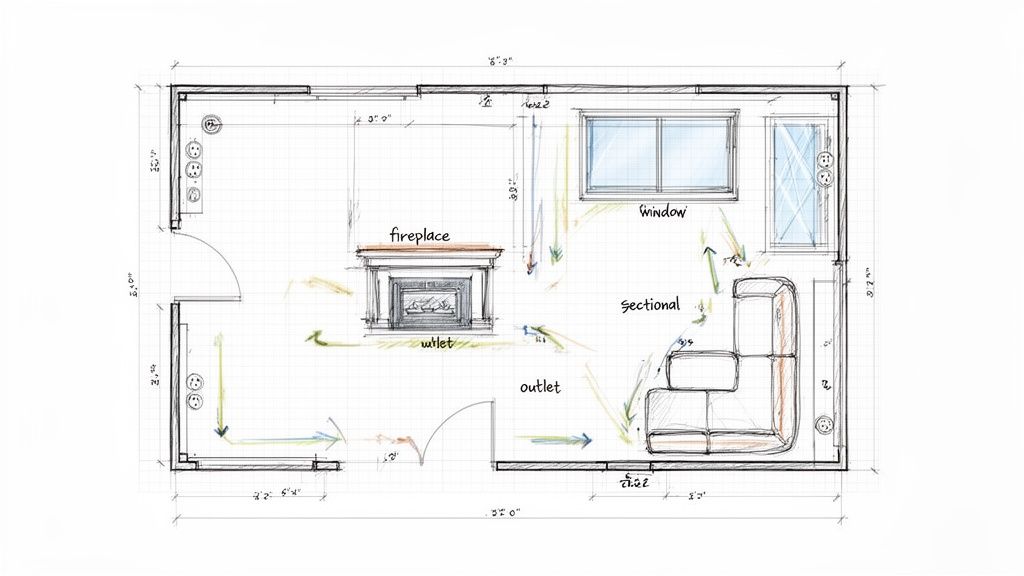
Before you fall in love with a sofa or start browsing for tables, the most critical step is to get to know your space inside and out. This goes way beyond just measuring the length of the walls. It’s about documenting every little detail that will shape your final design.
Mapping Out Your Room's Unique Features
Start by sketching a rough outline of your room, noting the dimensions of each wall. Then, add in the non-negotiables—the built-in features you’ll have to work around.
- Windows and Doorways: Mark their locations and widths, and don’t forget to note which way the doors swing. This simple detail helps you avoid blocking natural light or creating awkward entry points.
- Architectural Focal Points: Does your room have a fireplace, built-in shelving, or a stunning picture window? These are the natural anchors for your layout.
- Outlets and Vents: This is a small step people often forget. Note the placement of every electrical outlet, light switch, and HVAC vent. It's a practical move that ensures your lamps and electronics can be placed logically without a mess of extension cords.
This initial map is your most powerful tool. It transforms an abstract idea into a concrete plan and prevents the common frustrations that come with furnishing a room. It’s what ensures the Custom La-Z-Boy sectional you’ve been dreaming of will actually fit, with no surprises on delivery day.
This foundational work is what separates a thoughtfully designed room from just a collection of furniture. It helps you avoid the 'guesswork' of online shopping and instead create true customization that reflects your home, not a mass-produced catalog.
Creating a Simple and Scaled Floor Plan
Once you have your measurements and features mapped out, it’s time to create a scaled drawing. You don't need fancy software; simple graph paper works perfectly. A common, easy-to-use scale is one-quarter inch equals one foot (1/4" = 1').
This scaled floor plan becomes your personal design playground. You can experiment with different furniture arrangements by cutting out scaled paper shapes representing your sofa, chairs, and tables. This hands-on approach lets you truly visualize traffic flow and spacing before you commit to anything. If you need a hand getting accurate furniture measurements, you can learn more about how to measure furniture for any room in your home.
Taking the time to complete this step provides invaluable clarity. For homeowners in LaGrange, GA, and surrounding communities like West Point and Pine Mountain, this is the kind of expert guidance our trusted local team at Watts Furniture provides. Our Interior Design Center is here to help you move from a blank slate to a beautifully curated living room, ensuring every piece is furniture built for generations, not just a few seasons.
Find Your Room’s Purpose and Flow
A beautiful living room layout is about so much more than just arranging furniture. It’s about creating a space that works for the way you and your family actually live. Before you even think about a sofa, you have to ask: what is this room for?
Is it a formal space for entertaining guests? A cozy den for family movie nights? Or is it a multitasking hub for homework, afternoon naps, and playtime? Getting honest about its main job will guide every single choice you make from here on out. A room designed for conversation will look completely different from one built around a media center.
Anchor the Room with a Focal Point
Once you know the room’s purpose, it’s time to find its anchor—the focal point. This is the heart of the room, the one thing that naturally draws your eye and gives the whole layout a sense of direction. For many homes right here in the LaGrange area, this is often an architectural feature that’s already there.
You might be working with one of these common focal points:
- A Classic Fireplace: This is an easy one. Arrange your main seating to face the fireplace, and you’ll instantly create a warm, inviting space for conversation.
- A Large Window with a View: If you’re lucky enough to have a beautiful view, let it be the star of the show. Position your furniture to take full advantage of the natural light and scenery.
- A Media Center: For family rooms, the television is often the main event. You can build your layout around a stunning, American-made Kincaid entertainment unit that not only organizes your media but also adds incredible style and storage.
Don't have a natural focal point? No problem. You can create one. A large piece of art, a beautifully crafted bookcase, or even a bold statement sofa can serve as the visual anchor your design needs.
Map Out Your Traffic Flow
With a focal point in place, you can now think about how people will move through the space. Traffic flow is all about the invisible pathways people take to walk into, through, and out of a room. A great layout lets everyone move easily without having to weave around furniture. The last thing you want is a room that feels cramped, awkward, or cluttered.
Think about where people enter and exit. Major pathways need about 30 to 36 inches of clear space to feel comfortable. This ensures that family and guests can move freely without that squeezed-in feeling, which is especially important in high-traffic zones that connect to other parts of your home.
This is where true expertise can make all the difference. The global demand for beautiful, functional furniture is soaring, with the living room furniture market expected to hit USD 339.6 billion by 2035. This growth is driven by people wanting versatile, hardworking pieces. Our design team knows exactly how to choose furniture that fits this need and your room’s unique flow. Discover more insights about these living room furniture trends.
At Watts, we believe a layout should feel effortless. Our Interior Design Center helps homeowners in LaGrange and Troup County create that perfect foundation for a comfortable and inviting atmosphere, taking the stress out of planning traffic patterns.
Nailing this foundation is critical before you start picking out specific pieces. It sets the stage for a room that doesn’t just look amazing but also functions beautifully for your everyday life. If you're just getting started, our guide on where to begin with your home design project is a great next step. This process ensures your finished living room is a true reflection of your lifestyle.
Mastering Furniture Placement and Scale
Picking out the right furniture is a delicate dance between style, comfort, and just the right proportions. You can have a solid layout in mind, but this is where even the best intentions can go sideways. A gorgeous sofa that’s just a little too big can make an entire room feel tight and off-balance.
The goal here is harmony. You want the scale of your furniture to feel like it belongs in the scale of your room. Got a large, open living room with soaring ceilings? Go ahead and embrace those bigger pieces, like a deep, comfortable sectional. But if you’re working with a cozier space, like a lot of the beautiful historic homes we see around LaGrange, you’ll want to lean into more streamlined furniture with visible legs to create an illusion of space.
Arranging Furniture for Real Life
Placement is every bit as important as scale. It's what makes a room feel like an inviting place to connect, not a sterile waiting area. Before you automatically shove everything against the walls, try pulling your main sofa out—even just a few inches. It’s a small tweak that gives the furniture "breathing room" and makes the whole space feel more intentionally designed.
When you’re setting up your seating, think about how people are actually going to talk to each other. A good rule of thumb is to keep seats no more than 10 feet apart. This encourages conversation that doesn’t involve shouting across the room and creates those perfect little groupings for hosting friends or just unwinding with family.
This flowchart breaks down the basic thought process for getting your room’s foundation right before a single piece of furniture comes through the door.
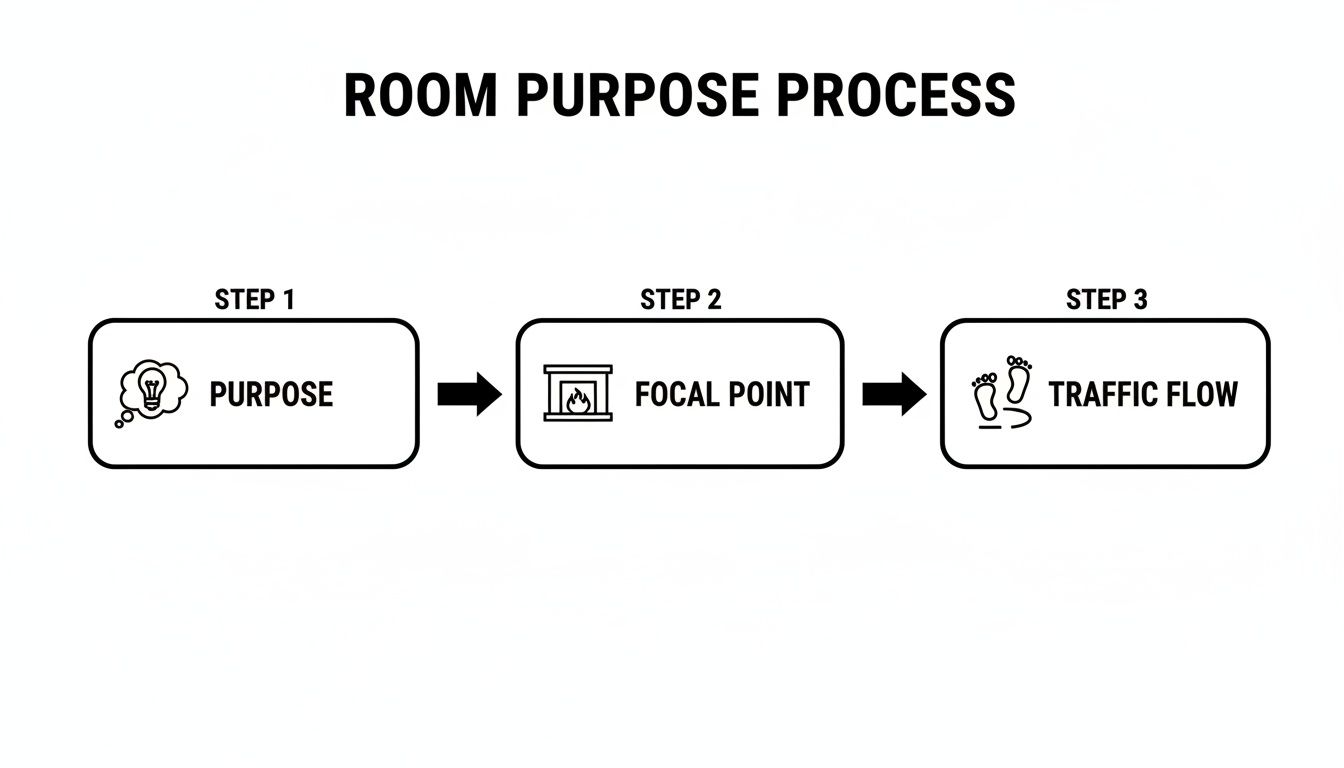
Starting with the room's main purpose, then nailing down a focal point, and finally mapping out traffic flow—this simple sequence sets you up for success.
Key Spacing Guidelines for a Polished Layout
Getting the small distances right makes a massive difference in how your room actually works day-to-day. You need enough space to move around without bumping into things, but not so much that everything feels disconnected and adrift.
Here are a few essential measurements to keep in your back pocket:
- Sofa and Coffee Table: Leave 16 to 18 inches between them. That’s close enough to set down a drink but gives you plenty of legroom.
- Coffee Table Height: Your coffee table should be within 4 inches (higher or lower) of your sofa’s seat cushions for a comfortable reach and clean sightline.
- Side Tables: A side table should sit just 2-3 inches from the sofa arm, making it easy to grab a book or turn on a lamp. Make sure its depth doesn't go beyond the sofa's depth.
For a deeper dive into arranging your TV and seating, our guide on the best placement for your sofa and television has specific calculations to get that optimal viewing angle just right.
Essential Spacing Guidelines for Your Living Room
Use this quick reference table to ensure your furniture placement allows for comfortable movement and conversation.
| Layout Element | Recommended Spacing | Why It Matters |
|---|---|---|
| Coffee Table to Sofa | 16-18 inches | Ensures easy access and comfortable legroom. |
| Main Walkways | At least 36 inches | Allows for easy, unobstructed movement through the room. |
| Seating Apart | 4-10 feet | Creates an intimate setting ideal for conversation. |
| Side Table to Sofa | 2-3 inches | Keeps lamps, drinks, and books within easy reach. |
| Rug to Walls | 12-24 inches | Leaves a "frame" of flooring that makes the room feel larger. |
| TV Viewing Distance | Varies by screen size | Prevents eye strain and provides an immersive experience. |
These little details are what transform a collection of furniture into a functional, comfortable living space.
The Power of Customization and Anchoring Rugs
This is where working with a local furniture store in LaGrange, GA like Watts really makes a difference. Instead of trying to force a standard-sized piece into your unique space, you can get true customization that reflects your home, not a mass-produced catalog. A custom Bassett sectional can be built to the exact dimensions your L-shaped room needs, or a La-Z-Boy recliner can be ordered in a smaller scale that’s perfect for a reading nook. This "made-for-you" approach takes the guesswork out of the equation and guarantees a perfect fit.
Finally, don’t forget to anchor your main furniture grouping with an area rug. One of the most common mistakes is choosing a rug that's too small, which makes all the furniture look like it's floating in the middle of the room. A properly sized rug should have at least the front legs of your sofa and any accent chairs resting on it. It’s a simple move that defines the seating area, adds warmth, and pulls the entire design together.
By focusing on both scale and placement, you're not just filling a room; you're creating an environment. This thoughtful approach is key to designing a layout that feels both beautiful and incredibly livable—furniture built for generations, not just a few seasons.
Layering Lighting, Storage, and Personal Touches
Once your main furniture pieces have found their home, it’s time for the fun part. This is where the true personality of your living room begins to shine through. A great layout is so much more than a sofa and a few chairs; it’s the thoughtful layers you add on top that transform a room into a warm, functional, and inviting space.
This is where lighting, storage, and personal decor come together to complete the picture.
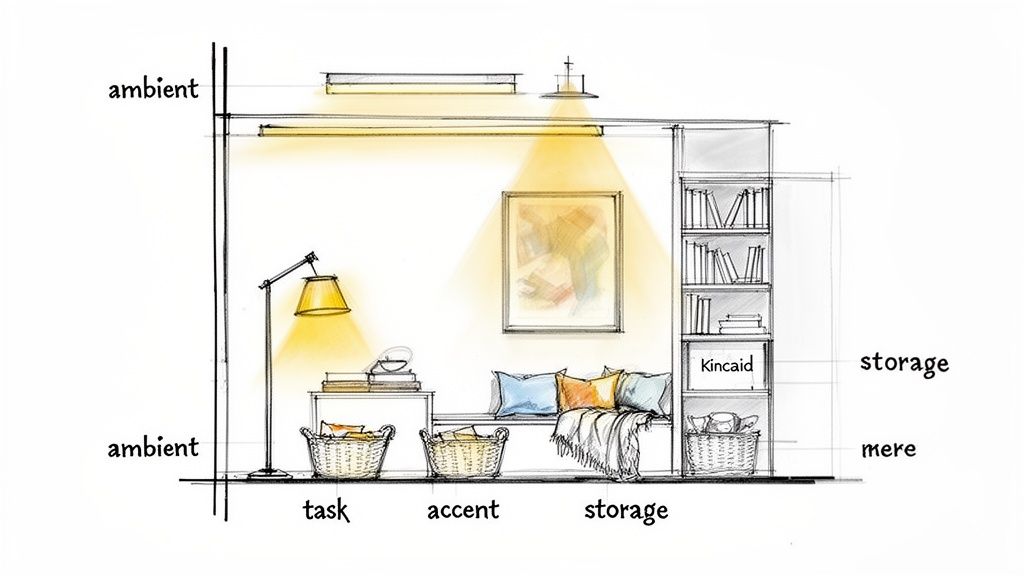
This final stage is all about adding depth and character. By carefully considering how you light the space, where you’ll tuck away your belongings, and how you display your favorite things, you elevate a simple floor plan into a home that feels uniquely yours.
The Three Layers of Living Room Lighting
I’ve seen it time and time again: the right lighting can make or break a room. The best approach relies on combining three distinct types of light to create a balanced atmosphere that’s both practical and beautiful. Each layer serves a specific purpose, and using them together gives you total control over the mood.
- Ambient Lighting: This is your room’s main light source—the general, even illumination from an overhead fixture like a chandelier or flush mount. It’s what you flip on when you first walk in.
- Task Lighting: This is focused light aimed at a specific spot for a particular activity. Think of a floor lamp next to a Custom La-Z-Boy recliner for reading, or a small table lamp on a console for sorting mail.
- Accent Lighting: This is the most decorative layer, used to highlight specific features like a piece of art, architectural details, or a beautiful plant. Picture lights or uplights are perfect for this.
When you combine all three, your room is never too harsh or too dim. For a deeper dive, you can explore our guide on how to put your living room in the best light.
Smart Storage That Complements Your Style
Nothing ruins a great layout faster than clutter. Smart storage is essential for keeping everyday items organized and out of sight, but that doesn’t mean it has to look purely functional. The key is choosing pieces that blend style with purpose.
Consider a beautiful, solid-wood media console from an American-made brand like Kincaid. It not only provides a home for your TV and electronics but also offers valuable drawer and cabinet space. A stylish bookcase can display treasured objects while discreetly storing books and board games. It’s all about choosing furniture built for generations, not just a few seasons.
A well-designed living room should feel calm and collected, not chaotic. Integrating high-quality storage pieces directly into your layout is the most effective way to maintain a sense of order and style.
Weaving in Your Personal Story
The final layer is where your personality truly comes to life. This is your chance to fill the room with accessories, textiles, and artwork that tell your family's story and make the space feel deeply personal.
Start with warmth and texture. Throw pillows and blankets on your sofa and chairs are an easy way to add visual interest. Next, look to your walls. A gallery of family photos, a single oversized piece of art, or a decorative mirror can all serve as a powerful finishing touch.
If pulling all these details together feels a bit overwhelming, our Complimentary In-Store Advice is the perfect next step. Our team can help you select the fabrics, finishes, and accessories that tie your whole look together, creating true customization that reflects your home, not a mass-produced catalog. From LaGrange to Hogansville, we love helping our neighbors curate a home they’ll love for years to come.
Common Layout Mistakes (And How to Fix Them)
Even with the best intentions, a few common layout traps can sneak into a design. Knowing what to watch for—and more importantly, how to fix it—is what separates a good living room from a great one. We see these simple blunders all the time, but the good news is they’re all incredibly easy to correct.
Let's walk through the most frequent design missteps and the straightforward fixes that will make all the difference in your space.
Mistake 1: Pushing All the Furniture Against the Walls
It’s almost a reflex: push everything against the walls to make the room feel bigger. But in reality, this usually does the opposite, creating a cold, awkward space that feels more like a doctor's waiting room than an inviting living room. That big, empty void in the middle makes everything feel disconnected.
- The Fix: Pull your main seating pieces away from the walls. Even shifting your sofa forward by just 3-5 inches creates breathing room and makes the entire layout feel more intentional and sophisticated. This simple move pulls the room together and creates a more intimate setting that actually encourages conversation.
Mistake 2: The Tiny Area Rug
An area rug is meant to anchor your furniture and define the conversation zone, but a rug that's too small is a classic mistake. When you have a "postage stamp" rug floating under just the coffee table, it makes your furniture look like it's drifting aimlessly in the room. It visually shrinks the space instead of grounding it.
- The Fix: A properly sized rug should have at least the front legs of your sofa and any accent chairs resting on it. This creates a unified, grounded seating area. As a rule of thumb, try to leave about 12 to 24 inches of bare floor between the edge of the rug and the walls. It frames the space perfectly.
Choosing pieces with the right scale and purpose is crucial. Our experts focus on sourcing furniture built for generations, not just a few seasons, ensuring your investment is as durable as it is beautiful for your LaGrange, Hogansville, or Pine Mountain home.
Mistake 3: Forgetting About Vertical Space
So often, we get stuck thinking only about what's happening on the floor. When you ignore the walls, a room can feel flat and unfinished. Your walls are a blank canvas, and using them is your secret weapon for adding height, drama, and personality to your layout.
- The Fix: Draw the eye upward. It’s a simple trick with a huge impact. Bring in tall bookcases, hang your curtains higher and wider than the actual window frame, or create a gallery wall that stretches toward the ceiling. This strategy makes ceilings feel higher and adds a layer of architectural interest that makes the room feel complete.
There's a growing awareness of quality and longevity in home design. Here in North America, where the U.S. living room furniture market was valued at USD 52.7 billion in 2025, homeowners are looking for more than just aesthetics—they want comfort and durability. This is exactly why we prioritize high-quality, adaptable pieces like the American-made furniture we carry. Learn more about these global living room trends.
Navigating all these details is where professional guidance can save you from frustration and costly mistakes. The Watts Premium Design Service is designed to help you sidestep these problems entirely. Our trusted local team creates a comprehensive plan that considers every element, from rug size to furniture placement, ensuring a flawless result you'll love for years to come.
Your Living Room Layout Questions Answered
Even the best-laid plans can hit a snag. When you're in the thick of designing your living room, specific questions always pop up and can leave you feeling stuck. We get it. Here are our answers to some of the most common dilemmas we see homeowners face.
How Do I Choose the Right Focal Point for My Living Room?
Think of a focal point as the room's anchor. It’s what gives the entire layout a sense of purpose and direction, and it’s usually the first thing your eyes land on when you walk in. Getting this right is a big deal.
A lot of rooms have a natural focal point built right in, like a classic fireplace or a big picture window with a gorgeous view. If your room doesn't have an obvious one, don't worry—you get to create it. You can easily establish a focal point with a statement piece of furniture, like a stunning American-made Bassett media console, or even a large, compelling piece of art.
Once you’ve picked your spot, arrange your main seating to face it. This simple move naturally pulls the room together, encouraging conversation and creating a design that feels balanced and intentional. If you're still on the fence, our team at the Interior Design Center is fantastic at helping you find or create the perfect focal point for your unique space.
What’s the Best Way to Arrange Furniture in a Small Living Room?
With a smaller room, the main goal is to make it feel open and airy, not cramped. The trick is to start with furniture that’s properly scaled. A huge, bulky sofa is only going to swallow the room whole and make it feel even smaller.
A great tip is to look for pieces with visible legs, like sofas or accent chairs that are lifted off the floor. It’s a simple design illusion, but seeing the floor underneath instantly creates a sense of more space. Multipurpose furniture is also your best friend here.
A few smart ideas for smaller spaces:
- Storage Ottomans: They give you a place to put your feet up, offer extra seating, and hide away blankets or magazines.
- Nesting Tables: You get flexible surface area that can be tucked away when you don’t need it.
- Streamlined Media Consoles: Pick one that fits your TV and provides closed storage to keep the clutter out of sight.
Most importantly, fight the urge to shove everything up against the walls. Pulling your sofa just a few inches away from the wall can make the entire room feel larger and more thoughtfully designed. Our Complimentary In-Store Advice is perfect for finding stylish, space-saving pieces from brands like La-Z-Boy and Kincaid. For a deeper dive, our ultimate sofa buying guide has even more expert advice.
How Far Should My Sofa Be from My Television?
Getting this distance right is absolutely critical for comfortable viewing that won’t strain your eyes. Too close or too far, and you can ruin an otherwise perfect setup for movie night.
A good rule of thumb is to place your main seating 1.5 to 2.5 times the diagonal measurement of your TV screen away from it.
For a 65-inch television, that means you’d want your sofa somewhere between 8 and 13.5 feet away. This creates the ideal viewing angle without overwhelming your field of vision.
It’s one of those crucial details that can make or break a room. This is exactly the kind of thing our Premium Design Service team nails down in a full-scale space plan, ensuring your media room is perfect from day one.
Should I Hire a Professional Interior Designer?
While there’s a ton of satisfaction in a DIY project, sometimes professional guidance is the smartest investment you can make. If you're staring down a tricky layout, furnishing a whole home, or just want to avoid the 'guesswork' of online shopping and expensive mistakes, an expert can see the bigger picture. They bring a cohesive vision to life and can save you a surprising amount of time and money.
At Watts, we believe professional design should be within reach for everyone in our community. That's why we offer two options to fit any need or budget.
- Our Complimentary In-Store Advice is perfect for those quick questions about pulling fabrics and colors together.
- Our Premium Design Service delivers a comprehensive plan—from mood boards to scaled layouts—and the initial deposit is credited directly back to your furniture purchase.
It's a fantastic way for homeowners in LaGrange, West Point, and across Troup County to get expert help without the high price tag of a traditional designer. You end up with true customization that reflects your home, not a mass-produced catalog. Ready to transform your space? Book a consultation with our Interior Design Center today and let us help you curate a home you’ll love.