Find Your Perfect Mattress with Our Guides

Top 3 Piece Nook Dining Set Trends for 2026


That empty kitchen corner bothers a lot of homeowners more than they expect. It isn't quite big enough for a full dining set, but it's too visible to ignore. So it becomes a catch-all for mail, backpacks, or the chair that never quite belongs anywhere else.
A well-chosen 3 piece nook dining set solves that problem in a practical, lasting way. It turns an awkward corner into a place for breakfast, homework, coffee, and conversation. For many families in LaGrange, Troup County, West Point, Pine Mountain, and Hogansville, that kind of hardworking space matters more than ever.
What Is a 3 Piece Nook Dining Set
A 3 piece nook dining set usually includes three main parts: a corner bench unit, a separate bench, and a dining table. Instead of spreading chairs around all four sides, the set tucks neatly into a corner and uses the room more efficiently.

That basic definition sounds simple, but the benefit is bigger than it first appears. A nook set lets you seat several people without making the kitchen feel crowded. In a smaller breakfast area, that can be the difference between a room that feels boxed in and one that feels usable every day.
Why this design works so well
A corner layout takes advantage of space that standard chair-and-table sets often waste. The benches stay in place, so you don't need as much pull-back room as you would with multiple dining chairs. That's especially helpful in compact homes, open kitchen layouts, and eat-in spaces where walkways matter.
A lot of people also like the built-in feel. Even if the piece isn't custom built, it often looks more intentional than a small table with mismatched chairs.
Practical rule: If a kitchen corner feels too tight for a traditional dining arrangement, a nook set usually deserves a closer look before you give up on the space.
A smart solution with a long history
This kind of compact dining didn't appear out of nowhere. Postwar kitchen research shaped how designers thought about family eating spaces. A key 1950s study found that kitchen item storage had risen by 110%, which pushed furniture design toward efficient, built-in solutions for busier family kitchens, as noted in this postwar kitchen research excerpt.
That history still shows up in today's designs. You'll see it in corner benches with storage, reversible bench layouts, and sets made to serve more than one purpose. Families don't just eat here. They answer emails, help with spelling words, sort groceries, and sit down for a quick conversation as the day concludes.
What shoppers often confuse
Many first-time buyers assume “3 piece” means “small.” Not always.
The number refers to the three components, not necessarily a tiny scale. Some 3 piece nook dining set options are compact and apartment-friendly. Others are roomy enough for family seating and built-in storage. That's why the shape, orientation, and measurements matter just as much as the label.
How to Measure Your Space for the Perfect Fit
Most nook set mistakes happen before anyone opens the box. The set looks right online, the finish seems perfect, and then it arrives and crowds the walkway, bumps the window trim, or leaves the table too close to the bench for comfortable seating.
That's why measuring has to go beyond wall length.
Start with the corner itself
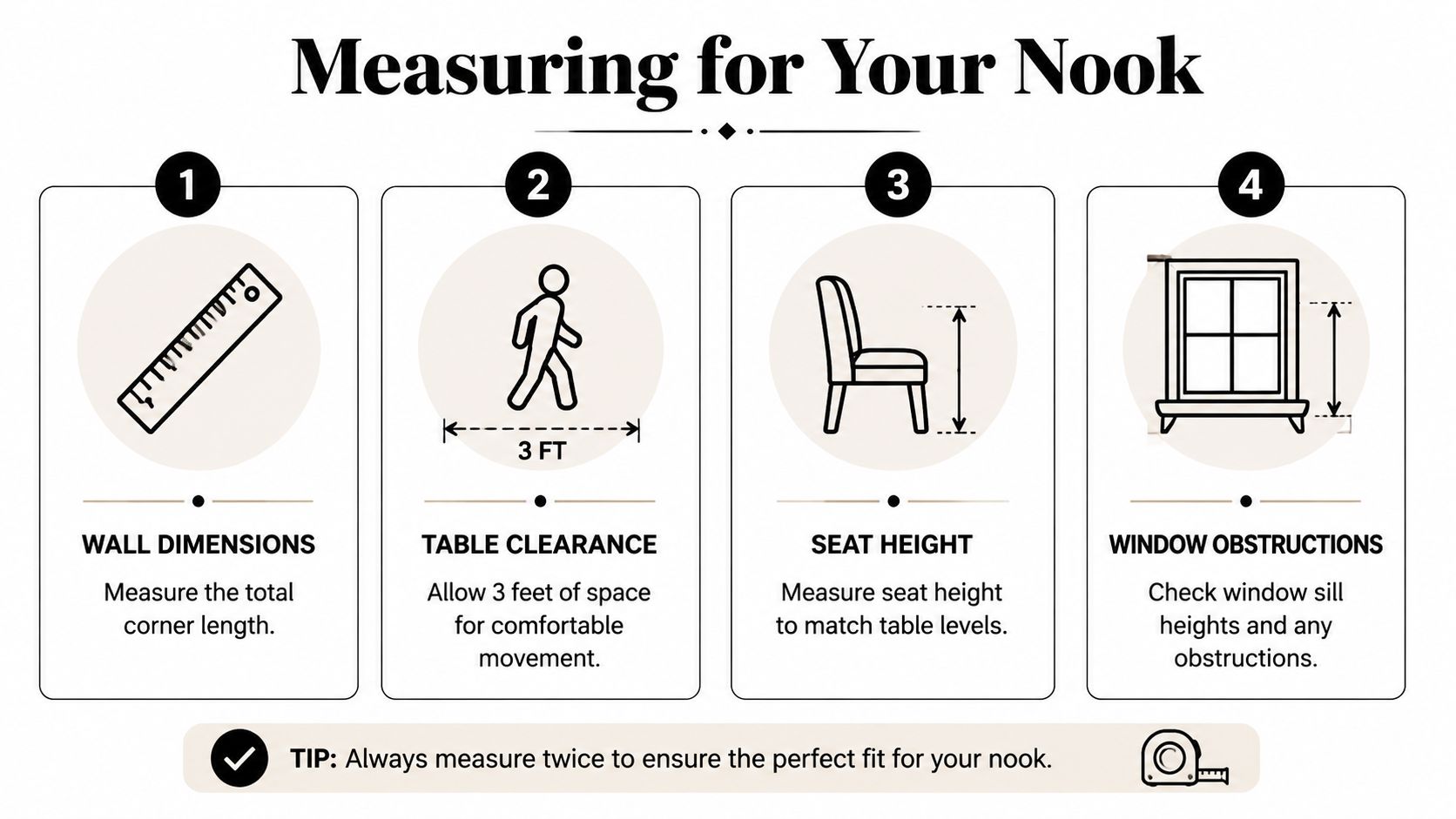
Measure both walls from corner to open end. Then measure the depth of the space, including any area the table will project into the room. Don't forget baseboards, window trim, outlets, vents, and door casing.
If your walls aren't perfectly square, and many aren't, measure in more than one spot. A nook bench can look straight in a product photo and still leave you fighting a crooked wall in real life.
Use this quick checklist:
- Wall length. Measure each wall the bench will touch.
- Bench depth. Account for how far the seating extends from the wall.
- Table projection. Measure how much room the table uses once placed.
- Walkway space. Leave room to move around the set comfortably.
- Window and trim clearance. Check sill height and where the backrest will land.
If you want a helpful room-planning refresher, this guide on how to measure a room for furniture is worth reviewing before you shop.
Measure for comfort, not just fit
A nook set can physically fit and still feel wrong. That usually happens when seat and table heights don't work together.
According to breakfast nook clearance benchmarks, seat height should generally fall between 16 to 18 inches, and backrest height should generally fall between 30 to 36 inches for comfortable posture and long-term use. Those numbers matter because a bench that sits too low or too high changes how your knees, hips, and lower back feel at the table.
If you're comparing two sets and one “just looks a little off,” check the seat height first. Your body usually notices poor proportions before your eyes can explain them.
Leave room to live around it
A breakfast nook isn't only about seated space. You also need circulation space around it. Can someone walk past while another person is seated? Can a child slide in and out without scraping the wall? Can you carry dishes from the stove to the table without turning sideways?
Those are practical questions, and they're the ones online listings often leave unanswered.
Consider this simple perspective:
| Area to measure | Why it matters |
|---|---|
| Corner wall length | Confirms the bench can actually nest into the space |
| Table edge to traffic path | Prevents daily bottlenecks |
| Seat height to table height | Affects comfort at every meal |
| Back height to window sill | Prevents visual and physical interference |
Common measuring mistakes
People get tripped up by a few repeat problems:
- Ignoring baseboards. Benches don't always sit flush unless the design accounts for trim.
- Measuring only the table. The bench footprint is what usually controls the layout.
- Forgetting orientation. A reversible nook helps, but you still need to know whether the long side belongs left or right.
- Skipping delivery path checks. A set has to get through doors, halls, and turns before it ever reaches the kitchen.
That's where expert planning earns its keep. It helps you avoid the guesswork of online shopping and make choices that work on paper and in your home.
Choosing Materials and Styles That Last
The quickest way to overspend on a nook set is to focus only on the finish color. Style matters, of course, but the primary value is in what the piece is made from and how it handles daily life.
A kitchen dining set doesn't live a gentle life. It sees sliding, leaning, spills, humidity, and constant use. If you've got children, guests, or pets nearby, that pressure shows up even faster.
Solid wood versus MDF
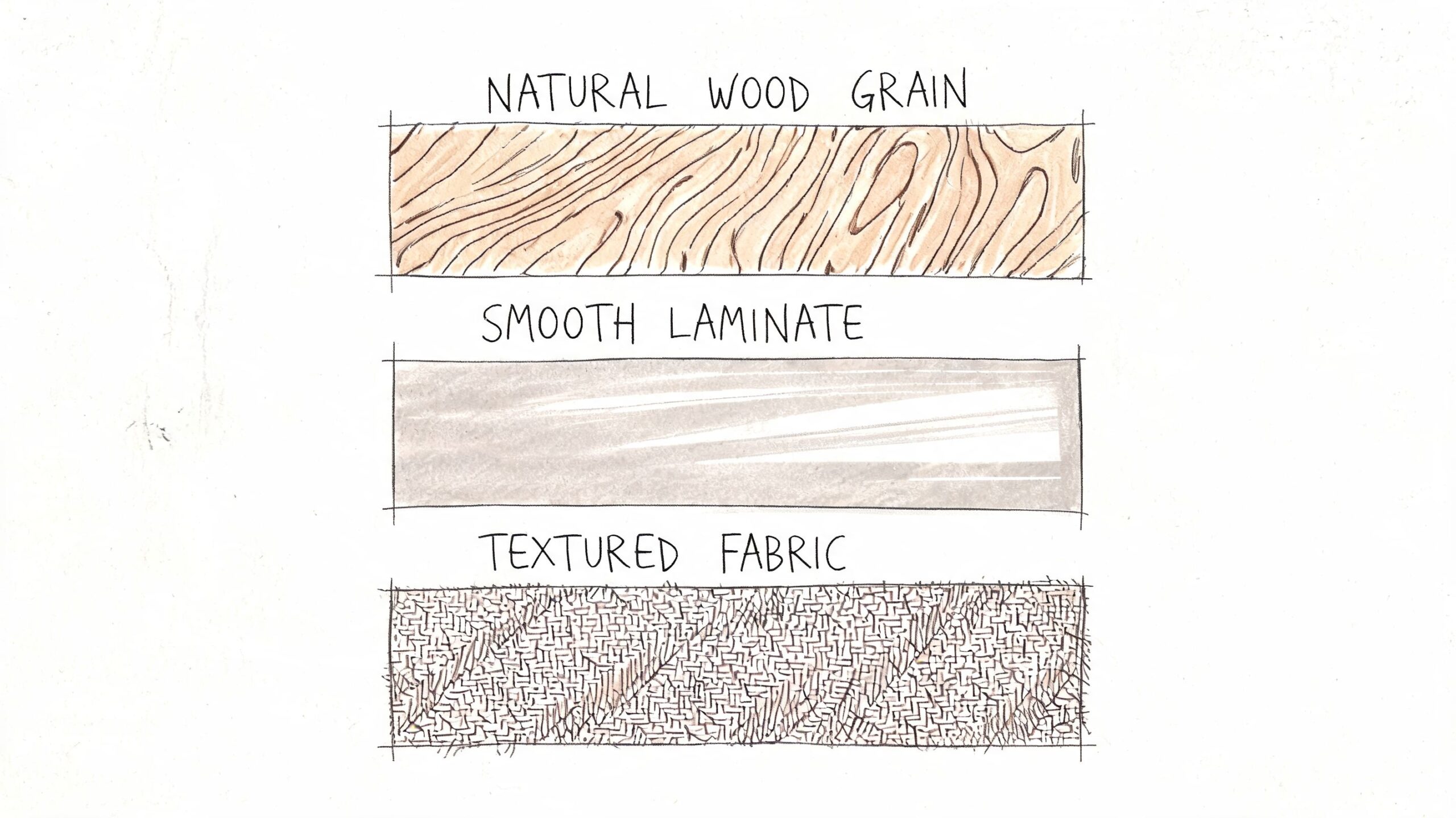
If you're comparing a solid wood set to one made largely from MDF, start with durability. According to this material comparison for the Simple Living Knox set, solid pine outperforms MDF by 40% in shear strength. That matters in a family setting where benches get used hard and often.
The same source notes an important tradeoff. MDF can look smooth and uniform, but it's more vulnerable to humidity-related swelling. Pine, by contrast, resists warping better under dynamic daily use because of its natural grain structure.
That doesn't mean every MDF set is poor quality. It means you should know where it belongs. For lighter use, a well-made MDF nook may serve well. For heavier family traffic, solid wood usually gives you more confidence over time.
Furniture built for generations, not just a few seasons, usually starts with better material under the finish.
What to inspect before you buy
A strong nook set isn't only about wood species. It's also about joinery, hardware, and how the piece handles movement.
Look closely at these areas:
- Bench lids and storage hinges. If the seat lifts for storage, the hinge system needs to feel steady, not flimsy.
- Table base stability. A shaky table ruins the experience even if the benches are sturdy.
- Edge finish. In a kitchen, exposed edges take abuse from moisture and repeated contact.
- Surface repairability. Some finishes are easier to live with and easier to refresh.
A piece can photograph beautifully and still disappoint after a year of real use. That's one reason shoppers often benefit from learning the basics of fabrics and surfaces together. This guide to upholstery materials is especially useful if you're adding cushions or upholstered seating to your nook.
Match the style to the home
A nook should look settled into the room, not dropped in as an afterthought. Some spaces call for a simple painted finish. Others look better with visible wood grain and a warmer, more furniture-like presence.
Here's a practical comparison:
| Material choice | Best fit |
|---|---|
| Solid pine or other solid wood | Busy family kitchens, long-term use, classic interiors |
| MDF with finished veneer or paint | Budget-conscious spaces, lighter daily wear, simpler maintenance expectations |
| Upholstered bench accents | Softer look, longer meals, more decorative breakfast areas |
Style that won't date too quickly
If you want a nook that still looks good years from now, keep the structure classic and let the accessories do the trend work. A straightforward table shape, a dependable finish, and bench lines that aren't overly ornate tend to age better than highly themed designs.
That's also the safer route when you want the set to move with you, or coordinate with future updates to flooring, paint, or lighting. Good bones matter most.
Customizing Your Nook for Your Family
A lot of shoppers settle too early. They find a 3 piece nook dining set that almost fits, almost matches, and almost handles the way their household lives. Then they spend the next several years working around the furniture instead of letting the furniture work for them.
Customization changes that.
Why personalization matters more now
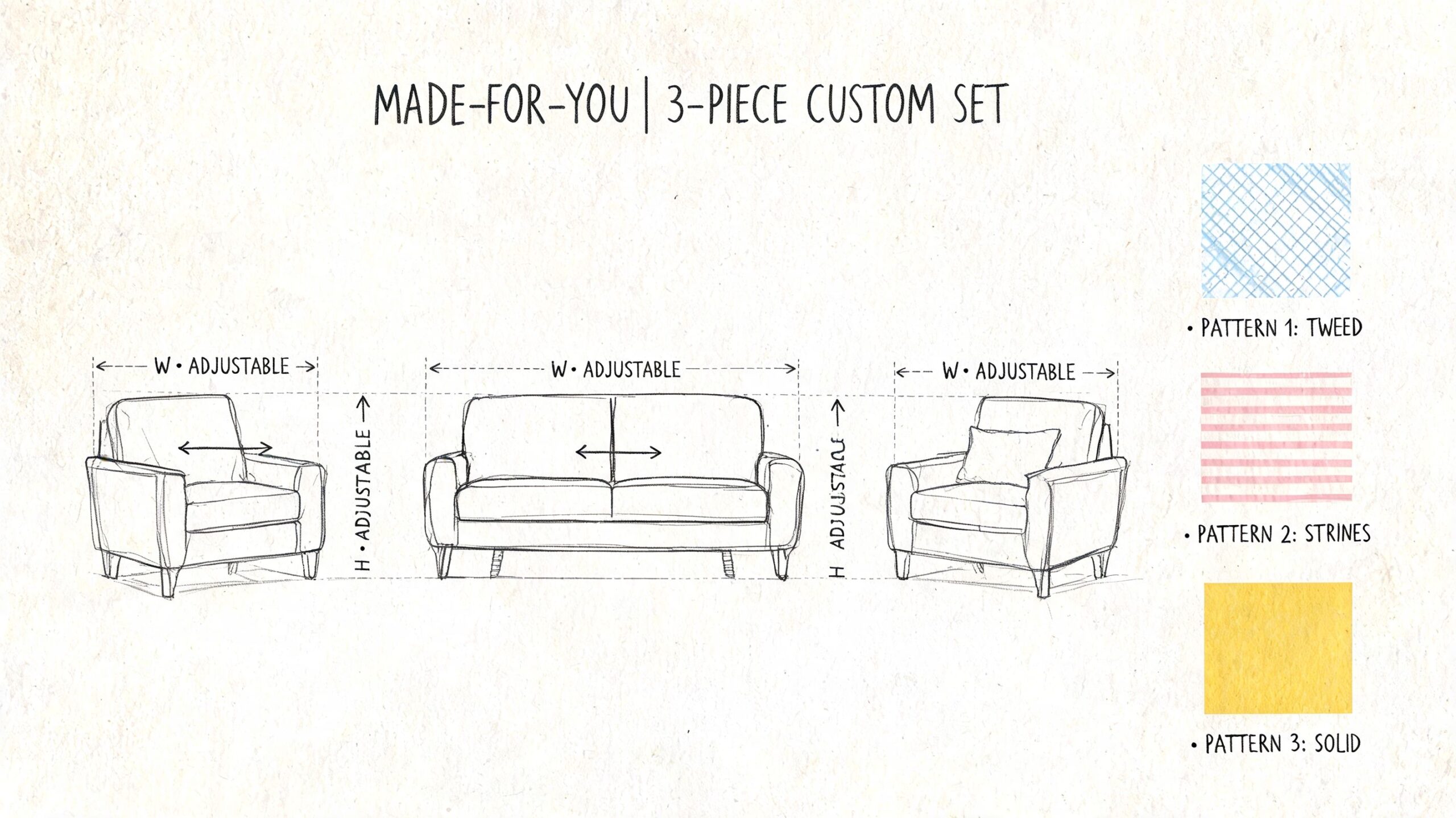
There's growing interest in personalized nook seating, especially for households that need storage, flexibility, and stronger materials. One verified trend worth noting is that sales of solid wood L-shaped nooks increased by 28% in the past year, reflecting rising demand for customizable, USA-made options, according to this market trend reference.
That makes sense on the showroom floor. Families want seating that handles real routines, not just staged photos. They want hidden storage for placemats and school papers. They want the long bench on the correct side. They want finishes that make sense with their cabinets and flooring.
The most useful custom choices
Not every customization matters equally. A few choices make the biggest daily difference.
- Reversible orientation helps when the room layout is tricky.
- Storage under the bench gives the nook a second job.
- Finish selection helps the piece sit naturally with the rest of the kitchen.
- Performance fabrics or wipeable surfaces make family life easier.
- Seat feel matters if your table doubles as a workspace or homework spot.
A custom approach doesn't have to mean extravagant. Often it means being thoughtful about the details that affect comfort and fit every day.
True customization versus catalog compromise
There's a real difference between choosing from a limited online dropdown and shaping a piece around your household. True customization reflects your home, not a mass-produced catalog.
That matters when one family needs a firmer bench for everyday dining, while another wants softer cushions for long coffee mornings. It matters when a left-facing layout is the only one that works. It matters when you need the wood tone to complement existing furniture instead of fighting it.
For shoppers comparing possibilities, this resource on custom furniture made simple gives a helpful overview of how the process can feel more manageable than many people expect.
A nook becomes part of the family rhythm when it's sized, finished, and arranged for the way you actually live.
Layout and Styling Your Breakfast Nook
Once the furniture is right, the room still needs finishing touches. A breakfast nook should feel inviting, but it shouldn't feel cluttered. In a smaller corner, every styling choice pulls a lot of weight.
The easiest mistake is overdecorating. A nook usually looks best when the structure does most of the visual work and the accessories stay simple.
Build the space around one focal point
Start with lighting. A pendant or compact overhead fixture helps define the nook as its own destination inside the kitchen. If the fixture is too large, the area feels crowded. If it's too small, the nook can feel forgotten.
Wall treatment comes next. One piece of art, a small mirror, or a restrained grouping often works better than a busy gallery wall in this spot.
Try this sequence:
- Choose the table and bench placement first.
- Add lighting that centers the space visually.
- Introduce cushions only if they improve comfort or soften hard lines.
- Finish with one tabletop accent, not five.
Keep comfort practical
Bench cushions and throw pillows can help, but don't treat the nook like a living room sofa. Too many loose pieces get pushed aside, stacked up, or left on the floor.
A better approach is to use a few well-chosen accents in durable materials and let the seating stay easy to use. If the nook is where your family eats every morning, convenience wins.
For broader planning ideas, this guide to table shapes and seating arrangements can help you think through proportion and flow.
Keep the center of the table clear enough that you can set down groceries, plates, or a laptop without first moving decor.
Make the nook feel connected
The best breakfast nooks don't feel isolated from the rest of the home. Repeat a wood tone, fabric texture, or metal finish from nearby spaces so the nook belongs to the larger room.
That might mean matching a black hardware detail from the kitchen, echoing a warm wood note from the living room, or choosing textiles that tie into nearby colors. Small choices like that make a compact area feel intentional.
If you want help pulling those details together, many homeowners find that complimentary in-store design advice is enough to clarify fabric, finish, and color direction without turning the project into something overwhelming.
Your Guide to Buying with Confidence at Watts
A nook set is one of those purchases that looks easier online than it really is. You have to judge scale from photos, guess at comfort, decode assembly instructions, and hope the layout works once everything arrives.
That's a lot to put on one product page.
Why service matters on this purchase
Verified industry data shows that self-assembled furniture has a return rate of 15% to 25%, often because of installation problems, confusing directions, or measurement mistakes, according to this online furniture category reference. A nook set is especially vulnerable to those problems because corners, wall conditions, and orientation errors can throw off the whole plan.
That's why expert guidance matters. It removes uncertainty before the order is placed and helps avoid the frustration of discovering the problem too late.
A better way to approach the purchase
Buying with confidence usually comes down to five things:
- Accurate measuring before selection
- Material clarity so you know what you're bringing home
- Comfort checks on height and seating feel
- Layout planning that considers traffic flow
- Delivery and setup support so the piece starts its life correctly
For shoppers weighing budget and timing, it also helps to review practical payment options ahead of time. This overview of furniture financing can help you think through that part without pressure.
The value of expert help close to home
When you're making a first significant furniture purchase, confidence matters as much as style. You want to know the set fits, functions, and holds up. You want fewer surprises and better answers.
That's where a trusted local team stands apart from a giant online marketplace. Good design help reduces guesswork. White-glove delivery reduces stress. Ongoing support matters after the sale, too.
For homeowners looking for a furniture store LaGrange GA families can rely on for long-term value, that full-service approach makes the purchase feel much more grounded.
If you're ready to find a 3 piece nook dining set that fits your home and your routine, visit Watts Furniture & Mattress. Their team offers complimentary in-store design assistance, a more in-depth Interior Design Center planning service with the deposit credited toward your purchase, custom furniture options, white-glove delivery, and flexible financing support. Visit the showroom at 212 Commerce Avenue in LaGrange to experience the comfort of La-Z-Boy in person. Ready to transform your space? Book a consultation with their Interior Design Center today and let them help you curate a home you'll love.