Find Your Perfect Mattress with Our Guides

How to Pick the Right Rug Size: Expert Guide

You’re usually deciding on rug size after the bigger purchases are already in place. The sofa arrived. The dining set is set up. The bed finally fits the room. Then the rug becomes the part that somehow still feels uncertain.
That’s where most rooms go off track.
A rug isn’t just a soft surface underfoot. It’s the piece that tells the eye where the room begins, where the furniture belongs, and whether the layout feels finished or accidental. If you want to know how to pick the right rug size, start by treating the rug like a foundation, not an accessory.
The Foundation of a Well-Designed Room
A family in LaGrange buys the sofa they love, brings home a rug that looked generous in the showroom photo, and rolls it out in the living room. Suddenly the seating area feels scattered, the coffee table looks stranded, and the whole room reads smaller than it is. I see that problem all the time, and the cause is usually simple. The rug is too small for the furniture plan.
A well-sized rug gives the room structure. It connects the main pieces, settles the layout, and makes the space feel finished. In open-concept homes, it does another job too. It marks where the living area begins without adding walls or visual clutter.
Start with the furniture, not the empty floor
The rug needs to support the way the room is used. That means the furniture grouping comes first.
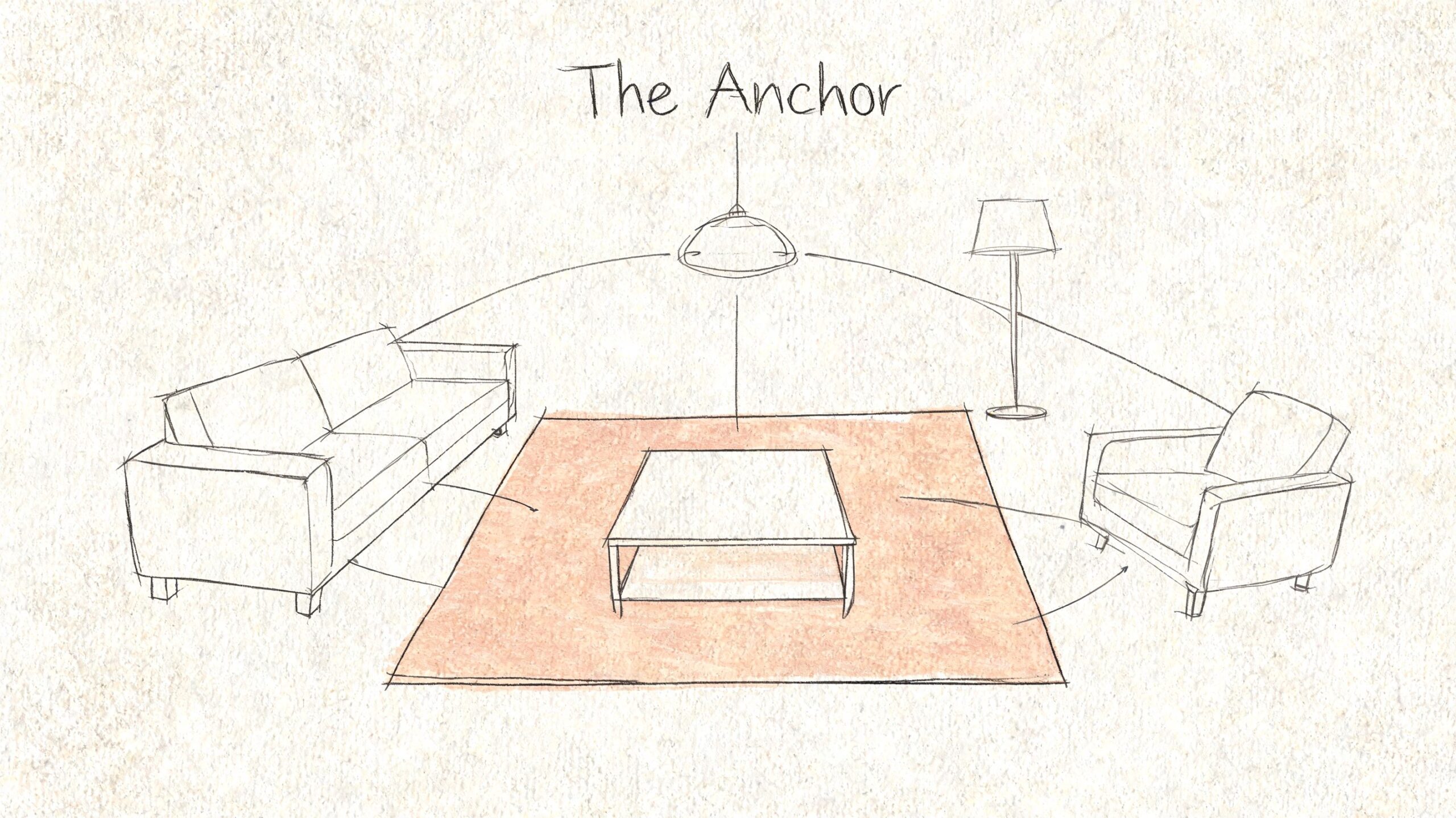
In a seating area, the practical baseline is simple. The front legs of the main upholstered pieces should sit on the rug. If the room and budget allow, getting all major furniture legs onto the rug creates a stronger, more settled layout. That larger size usually looks better, but it is not the only good answer. In many real homes, especially with sectionals, fireplaces, and open floor plans, the right choice is the size that anchors the conversation area cleanly without crowding the room or pushing the budget past reason.
That trade-off matters. Homeowners often know the "ideal" size, then hesitate because the price jump between standard rug sizes can be significant. A smaller rug that properly catches the front legs of the seating can still look polished. A rug that floats in the middle rarely does.
Practical rule: The rug should hold the seating area together, not sit alone under the coffee table.
Leave a floor border that looks intentional
A rug usually looks best with visible flooring around it. That border gives the room shape and keeps the rug from feeling oversized for the space.
The exact border will vary by room, furniture scale, and layout, but consistency matters more than chasing a perfect formula. A clean, even frame of exposed floor looks planned. A tight gap on one side and a wide gap on the other looks like the rug was squeezed in after the fact.
Use these checkpoints when you look at the room:
- Minimum support means the front legs of the main seating pieces rest on the rug.
- Stronger balance means the larger furniture pieces sit fully on the rug.
- Better proportion means the exposed floor around the rug feels even and deliberate.
Size decisions shape the room before color or pattern ever enters the conversation. Get the scale right first, then choose the rug you want to live with for years.
If you want help sorting out layout, furniture scale, and what is worth spending on first, this room design starting guide from Watts Furniture gives a practical place to begin.
How to Measure Your Space Like a Pro
You get home with a rug that looked perfect online, roll it out, and the room still feels off. The size may be technically close, but a door scrapes the edge, the walkway feels tight, or the sofa sits too far outside the rug to look connected. Good measuring prevents that kind of expensive almost-right decision.
The goal is to measure the part of the room the rug needs to serve, not just the walls. In open-concept homes around LaGrange, that matters even more. One rug may need to define a seating zone without fighting the dining area or main traffic path.
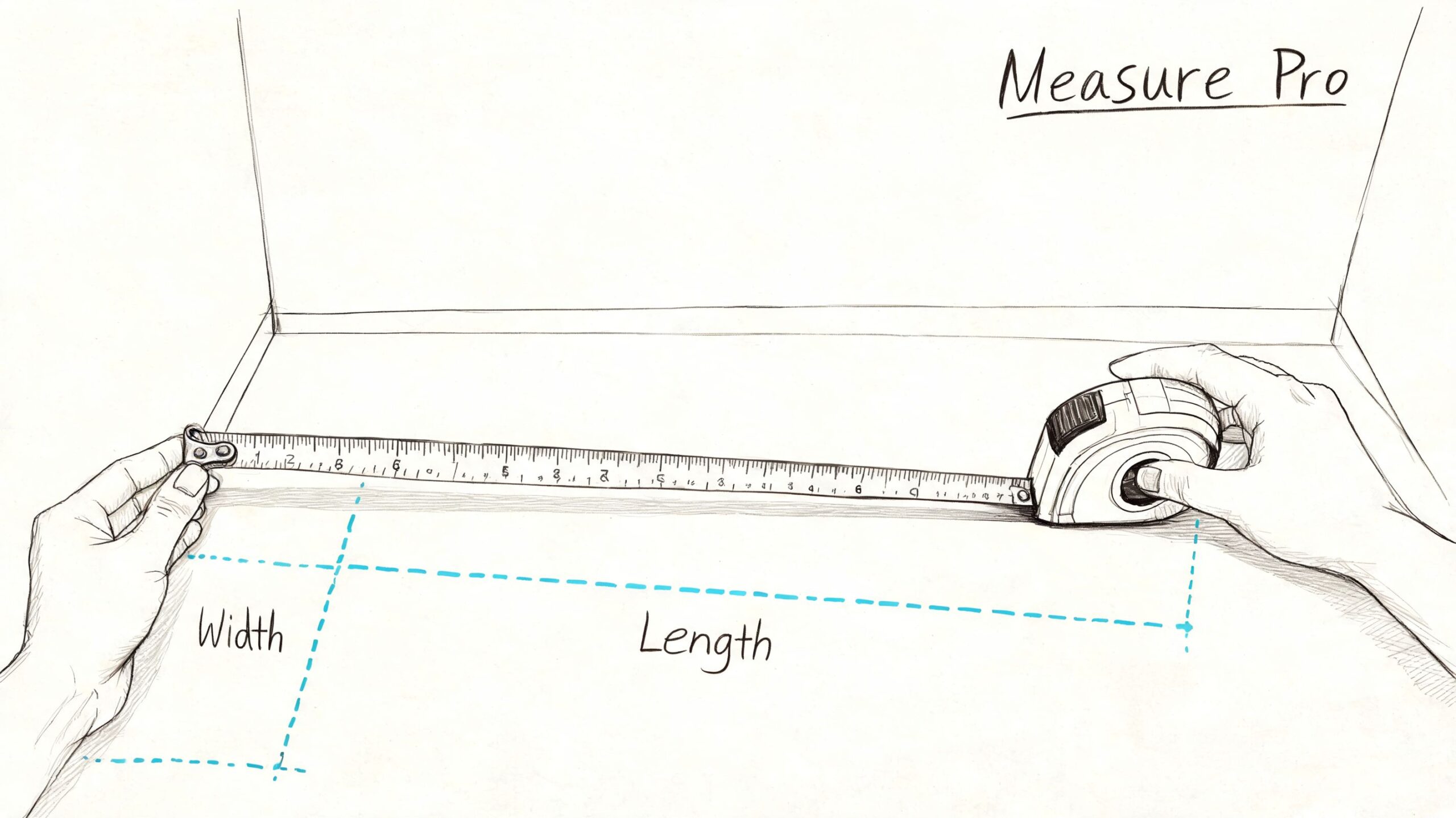
The easiest method is still the one I use in-store with customers. Mark the rug size on the floor with painter's tape before you buy.
The tape-out method that saves expensive mistakes
Painter's tape shows the rug's footprint at full scale. That matters because a rug can sound right on paper and still feel undersized once you see it in the room. It also helps with budget decisions. If the ideal size pushes the price higher than you planned, a taped outline lets you compare the next size down and judge whether the compromise still supports the furniture well.
Use this order:
- Measure the full room to understand your limits.
- Measure the furniture group the rug needs to anchor.
- Tape the rug outline on the floor in the size you're considering.
- Walk your normal paths through the space.
- Open nearby doors and move chairs to catch clearance problems before you order.
Tape shows you something measurements alone won't: whether the rug fits the way the room lives day to day.
What to check before you commit
Once the tape is down, stand in the doorway, then sit in your usual seat and look again. That second view catches problems many homeowners miss. A layout can measure fine and still look shifted, crowded, or too small for the furniture around it.
Check these details before ordering:
- Door clearance: Nearby doors should open freely without catching the rug.
- Furniture support: The rug should reach the pieces it needs to anchor, especially the main seating.
- Traffic flow: Avoid placing the rug edge where people cut through the room every day.
- Room balance: The exposed floor should look even and intentional, not pinched on one side.
Large sectionals deserve extra attention. Measure the seating zone first, then test how far the rug needs to extend beyond the chaise or corner so the layout feels settled. In many homes, the room can handle a larger rug than the budget can. Taping out two sizes helps you choose the best stopping point between ideal scale and real cost.
If you want a clear checklist before you start, keep this room measuring guide for furniture and layout planning open while you work.
Room-by-Room Rug Size and Layout Guide
A rug that looks right in the showroom can fall apart once it meets real furniture, real traffic, and a real budget. Room by room, the goal is the same. The rug needs to anchor the furniture you use, leave enough floor showing to feel intentional, and make sense for the way the space is lived in.
Living rooms
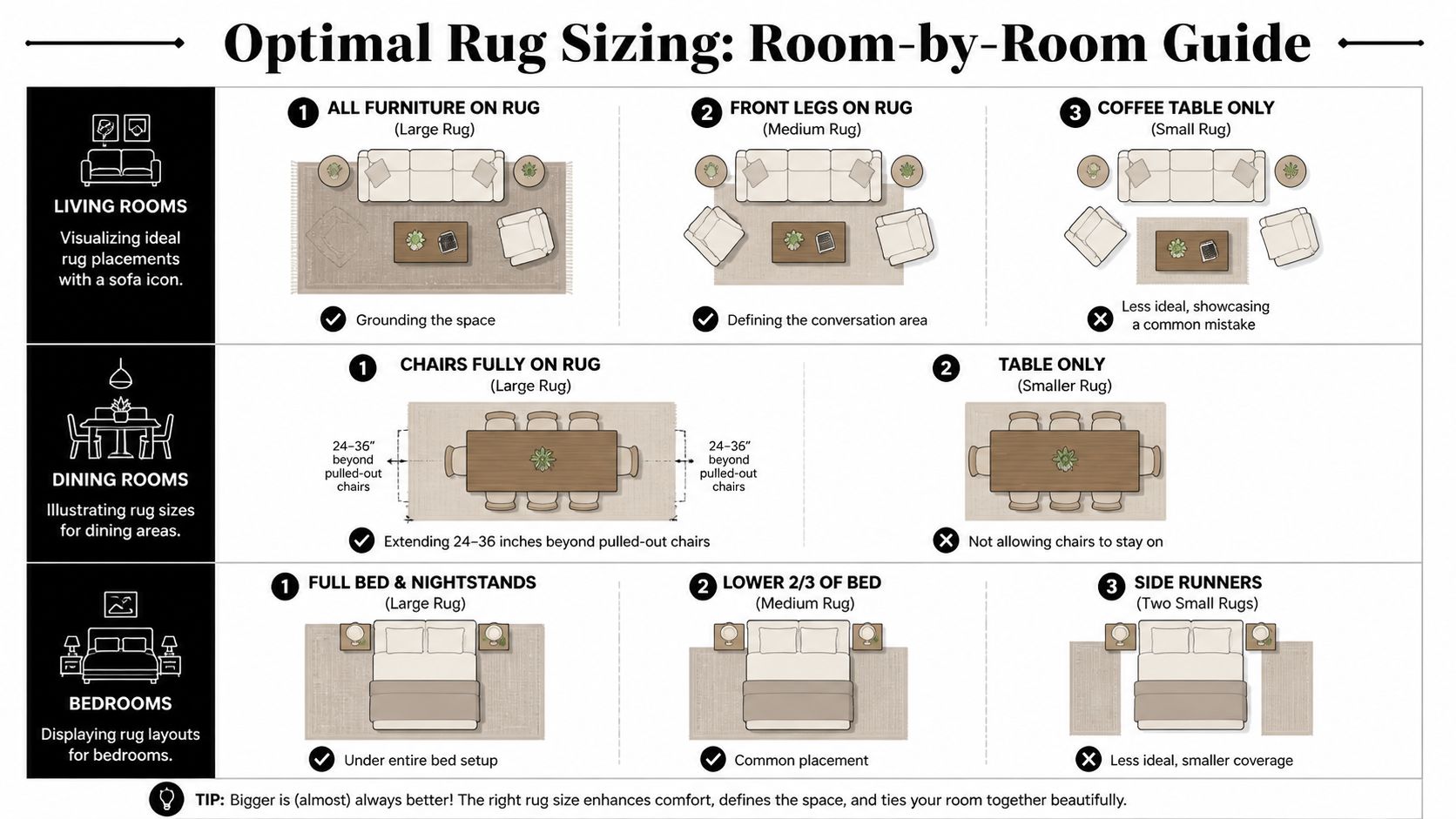
Living rooms are where rug mistakes show up fastest. A rug that is too small makes the whole seating group feel like it is drifting, especially with sectionals, deeper sofas, and heavier wood tables.
For many LaGrange homes, 8'x10' is the practical starting point for a standard seating area. 9'x12' often feels better in larger rooms or open layouts where the furniture sits away from the walls and needs a stronger footprint.
Use these layouts as a guide:
- Front legs on the rug: A reliable middle-ground choice. It keeps the seating area connected without pushing the budget as far as a larger size.
- All furniture on the rug: Best for spacious rooms where you want the entire conversation area to read as one zone.
- Coffee table only on the rug: Usually too small. It leaves chairs and sofas visually disconnected.
Material and furniture scale matter here. A substantial sofa, a pair of upholstered chairs, or solid wood occasional tables need a rug with enough size to support that weight. Otherwise, the room feels pinched even if the measurements technically fit.
In living rooms, bigger usually looks more natural than people expect once it’s taped out on the floor.
Dining rooms
Dining rooms leave less room for compromise. If a chair catches the rug edge every time someone scoots back, the size is wrong, no matter how good the rug looks under the table.
The safest rule is simple. The rug should extend far enough past the table for the chairs to stay on the rug when occupied. If you want a closer look at how that works with different table shapes and sizes, this guide to choosing a rug for under your dining table is a helpful reference.
That means the table is only part of the calculation. Chair movement decides the final size.
| Dining setup | What works | What fails |
|---|---|---|
| Chairs stay fully on rug | Comfortable and stable | Best result |
| Front chair legs stay on, back legs fall off | Feels awkward when seated | Too small |
| Table fits but chairs don’t | Looks tidy until someone uses it | Wrong size |
This is one room where undersizing costs you twice. You save a little upfront, then live with a daily annoyance every time the chairs move.
Bedrooms
Bedrooms need softness in the right places. The rug should frame the bed well, but it also needs to catch your feet when you get up in the morning.
A good rule is to let the rug extend past the sides and foot of the bed so it feels generous, not skimpy. In practice, these sizes are a solid guide:
- Twin bed: 5'x8'
- Queen bed: 6'x9' or 8'x10'
- King bed: 8'x10' or 9'x12'
Two layouts tend to work best.
- Large rug under most of the bed and nightstands: Gives the room a finished, grounded look.
- Rug starting under the lower portion of the bed: A smart compromise when the room is tight or the ideal size pushes past the budget.
That trade-off matters. I often see homeowners choose a smaller rug to save money, then regret how narrow it feels beside a queen or king bed. In many cases, it makes more sense to buy fewer decorative extras and put more of the budget into the rug size that makes the room feel settled for the long term.
If the bedroom is compact, keep some visible floor around the rug. A rug that nearly touches every wall makes the room feel crowded instead of comfortable.
Solving Rug Sizing for Open-Concept Homes
Open layouts change the question. You’re no longer sizing a rug to a room with clear walls. You’re sizing it to a function inside a larger shared space.
That’s where many generic rug guides stop being helpful.
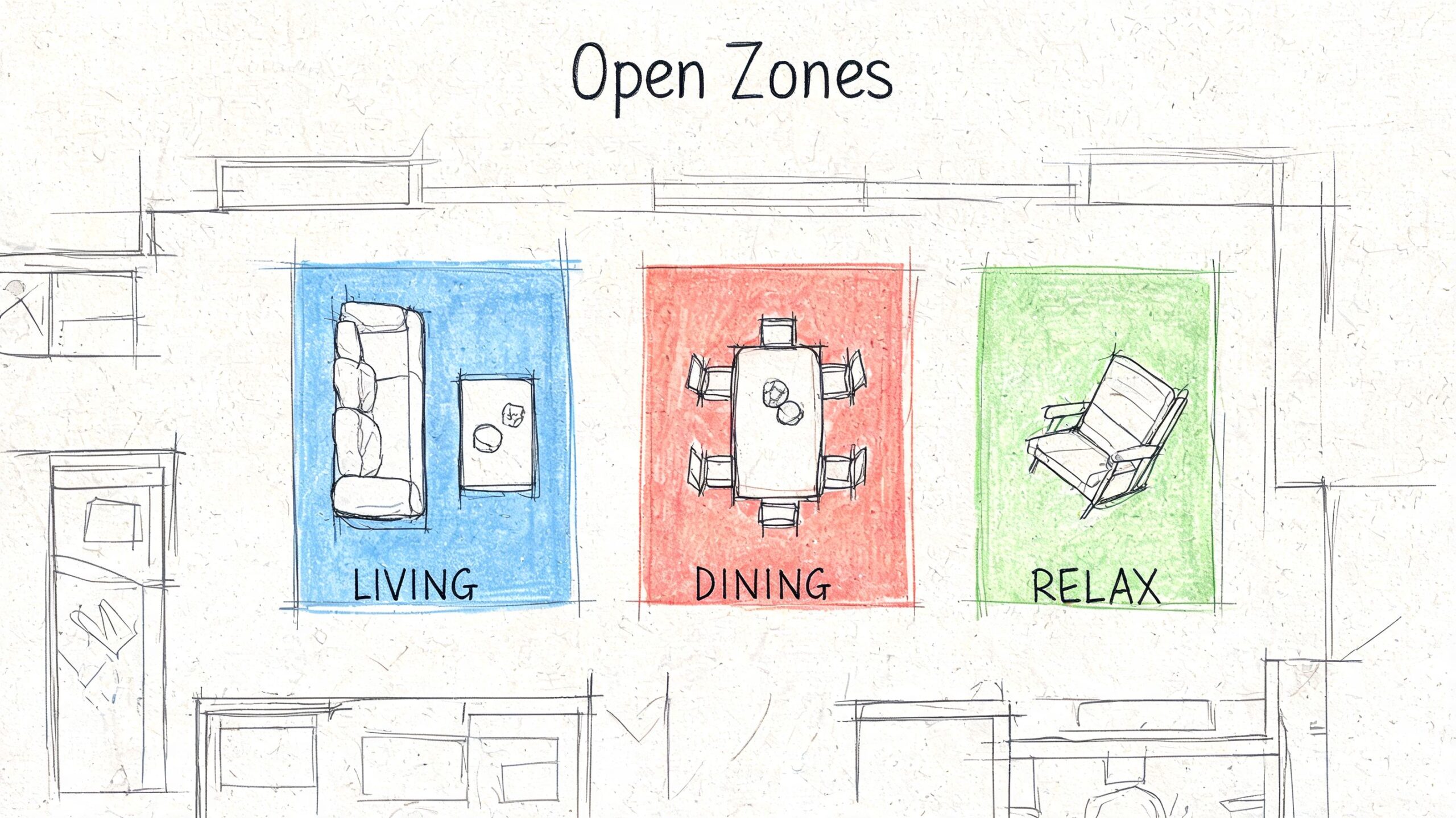
Think in zones, not rooms
In open-concept homes, rugs do the work walls used to do. They define where the living area starts, where the dining area ends, and where the eye should rest.
Many guides mention using rugs to define zones in open floor plans, but they often don’t give specific sizing help when spaces lack walls, which leaves homeowners trying to judge proportions against sight lines and traffic flow without enough direction, as discussed in this open-plan rug article. That’s why a floor plan matters more here than a single room measurement.
Use this framework:
- Anchor each function separately: One rug for seating, another for dining, rather than one oversized rug trying to solve everything.
- Keep shapes consistent with furniture groups: A dining rug should still reflect the dining zone. A living room rug should still support the seating footprint.
- Respect walkways: Don’t let rug edges interrupt the natural path from kitchen to dining to living area.
What works in real homes
In a long combined living and dining area, two rugs usually create more order than one giant rug. The trick is making them feel related without making them identical.
Good pairings often share one or two design elements:
- A common tone
- A similar texture
- A repeating accent color
- A shape that suits each furniture grouping
If your furniture placement may change over time, tape-out planning matters even more in an open plan. A rug that feels centered from one viewpoint can look off-balance from the kitchen or main entry.
For homeowners working through an open floor plan, this decorating guide for open layouts offers a useful way to think about furniture zones before choosing the rug sizes that support them.
Open layouts rarely need one answer. They need a coordinated plan.
Common Rug Sizing Mistakes and How to Avoid Them
A couple walks into our LaGrange showroom with photos of a living room that still feels off, even after they bought new furniture. In many cases, the problem starts at the floor. The rug is too small, the pad is wrong, or the size made sense online but not in the way the room gets used every day.
The biggest mistake is treating rug size like a decorating detail instead of a layout decision. Good rooms rarely come from guesswork. They come from choosing a rug that supports the furniture, the traffic pattern, and the budget at the same time.
Buying too small to save money
This one costs homeowners more than they expect.
A bargain rug can leave the front legs floating off the edge, make seating feel disconnected, and shrink the room visually. Then the space still needs help, so people start replacing pillows, moving furniture, or shopping for another rug. That first “saving” disappears fast.
A better approach is to protect the footprint first, then adjust the finish. Choose a simpler construction, a lower-maintenance fiber, or a design with less pattern if that helps you get the size the room needs. For some homes, a well-scaled option like this handmade Bari rug for living spaces does a better job than a smaller rug in a premium material.
Forgetting the rug pad
A rug pad is part of the purchase, not an extra.
The pad should sit slightly inside the rug so it stays hidden and supports the full surface. It also helps reduce slipping, protects the floor, and keeps wear more even across the rug. If the rug and pad together are too thick for a nearby door, fix that before the rug is placed. A good fit on paper still fails if the room cannot function normally.
Ignoring how the room functions
A rug can look right in a product photo and still be wrong for the home.
Watch for these common problems:
- Dining chairs catch at the edge when pulled out
- A bed sits on a rug that feels too narrow at the sides
- The rug lands where people naturally walk through the room
- The pad is undersized, so the rug shifts and wears unevenly
These are the trade-offs that matter in real homes, especially in open-concept layouts and busy family spaces. The ideal size on a rug chart is only part of the answer. The better choice is the one that fits the room you have, the way you live in it, and the budget you want to keep under control.
Find the Perfect Foundation at Watts Furniture
The right rug does more than finish a room. It sets the scale, supports the furniture, and gives the entire space a sense of order. When the size is right, everything above it looks better.
That’s one reason rug buying feels harder than people expect. You’re not just choosing color or pattern. You’re making a layout decision that affects the entire room.
For homeowners in LaGrange, GA and surrounding communities like West Point, Pine Mountain, Hogansville, and across Troup County, that’s where expert guidance can save time and frustration. Instead of relying on online guesswork, you can work with a trusted local team that understands room planning, flow, and how rugs need to relate to real furniture.
Watts Furniture & Mattress brings that kind of practical help to the showroom through its Interior Design Center, including:
- Complimentary In-Store Advice for help with fabrics, finishes, and color coordination
- Premium Design Service for space layouts and mood boards, with the deposit credited back toward your purchase
- Customization options that help you pair a rug with pieces like Custom La-Z-Boy recliners, sectionals, and Bassett furniture
- White-glove delivery and setup backed by hometown service and ongoing support
If you’re furnishing a full room, it also helps to see rugs in context with custom furniture, American-made furniture, and the scale of the pieces they’ll live with for years. That’s how you avoid short-term decorating fixes and build rooms that feel complete.
For a look at one finished option, the Bari Handmade Rug shows the kind of texture and foundation that can ground a space beautifully.
If you’re ready to stop guessing and choose a rug that fits your room, visit Watts Furniture & Mattress at 212 Commerce Avenue in LaGrange. You can explore rugs, custom furniture, and room-sized layouts in person, then get expert help from the Interior Design Center. Ready to transform your space? Book a consultation and let the trusted local team help you curate a home you’ll love.