Find Your Perfect Mattress with Our Guides

Living Room Furniture with LED Lights: A Buyer’s Guide

Your living room probably does more work than any other room in the house. It hosts movie nights, after-school sprawl, quiet evenings, holiday guests, and the everyday habit of dropping into your favorite seat at the end of a long day.
That's why living room furniture with led lights keeps getting attention. When it's done well, it doesn't feel flashy or gimmicky. It gives the room a softer glow, clearer visual zones, and a more current look without sacrificing comfort.
I'll be direct. Some LED furniture looks sharp in photos and disappointing in real homes. The good pieces feel integrated, restrained, and useful. The bad ones scream for attention and age fast.
If you're shopping in LaGrange, West Point, Pine Mountain, Hogansville, or anywhere around Troup County, the smart approach is simple. Treat LED furniture like a design decision first, and a tech feature second. That's how you get a room that feels modern now and still looks right years from now.
Brighten Your Home with Modern Style
Many homeowners don't walk into their living room and say, “I need LEDs.” They say something more practical. The room feels flat. The seating is comfortable but dated. The TV wall looks heavy. The space works during the day, but at night it loses warmth.
That's where LED-integrated furniture makes sense.
A well-chosen sectional, media console, or display piece with subtle lighting can give the room depth without turning it into a showroom set. It helps the space shift easily from bright daytime living to a calmer evening mood. That matters in family homes, especially when one room has to handle relaxing, entertaining, and everyday traffic.
What people actually want
Homeowners around LaGrange usually want three things at once:
- Comfort that lasts so the room still feels inviting after the excitement of a remodel wears off
- A current look that doesn't feel cold or overdesigned
- Less decorating guesswork when pulling together upholstery, wood tones, lamps, and wall color
LED furniture fits when it supports those goals. It does not fit when it becomes the whole personality of the room.
Practical rule: If the lighting feature is the first thing you notice and the furniture quality is the second, keep shopping.
The strongest rooms use LED accents the same way they use texture, metal finishes, or a good lamp. As one layer. Not the whole plan.
If you lean toward a cleaner, updated style, modern home design ideas can help you see where illuminated furniture belongs and where it doesn't. In most homes, the answer is simple. Use it to create mood and polish, then let timeless upholstery, solid construction, and scale do the heavy lifting.
What Is LED-Lit Furniture Really About
High-quality LED-lit furniture isn't just furniture with a glow stuck on the bottom. It's furniture designed from the start to include lighting as part of the piece.
That difference matters.
There is a significant difference between a sofa with integrated accent lighting and a cheap aftermarket strip added later. This is comparable to factory-installed ambient lighting in a vehicle versus a kit from a bargain bin. One looks intentional. The other usually looks temporary.

Why it's showing up in more homes
This trend didn't appear out of nowhere. LED lighting has become standard in everyday life. The share of U.S. households using mostly LED bulbs for indoor lighting rose from 4% in 2015 to 63% by 2024, according to the U.S. Energy Information Administration's household lighting update. That tells you consumers are already comfortable with LED technology throughout the home.
So yes, it makes sense that furniture followed.
But the important point is how the lighting is used. In good furniture, LEDs support the design by outlining a base, illuminating a console area, or giving a media piece a softer profile at night. They help define the furniture's shape and make the room feel more layered.
What it should do in a room
Good LED furniture should do a few things well:
- Add ambiance without overpowering the rest of the room
- Support function by helping with orientation in low light
- Feel built-in rather than added on
- Coordinate with the room's style instead of competing with it
It should also match the broader lighting plan in your home. If your lamps, ceiling fixtures, and finishes all feel warm and relaxed, bright blue lighting under a sectional is going to look out of place fast.
A clean room always looks more expensive when the light feels intentional.
For homeowners trying to make that balance work, living room lighting guidance is useful because furniture lighting only succeeds when it works with the rest of the room. The furniture can glow. The room still needs to feel grounded.
Popular Types of LED-Integrated Furniture
The easiest way to understand this category is to look at where LED lighting helps. Some pieces benefit from it. Others don't.

Most integrated LEDs in furniture are designed as low-voltage accent systems, not primary room lighting, as shown in retailer examples of LED sofas and sectionals. That means they're there for mood, visual zoning, and convenience. You still need lamps, overhead light, or other layered lighting for the room to work well.
Sofas and sectionals
This is the category that typically comes to mind first.
LED sofas and sectionals often include lighting along the base rail, around cup holders, or near consoles. Many also pair the lighting with power recline, USB charging, and storage features. These are popular for media rooms, open-concept family rooms, and homes where the living room sees heavy evening use.
They work best when:
- The room is used at night often
- You want a theater-style comfort setup
- The upholstery and shape still look good with the lights off
If the sofa only feels special when plugged in, skip it.
TV consoles and media stands
This is one of my favorite uses for LED integration because it can look polished without trying too hard.
A media console with soft backlighting or under-lighting can keep the TV wall from feeling like a dark block in the room. It also helps define that wall as its own zone, especially in larger spaces where seating, traffic flow, and storage all meet in one area.
A good media piece should still stand on its own as furniture. The finish, proportions, storage layout, and hardware matter more than the light.
Display cabinets and shelving
This is the most elegant option when it's done right.
Integrated lighting inside shelving or glass-front display storage draws attention to books, pottery, framed pieces, and collected objects. It's less about entertainment and more about visual depth. In a traditional or transitional room, this can be a cleaner fit than a glowing sectional.
Here's the simple breakdown:
| Furniture type | Best use | Watch out for |
|---|---|---|
| Sofa or sectional | Evening lounging, media use | Overly bright or colorful effects |
| Media console | TV wall ambiance, visual balance | Cheap finishes that date quickly |
| Shelving or cabinet | Decorative display, layered design | Harsh glare on glass or shiny decor |
If you're comparing layouts, living room furniture types can help narrow down which category belongs in your space before you start chasing features.
How to Style LED Furniture for an Elegant Home
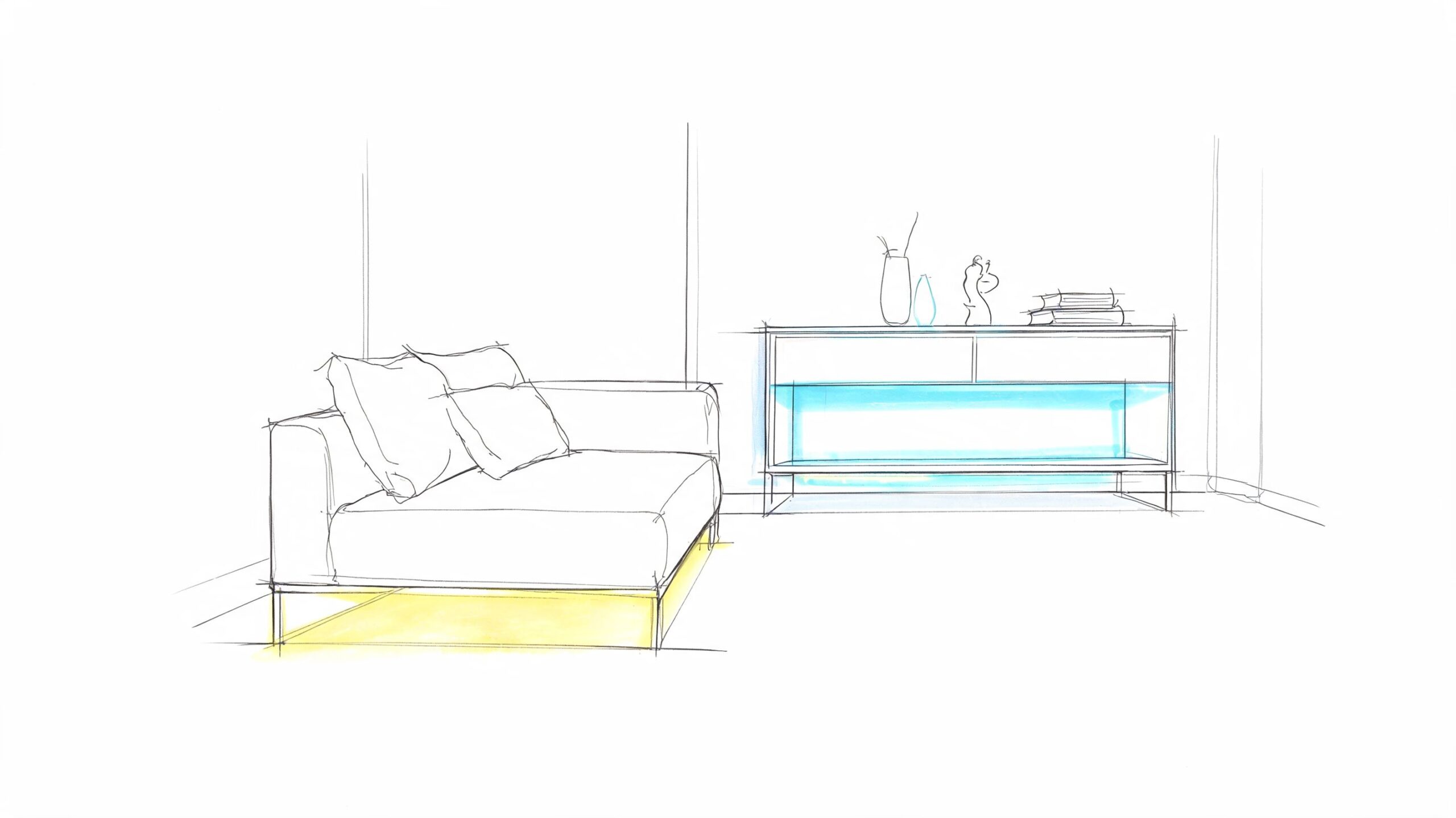
The biggest mistake people make with LED furniture is treating the light as the star. That's how a room starts looking like a game room instead of a well-finished home.
If you want it to look elegant, keep the lighting subtle and let the furniture shape, upholstery, and palette lead the room.
Use restraint with color and brightness
This is not the place for constant color changes unless the room is set up as a dedicated entertainment space. In most homes, a softer and steadier light reads better.
My recommendation is simple:
- Choose gentle, neutral-looking illumination over novelty colors for everyday use
- Keep brightness low so the furniture adds atmosphere rather than glare
- Match the mood of the room instead of forcing contrast for the sake of effect
That's especially important near a television. Harsh accent light can become distracting fast, even if it looked exciting in the showroom.
Designer's shortcut: The more timeless the room, the more subtle the lighting should be.
Let the room finishes make the decision
A lot of shoppers overcomplicate this. Your room already tells you what belongs in it.
If you have warm wood tones, soft neutrals, and classic upholstery, pick LED furniture that blends quietly into that language. If your room is cleaner and more contemporary, you can push a little further with sleeker lines and more visible illumination. But the room still needs one visual voice.
That's where in-person design help matters. Complimentary In-Store Design Assistance can help you compare fabrics, leathers, and finishes without guessing from a screen. For larger projects, the Premium Design Service is the smarter route because you can work through space layouts and mood boards, and the deposit goes back toward your purchase.
Keep the coffee table and accents calm
If your seating or media piece includes LED accents, don't overload the room with too many statement accessories. A restrained coffee table, fewer competing finishes, and cleaner styling usually produce a stronger result.
A practical way to do that is to simplify the center of the room, then add texture through pillows, rugs, and art. Coffee table styling ideas can help if you're trying to keep the room polished instead of busy.
The elegant version of LED furniture is never loud. It feels edited.
Key Technical and Long-Term Considerations
Buyers need straight answers at this point.
LED furniture is often sold like it's all fun and convenience. In reality, it's an integrated product with moving parts, wiring, controls, and power demands. If you ignore that, you can end up with a room that looks good for a month and becomes annoying after that.
According to product examples in the market, LED furniture often combines lighting with features such as power recliners and USB chargers, which means buyers need to think about installation, cord management, and serviceability, not just appearance, as noted in this video overview of feature-heavy furniture options.
Ask the serviceability questions first
Before you buy, ask these plainly:
- How is the lighting powered
- Where will the cords run
- Can the light component be serviced
- Can the controls be replaced if they fail
- Can the furniture still function if one feature stops working
If a seller can't answer those questions, that's a problem.
The more features packed into a piece, the more important those answers become. Recline motors, charging ports, control panels, and lighting systems all add convenience. They also add complexity. Furniture built for generations, not just a few seasons, should be evaluated like a complete system.
Plan the room around real power access
A beautiful LED sectional can look messy in a hurry if cords stretch across a walkway or bunch behind the frame.
Use this checklist before ordering:
- Measure wall location and outlet access so you know where power can realistically go.
- Confirm traffic flow so no cord path cuts across an entry or common route.
- Check full recline clearance if the piece has motion features.
- Leave access for service so the furniture doesn't have to be fully disassembled just to reach connections.
For room planning, furniture measuring guidance helps with more than fit. It helps prevent setup mistakes that become daily annoyances.
Buy the furniture you can live with when every feature is off. Then enjoy the features when they're on.
Don't ignore repair and support
This is the question big-box listings often dodge. What happens when something stops working?
That's why a Service Request and Support Hub matters. When lighting is integrated into a seating or storage piece, support after delivery is part of the purchase decision. White-glove delivery and setup also matter because proper placement and connection reduce avoidable problems from day one.
If you're shopping for premium living room sectionals, don't let the LED feature distract you from the basics. Frame quality, seat comfort, upholstery durability, and long-term support still decide whether the piece was worth the money.
The Watts Difference Custom Quality and Hometown Service
You walk into your living room at night, tap the lights on, and the furniture gives the room a soft glow instead of a loud showroom effect. That is the goal.
Good LED furniture should still look expensive with the lights off. If a piece only feels interesting when the LEDs are on full color mode, it is the wrong piece. I tell LaGrange shoppers to start with shape, comfort, upholstery, and finish, then decide whether the lighting adds anything useful to the room.

Why quality comes first
A lot of LED furniture on the market is built to get attention fast. You will see extra lights, flashy controls, and trendy styling paired with weak construction or finishes that age poorly. Skip that.
The smarter buy is timeless furniture with well-integrated features. That means a frame worth owning, cushions that hold up, upholstery you would choose even without the lighting, and components that can be accessed if something needs service later.
That is why strong manufacturers matter. Shoppers who want customization often do well with options such as:
- Custom La-Z-Boy recliners with a wide range of fabric and leather choices
- Bassett recliners and living room seating with more control over finishes and upholstery
- Kincaid for buyers who want American-made furniture and a stronger emphasis on long-term construction
What local service changes
Big-box stores usually answer the easy questions. Color options. USB ports. Remote controls. The better question is what happens two years from now if a light strip, switch, or power connection needs attention.
That is where a local store earns its place. In LaGrange, shoppers can sit in the piece, judge the scale in person, compare materials, and ask direct service questions before buying. They can also get honest guidance on whether an LED feature will look refined in their home or feel out of place.
Watts Furniture & Mattress is one local option that offers living room seating, customization through brands such as La-Z-Boy and Bassett, design help, delivery, and financing. That matters because LED furniture is not just a style decision. It is a purchase that needs setup, support, and a clear plan if a component ever fails.
The parts of the experience that matter later
The best LED furniture purchase usually includes more than the furniture itself.
- Customization and special orders so the piece fits your room and style instead of forcing you into a stock look
- White-glove delivery and setup for furniture with powered features and integrated lighting
- Flexible financing, including 0% APR financing, when available through current programs
- Design guidance so the lighting works with the rest of the room and does not turn a classic space into something that feels cheap
Modern features are easy to sell. Lasting comfort, serviceable construction, and thoughtful design are harder to find. That is the difference that holds up in your home.
Your LED Furniture Questions Answered
A family in LaGrange buys a reclining sofa with blue LED lights, gets it home, and loves it for a month. Then real life starts. Movie glare shows up on the TV. The light feels harsher than it did in the photo. A switch stops responding. Those are the questions that matter.
Are the LED strips replaceable
Sometimes. The deciding factor is access.
Some manufacturers build LED components so a technician can reach the strip, switch, or power connection without tearing the furniture apart. Others hide those parts so thoroughly that repair turns into replacement. Ask for a clear answer before you buy. If a seller cannot explain how the lighting is serviced, choose a different piece.
Will LED furniture light the whole room
No. LED furniture works best as accent lighting.
Use it to outline a base, add a soft glow under a console, or give a media room more atmosphere. Keep your lamps and overhead lighting for the work they are supposed to do.
Will the lights be distracting during TV time
They can be.
Skip harsh brightness, fast color changes, and exposed light aimed straight at eye level. In a living room, warm and dim usually looks better than bright and flashy. The goal is a soft background glow that supports the room, not a light show that fights the screen.
A polished room should feel calm.
Does LED furniture use a lot of energy
LED lighting is generally efficient and runs cooler than older bulb types, which is one reason buyers like it for everyday use. That does not make every LED furniture design equal. Poor wiring, cheap controls, and low-grade components still create headaches. Energy savings are nice, but build quality matters more over the long haul.
What questions do big-box stores usually skip
They often skip the questions that decide whether the piece still makes sense a few years later.
Ask about replacement parts. Ask whether the light can be dimmed. Ask where the power supply sits and whether it is easy to reach. Ask what happens if the remote fails, the strip burns out, or you decide you want a softer effect later. A good store should answer those questions plainly, and this discussion of furniture lighting concerns touches on some of the same practical issues shoppers run into.
If you are shopping in LaGrange, West Point, Pine Mountain, or Hogansville, this is the standard to keep. LED furniture should look refined, feel comfortable, and give you a realistic path for service if something quits working. That is how modern features stay tasteful instead of turning into a short-lived gimmick.