Find Your Perfect Mattress with Our Guides

The 2 Door Chest: A Guide to Smart & Stylish Storage


A lot of homes have that one spot that never feels finished. It might be the entryway where bags, keys, and mail pile up by the door. It might be a bedroom wall that needs more function than a framed print can give. Or it might be a living room corner that looks empty one day and cluttered the next.
That's where a 2 door chest earns its keep.
It's one of those rare pieces that solves two problems at once. It gives you concealed storage, and it adds shape, texture, and presence to the room. Done well, it doesn't look like a stopgap. It looks intentional.
In homes around LaGrange, West Point, Pine Mountain, and across Troup County, this matters. Many people aren't furnishing oversized rooms. They're trying to make everyday spaces work better without crowding the walkway or making the room feel heavy. A good 2 door chest helps you do exactly that, especially when you choose a piece that fits your routine instead of chasing a quick online trend.
More Than Just Storage A Stylish Introduction
A 2 door chest often enters the conversation when someone is tired of seeing the same clutter every day. Shoes near the front door. Spare throws with no home. Chargers, candles, placemats, or seasonal pieces tucked into the wrong room because there isn't a better place for them.
A chest gives that clutter a boundary. Once the doors close, the room settles down.
That's why this piece works so well in real homes. It can soften a blank wall, anchor a lamp and mirror, or add weight to a room that feels visually thin. It isn't only about what goes inside. It's also about what the piece does for the room around it.
A common mistake is choosing one that looks good in a photo but doesn't help the room function. The finish may be right, but the scale is off. The silhouette may feel stylish, but the storage inside doesn't match how you live. That's when furniture starts feeling like decoration instead of support.
For that reason, I always encourage people to think about the chest as part storage piece, part design tool. If you're trying to create a room that feels collected rather than patched together, this kind of accent furniture can do a lot of heavy lifting. The visual balance matters just as much as the storage, especially if you're working toward a more polished overall plan like the ideas shared in eye-catching room design inspiration.
A well-chosen chest doesn't just hide clutter. It gives the room a sense of order.
The lasting value comes from choosing a piece that still works after the first season of ownership. That's the difference between a purchase you live around and one that supports your home.
What Exactly Is a 2 Door Chest
A 2 door chest sits in a useful middle ground. It's usually smaller than a dresser, more enclosed than a console, and more versatile than a piece built for one single room.

How it differs from similar pieces
A dresser is built mainly for clothing and usually relies on multiple drawers.
A nightstand is smaller and meant to stay by the bed, usually with a lamp, book, and a few bedside essentials.
A sideboard or buffet tends to be longer and lower, often designed for dining rooms.
A 2 door chest is the utility player. It has a compact footprint, enclosed storage, and enough presence to work in several parts of the house.
Here's the simplest way to consider it:
| Piece | Best known for | Where it usually works |
|---|---|---|
| Dresser | Clothing storage | Bedroom |
| Nightstand | Bedside function | Bedroom |
| Sideboard | Serving and display | Dining room |
| 2 door chest | Compact concealed storage | Entryway, bedroom, living room, hallway |
That flexibility is what makes it appealing. If you move, repaint, or shift rooms around later, a good chest can often move with you.
What to look for in the basic form
A 2 door chest is often recognized by a few common traits:
- Two front doors that conceal shelves or compartment space
- Moderate scale that fits tighter walls and narrower spots
- A finished top that can hold a lamp, framed photo, tray, or decorative objects
- A versatile profile that doesn't lock the piece into one room style
Some versions are formal, with rich veneers or metal accents. Others are casual and relaxed, with painted finishes or simple hardware. The form stays useful either way.
If you want to compare styles and silhouettes before deciding what fits your room, it helps to browse a focused collection of bedroom chests and storage pieces and note which designs feel practical rather than just attractive.
Practical rule: If you can't quickly name what will go inside the chest, you probably aren't ready to choose one yet.
Key Specifications That Define Quality
A 2 door chest can look impressive on the outside and still disappoint in daily use. Doors can sag. Finishes can chip. Shelves can bow when the piece carries normal household items. That's why quality comes down to construction, not just appearance.
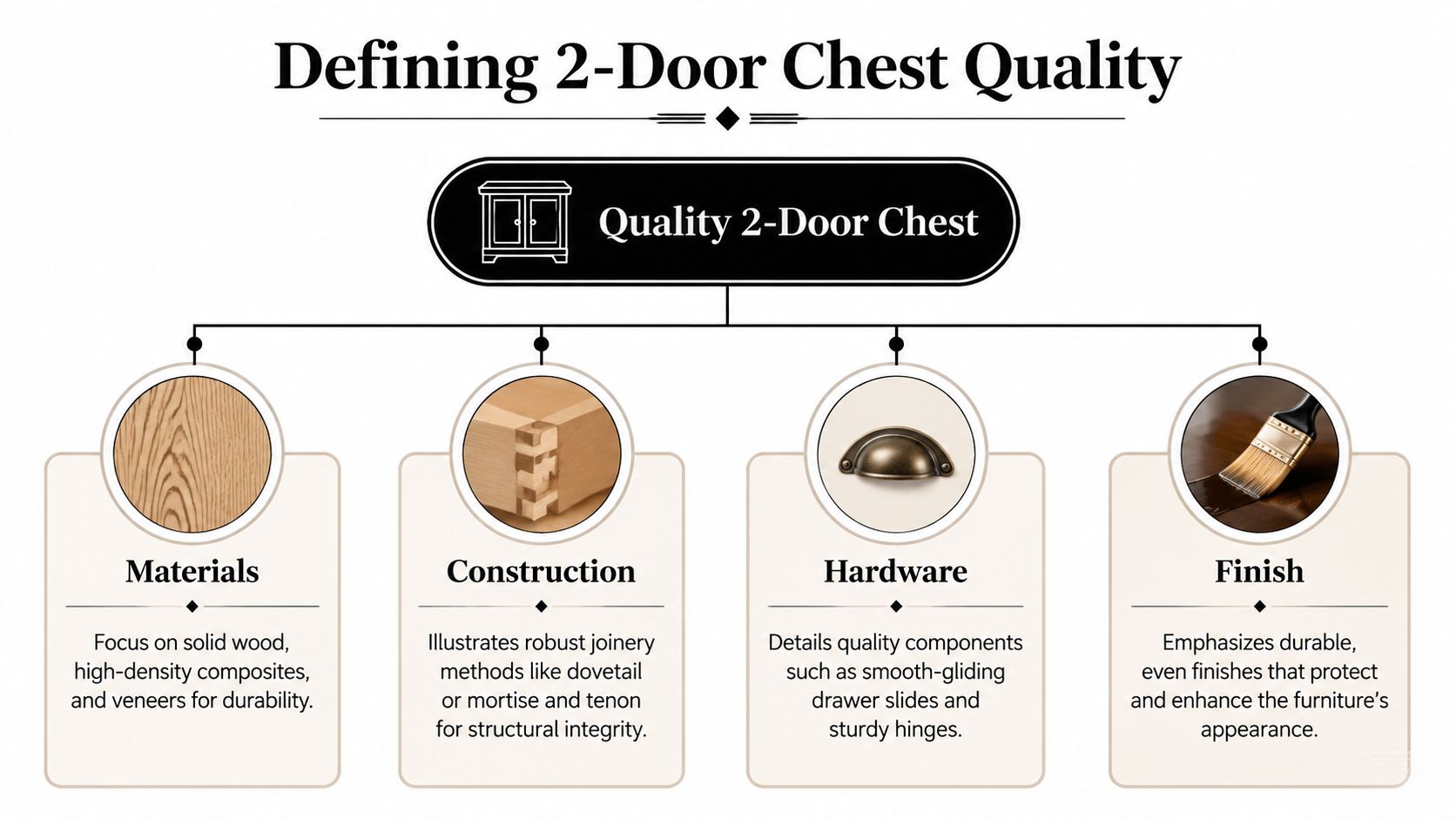
Materials matter first
The first question is what the piece is made of.
Solid wood has long-term appeal because it tends to age with character and can often handle years of use gracefully. Veneers also have a place when they're applied over stable core materials and finished well. Problems usually start when lower-grade construction tries to imitate better furniture without the structure to support it.
The published specs for the Bradburn Home 2 Door Side Chest offer a good example of what practical engineering looks like in a compact piece. It measures 32"W x 16"D x 32"H, and the shelf construction is described as designed to support 50-60 lbs per shelf, with a layout suited for folded linens or apparel. That tells you this type of chest is built for genuine storage use, not just display.
Construction separates lasting pieces from temporary ones
Once materials are settled, inspect how the piece is assembled.
Look closely at these areas:
- Door alignment. Gaps should look even, and the doors shouldn't rub or drift.
- Shelf stability. Interior shelves need to feel secure, not flimsy.
- Back panel strength. A weak back can let the whole case loosen over time.
- Base support. The chest should sit level and feel planted.
This is where the phrase Furniture built for generations, not just a few seasons means something. It isn't marketing language when the case stays square, the doors keep closing properly, and the finish still looks composed after years of opening, cleaning, and moving.
Hardware and finish tell you how the piece will age
A chest gets touched every day. That makes hinges, pulls, and finish quality more important than many shoppers expect.
Cheap hardware announces itself slowly. First a hinge loosens, then a door shifts, and before long the whole piece feels tired.
Look for hardware that feels substantial in the hand and doors that move smoothly without resistance. On the finish side, consistency matters. Uneven color, rough edges, or thin topcoats often show up fast in homes with normal wear.
For shoppers comparing better-made storage pieces with mass-market alternatives, this kind of evaluation is worth learning. A thoughtful guide to what to look for when buying chests, dressers, and cabinets can help sharpen your eye before you commit.
American-made furniture also deserves attention here. Brands such as Kincaid and Bassett are often part of the conversation because buyers looking for long-term value tend to want stronger materials, steadier construction, and finishes that don't feel disposable. That's especially important if you want a piece that can move from one room to another over time instead of being replaced after a short run.
Styling and Placing Your 2 Door Chest
Placement is where a good 2 door chest proves itself. A beautiful piece in the wrong spot becomes an obstacle. A well-placed one makes the room easier to live in.
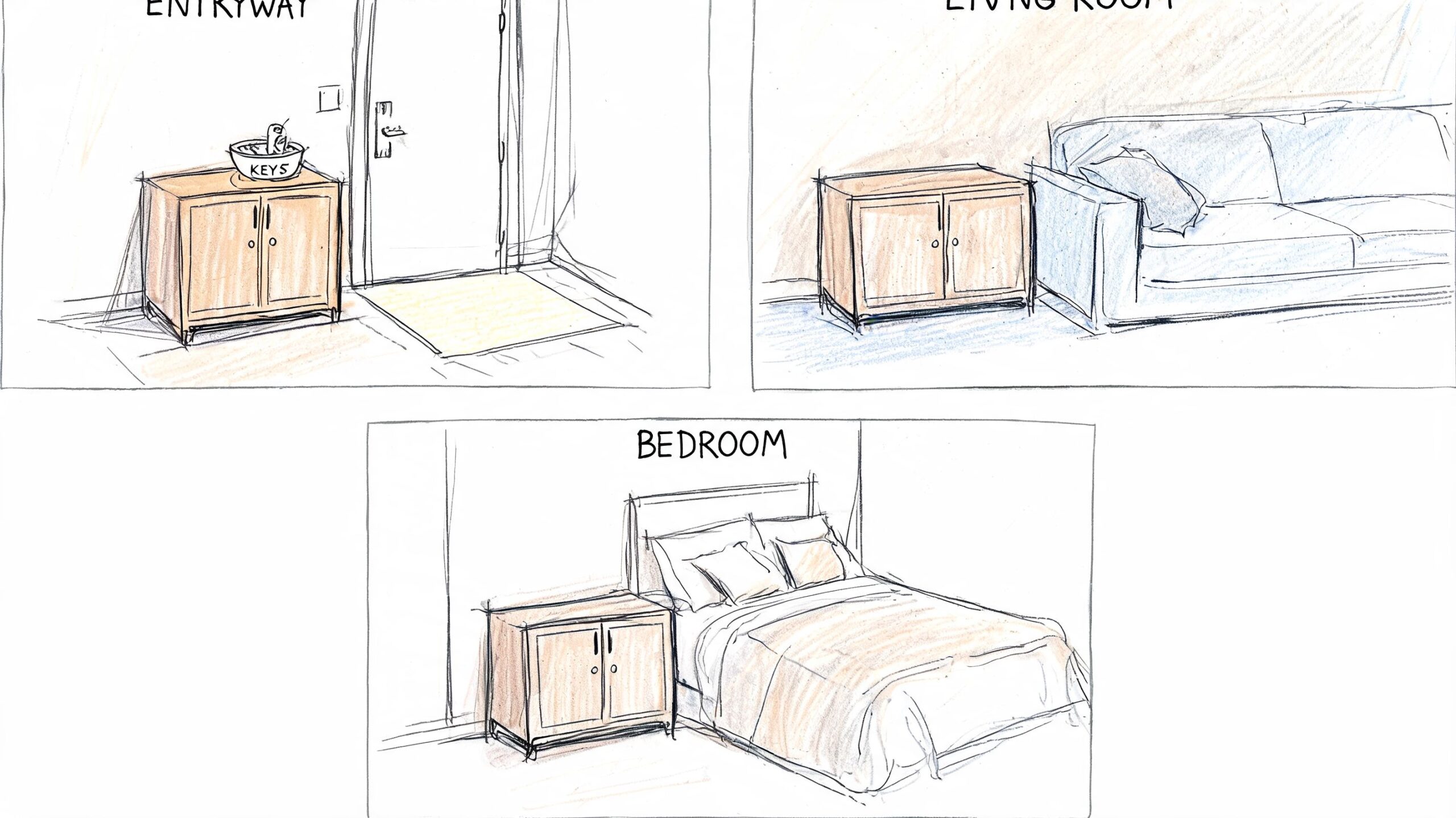
The size conversation matters more than ever in compact homes. According to the product research summary tied to Hooker Furnishings, 68% of new U.S. single-family homes are under 2,000 sq ft, and a typical 2-door chest falls around 36-42 inches wide. The same source notes that a closed-door design can reduce dust ingress by up to 40% compared with open shelving, but it also needs 24-30 inches of clearance for the doors to open properly, which is one reason room layout needs careful review in tighter spaces like bedrooms and entryways (Hooker Furnishings product reference).
In the entryway
This is one of the smartest uses for a chest.
An entryway chest can hold items that usually float around the house, such as bags, pet supplies, reusable shopping totes, or seasonal accessories. Add a mirror above it and a lamp or bowl on top, and the space starts to feel finished instead of improvised.
What works:
- A shallower profile that doesn't crowd the path inside the door
- Closed storage for visual calm
- Simple styling on top so the area still feels open
What doesn't work:
- Overdecorating the top
- Ignoring door swing
- Choosing a piece that's too deep for the walkway
In the living room or den
A chest can also stand in for a bar cabinet, game storage cabinet, or accent piece under art.
In this role, I like to see some visual contrast. If the seating is soft and low, a chest can bring structure. If the room already has a lot of wood, a painted or mixed-material finish often keeps things from feeling heavy.
One practical option in this category is the Westridge 2 Door Accent Cabinet, which is one example of a closed-storage accent piece that can fit this kind of room application.
In the bedroom
A bedroom chest works well when a full dresser won't fit or when the room needs extra concealed storage without adding visual bulk.
Leave enough space for the doors to open comfortably before you fall in love with the finish.
The Interior Design Center proves particularly useful. The complimentary in-store design help can assist with color and finish choices, and the premium design service can map the room more carefully with space planning and mood boards, with the deposit credited back toward the purchase. That support helps people Avoid the 'guesswork' of online shopping and make sure the chest fits the room's flow, not just the wall where they plan to place it.
If you're unsure how the piece will interact with nearby seating, beds, or traffic paths, a room-planning guide like how to plan a room layout is a smart place to start.
Your Buying Checklist for the Perfect Chest
A good purchase usually comes down to asking the right questions before you shop. Without them, many online orders go sideways. The chest looks right on a screen, but the scale, storage, or finish misses the mark once it arrives.
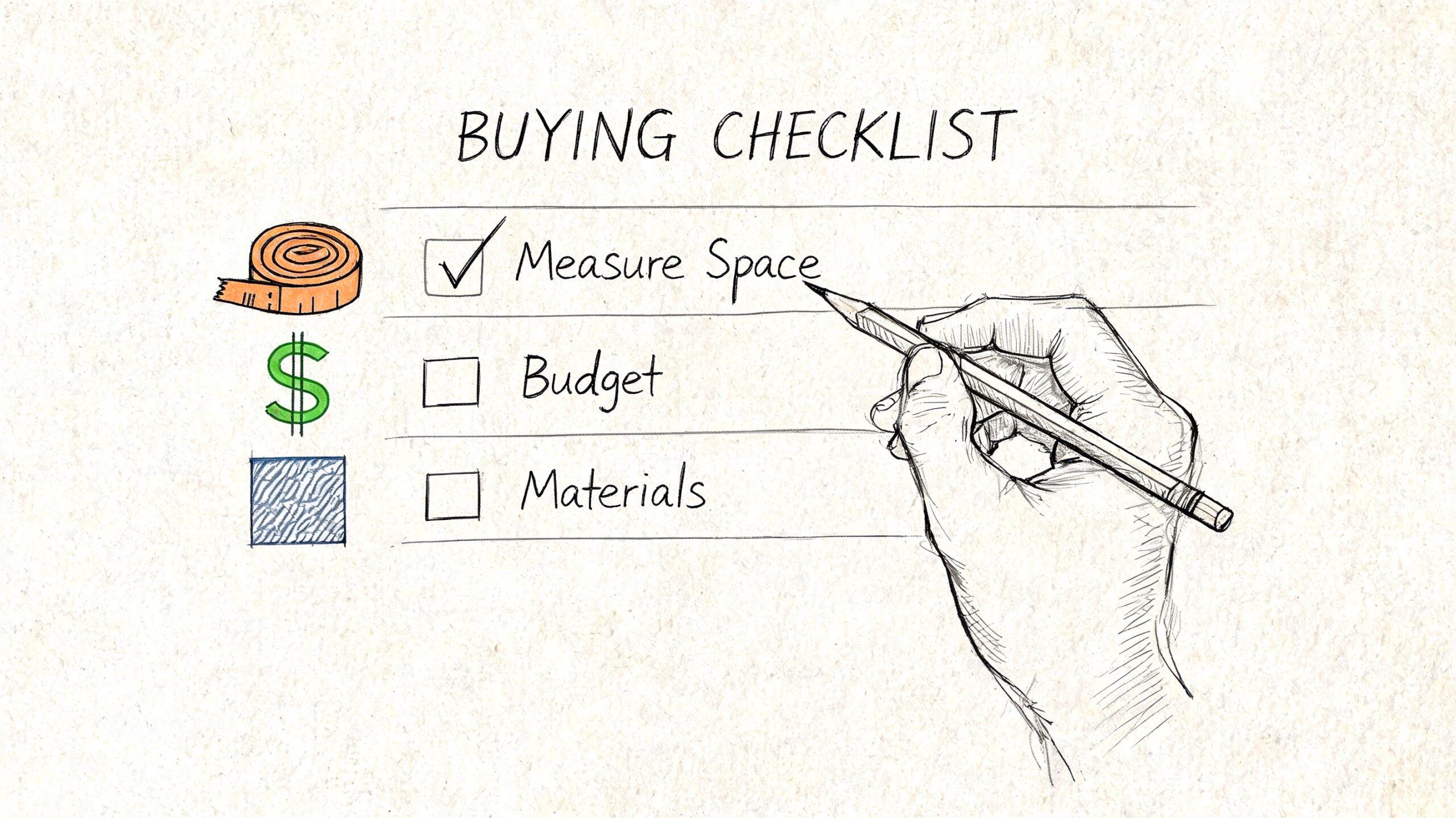
Start with the room, not the product photo
Before you compare finishes or hardware, get clear on what the chest needs to do.
- Measure the wall and note nearby doors, vents, and trim.
- Check the path in so you know it can make it through doorways, halls, and stair turns.
- Decide on the job. Will it hold linens, electronics, serving pieces, or everyday clutter?
- Match the room's weight. A chunky case can overwhelm a light room. A delicate one can disappear against substantial furniture.
Then evaluate the furniture itself
Once the room is clear, judge the piece with a practical eye.
- Open the doors and look at the usable interior, not just the outside appearance.
- Test the hardware for a smooth, solid feel.
- Inspect the finish in good lighting so you can see consistency and texture.
- Think long-term about whether the style will still fit if the room evolves.
A lot of shoppers also want more than a fixed look off the floor. That's where Custom furniture becomes valuable. With brands such as Bassett, buyers may be able to explore finish and style options that create True customization that reflects your home, not a mass-produced catalog.
Buy for your daily routine first, then for your inspiration board.
If you tend to second-guess furniture dimensions, materials, or proportions, don't rush. A slower decision usually leads to a piece you keep much longer.
Find Your Forever Chest at Watts Furniture
The right 2 door chest should make life easier the day it arrives and still look right years later. That usually means choosing with more care than a quick online click allows.
In a local showroom setting, you can judge scale in person, compare finishes accurately, and open the doors yourself. You can also ask better questions. Does this piece fit the room's traffic pattern? Will it complement nearby upholstery? Is the construction strong enough for real use? Those answers are easier to trust when you're working with a team that handles furniture every day.
That's also where the Watts approach stands apart in practical ways. Shoppers in LaGrange, Hogansville, West Point, Pine Mountain, and greater Troup County can use the Interior Design Center at two levels. There's complimentary in-store advice for fabrics, colors, and coordination, and there's a premium design service for fuller room plans and mood boards, with the deposit credited toward the purchase. Add white-glove delivery/setup and the Service Request and Support Hub, and the process feels much more settled from selection to setup.
For buyers who care about longevity, the focus on American-made furniture, customizable options, and pieces chosen for how they live in a home matters. This is how you avoid short-term furniture decisions and move toward a room that feels finished.
If you're also furnishing more than one space, that same guidance can help with Furniture store LaGrange GA needs beyond accent storage, from living room sectionals to Bassett recliners, and even Mattresses LaGrange GA shoppers comparing lines like Serta mattresses with expert help instead of guesswork.
Ready to see how a 2 door chest should look and function in person. Visit the Watts showroom at 212 Commerce Avenue in LaGrange to experience the comfort of La-Z-Boy in person.
Ready to transform your space? Book a consultation with Watts Furniture & Mattress today and let the trusted local team help you curate a home you'll love.