Find Your Perfect Mattress with Our Guides

Living Room Furniture Types: Choose Your Style

You're probably standing in the room right now, looking at a blank wall, an old sofa that's seen better days, or a space that never quite came together. You can see the life that should happen there. Family movie nights, a quiet cup of coffee before work, friends visiting, kids stretched out on the floor, maybe the dog claiming the best seat in the house.
That's why choosing among the many living room furniture types feels harder than it should. A living room isn't just another room. It's where your home does its daily work.
Your Living Room A Foundation for Your Home
In homes across LaGrange, Troup County, West Point, Pine Mountain, and Hogansville, the living room has to do a lot. It has to welcome guests, hold up to daily use, and still feel like your home instead of a furniture showroom. Many homeowners do not struggle because they lack taste. They struggle because there are too many choices, and too many of them are built for quick sale instead of long-term living.
That's why I always start with one simple truth. The living room rises or falls on the quality of its seating.
Statista reports that the global living room furniture segment generated about US$215.6 billion in 2023, and the category is led structurally by Seats & Sofas, which tells you exactly where the center of the room still is: the pieces you sit on every day, not the accessories around them (Statista living room furniture market data and analysis).
Start with the life you want in the room
If you shop by trend first, you usually make an expensive mistake. Start with use.
Ask yourself:
- Daily use: Is this room for TV, conversation, reading, napping, or all of the above?
- Traffic flow: Do people cut through this room to the kitchen, hallway, or back door?
- Household needs: Do you need space for kids, pets, overnight guests, or older family members who need firmer support?
- Visual weight: Does the room need one strong anchor piece or several lighter pieces?
Your living room should feel settled, not staged.
A good room doesn't happen because every piece matches. It happens because the major furniture choices are scaled properly and chosen with some discipline.
Good furniture solves stress, not just space
Most homeowners don't need more options. They need better filters. That's where local guidance matters. After decades of helping families furnish real homes, I can tell you this: furniture built for generations, not just a few seasons is almost always the better buy.
If you're sorting through styles and layouts, these living room furniture ideas are a useful starting point. Then narrow the room down by function, piece by piece, instead of trying to solve the whole thing at once.
The Foundation Sofas Sectionals and Loveseats
Your first major decision is the anchor seat. For most rooms, that means choosing between a sofa, a sectional, or a loveseat. Get this part right and the rest of the room gets easier. Get it wrong and every table, chair, and lamp becomes a compromise.
Choose a sofa when you want flexibility
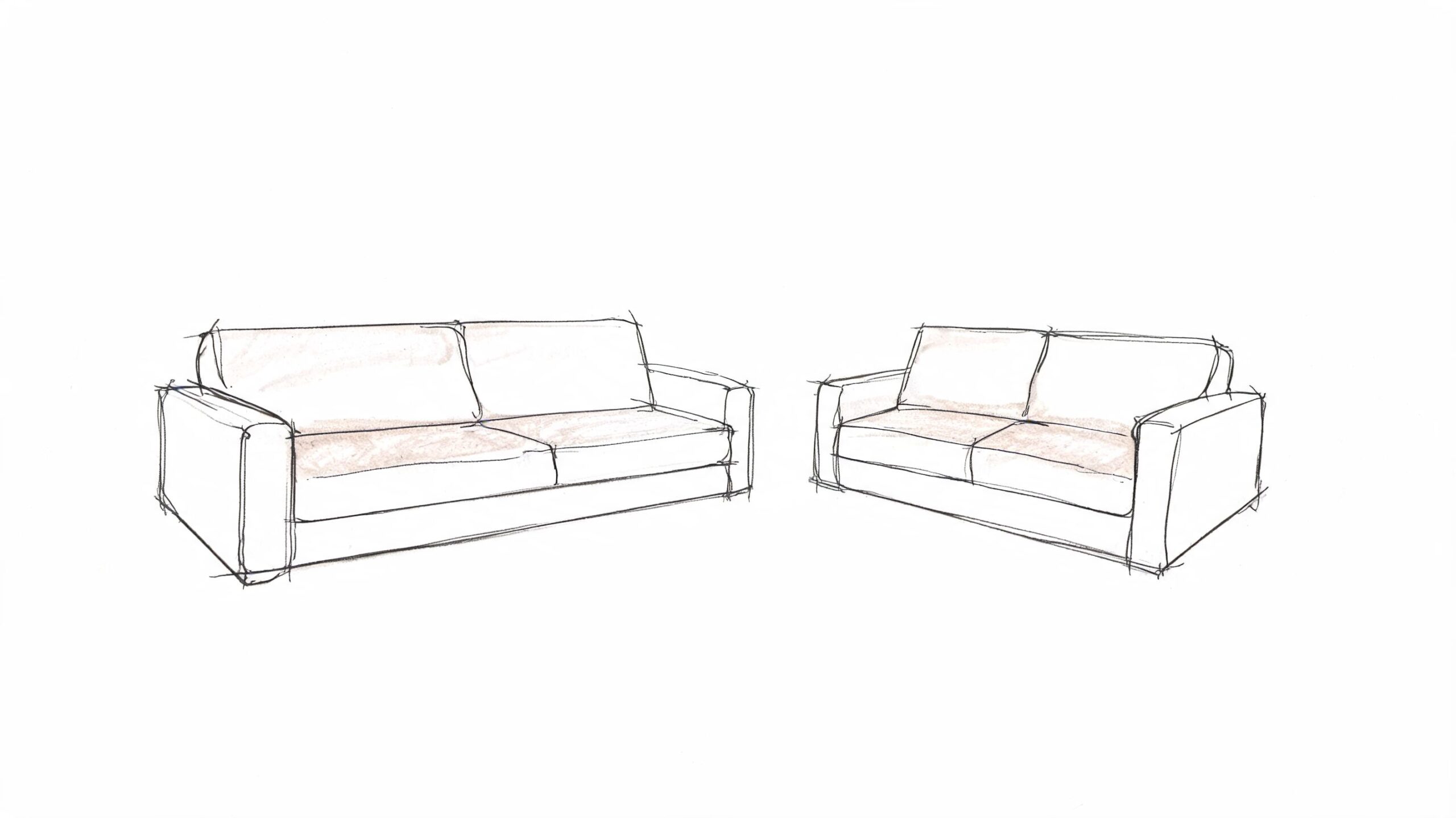
A standard sofa is still the safest, smartest choice for many homes. It gives you a strong visual anchor without locking the room into one fixed layout. If you like to rearrange, move homes, or swap accent pieces over time, a sofa gives you more freedom than a sectional.
I usually recommend a sofa when:
- Your room has multiple traffic paths: Sofas keep the footprint simpler.
- You want easier redesigns: You can change chairs, tables, and rugs without replacing the main seat.
- You prefer a layered room: A sofa plus two chairs often looks more refined than one oversized sectional.
Arm style matters more than most shoppers think. Track arms read cleaner and more modern. Rolled arms feel softer and more traditional. Tight backs look neat. Loose cushions feel more relaxed and are often easier to maintain over time if the cushions can be rotated.
Choose a sectional when the room needs definition
Sectionals are excellent when they're sized correctly. They're also the fastest way to make a room feel crowded if they aren't.
According to Gabberts' living room furniture and design guide, sectional sofas typically run about 120 to 180+ inches in total length, and you need a minimum of 2 feet (60 cm) of clearance around the piece for comfortable movement. That rule matters even more in open-concept homes where the sectional often acts like a soft wall between living, dining, and kitchen areas.
Here's my opinion. If you haven't measured the room, the diagonal, and the doorways, you're not ready to buy a sectional.
Practical rule: A sectional should define the room, not dominate it.
An L-shape works well for open plans and corner anchoring. A chaise-sofa combination suits TV rooms and casual lounging. A large U-shape only makes sense when the room is generous and the seating demand is real. Don't buy a huge sectional for a lifestyle you don't live.
Choose a loveseat only with a purpose
A loveseat is not a default substitute for a sofa. It's a specialty piece. It works in smaller rooms, paired seating groups, offices, upstairs lofts, or as a companion to a full sofa. On its own, it can leave a family room feeling under-furnished.
A loveseat makes sense when:
- You're furnishing a compact room
- You're pairing it with a sofa or sectional
- You want a dedicated two-person seat
- You need scale control more than maximum seating
What I recommend most often
If you want the safest long-term choice, buy the largest properly scaled sofa your room can handle, then build around it.
If your home has an open layout and the room needs structure, a sectional can be the right answer. Just don't guess. Measure first, then choose the configuration. For help with dimensions, scale, and style, this ultimate sofa buying guide for your living room is worth reading before you order anything.
If you want custom furniture, this is also where customization matters. Seat depth, cushion feel, fabric, leather, arm shape, and sectional orientation all change how the room lives day to day. True customization that reflects your home, not a mass-produced catalog, almost always produces a better room than chasing whatever is cheapest and fastest.
Individual Comfort Accent Chairs and Recliners
A living room without secondary seating usually feels unfinished. It may have enough seats on paper, but it won't have balance. Adding accent chairs and recliners helps these pieces earn their place.
Accent chairs add shape and personality
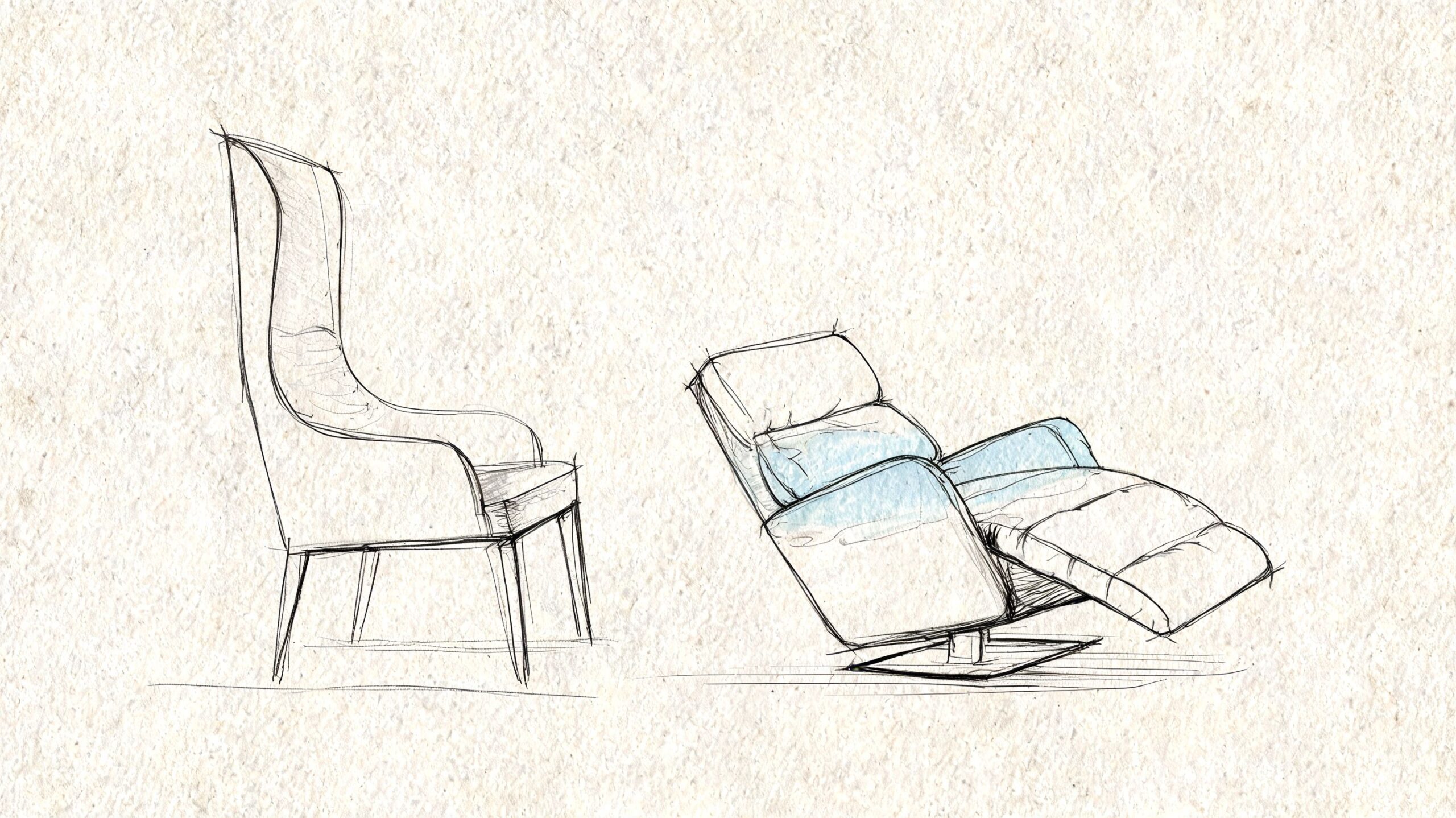
Accent chairs are the jewelry of the room. They let you introduce contrast without committing the whole room to it. If your sofa is neutral, the chair can carry pattern, texture, leather, wood tone, or a stronger silhouette.
Use an accent chair when the room needs:
- A visual break: Too much matching upholstery can make a room feel flat.
- A conversational angle: Chairs help turn a TV room into a room people talk in.
- A specialty seat: Reading, window views, or a corner that needs purpose.
Swivel chairs are especially useful in rooms with more than one focal point. If the space faces both a television and a fireplace, or opens toward another room, a swivel often outperforms a fixed accent chair because it works with the room instead of fighting it.
Recliners have changed, and shoppers know it
A lot of people still picture a recliner as bulky, overstuffed, and hard to style. That's outdated. Today's recliners come in cleaner profiles, smaller scales, and better fabrics and leathers. Some blend into a room so well that guests don't notice they recline until they sit down.
That shift lines up with how people use their homes now. The global recliner market is projected to grow from about USD 5.4 billion in 2024 to USD 8.6 billion by 2034, showing sustained demand for comfort-focused seating in multi-use living spaces (Livingetc awkward living room layout ideas).
That demand makes sense. The living room isn't just for “sitting nicely” anymore. People watch long movies, game, scroll, nap, read, and work from a laptop. Comfort isn't optional.
If one seat in the room becomes everyone's favorite, that's usually the recliner.
My advice on choosing one
Don't buy a recliner because you think you should. Buy one because one person in your household will use it constantly. Then choose the style carefully.
Look at these factors:
- Back height: Taller backs support the neck better for TV viewing and rest.
- Seat depth: A deep seat can be great for lounging, but not for every body type.
- Motion type: Some people want simple manual function. Others prefer power motion for easier adjustment.
- Cover choice: Fabric feels warmer and softer. Leather often looks sharper and is easier to wipe down.
If you're comparing silhouettes and scale, this guide to the right accent chair for living room use can help you avoid pieces that look good in a photo but feel wrong in person.
For shoppers who want specific comfort features and fabric choices, Custom La-Z-Boy recliners and Bassett recliners are usually where the conversation gets serious. Comfort should fit the room, not hijack it.
Essential Surfaces Coffee Tables and Side Tables
A lot of living rooms fail on the small pieces, not the big ones. People buy the sofa, maybe the chair, then treat the tables like filler. That's backward. Tables control convenience, reach, rhythm, and flow.
Coffee tables should serve the seat, not compete with it
A coffee table belongs to the seating group. It shouldn't feel stranded in the middle of the room, and it shouldn't be so large that people have to shimmy around it.
I prefer to choose coffee tables by function first:
- Rectangular tables: Best with standard sofas and longer seating groups
- Round tables: Better for tighter walkways and homes with kids because corners aren't jutting into the path
- Square tables: Strong in balanced seating arrangements with sectionals or four chairs
- Ottoman-style tables: Softer look, more forgiving, useful when you want one piece to do more than one job
A coffee table should support the conversation area. It's there for drinks, books, remotes, a tray, or a lamp if the room needs layered lighting. It isn't there to show off at the expense of comfort.
Side tables solve everyday irritation
End tables and side tables don't get much glory, but they do a lot of work. If someone can't set down a drink, place reading glasses, or reach a lamp without leaning halfway across the room, the layout isn't finished.
Good side tables can do different jobs at once. One may hold a lamp. Another may catch a coffee mug and the remote. They don't all need to match, but they do need to relate.
A few combinations work especially well:
- Wood with upholstery: Warms up soft seating and adds substance
- Metal with fabric: Sharpens a softer room
- Glass in a tight room: Keeps the sightline lighter when the space feels visually crowded
Console tables give the room a backbone
Console tables are useful behind floating sofas, against long walls, or in transitional spaces where the living room opens into another area. They help a room feel intentional. They can also carry lighting and decorative weight without crowding the main seating zone.
If you want practical styling direction, this foolproof guide to the perfectly styled coffee table is a smart next read. The right table mix makes the room easier to live in every single day.
Smart Storage Media Consoles and Bookcases
Storage in a living room should never look accidental. If cords, remotes, toys, games, throws, and devices are part of daily life, then the furniture needs to account for them from the start.
Buy a media console like it matters
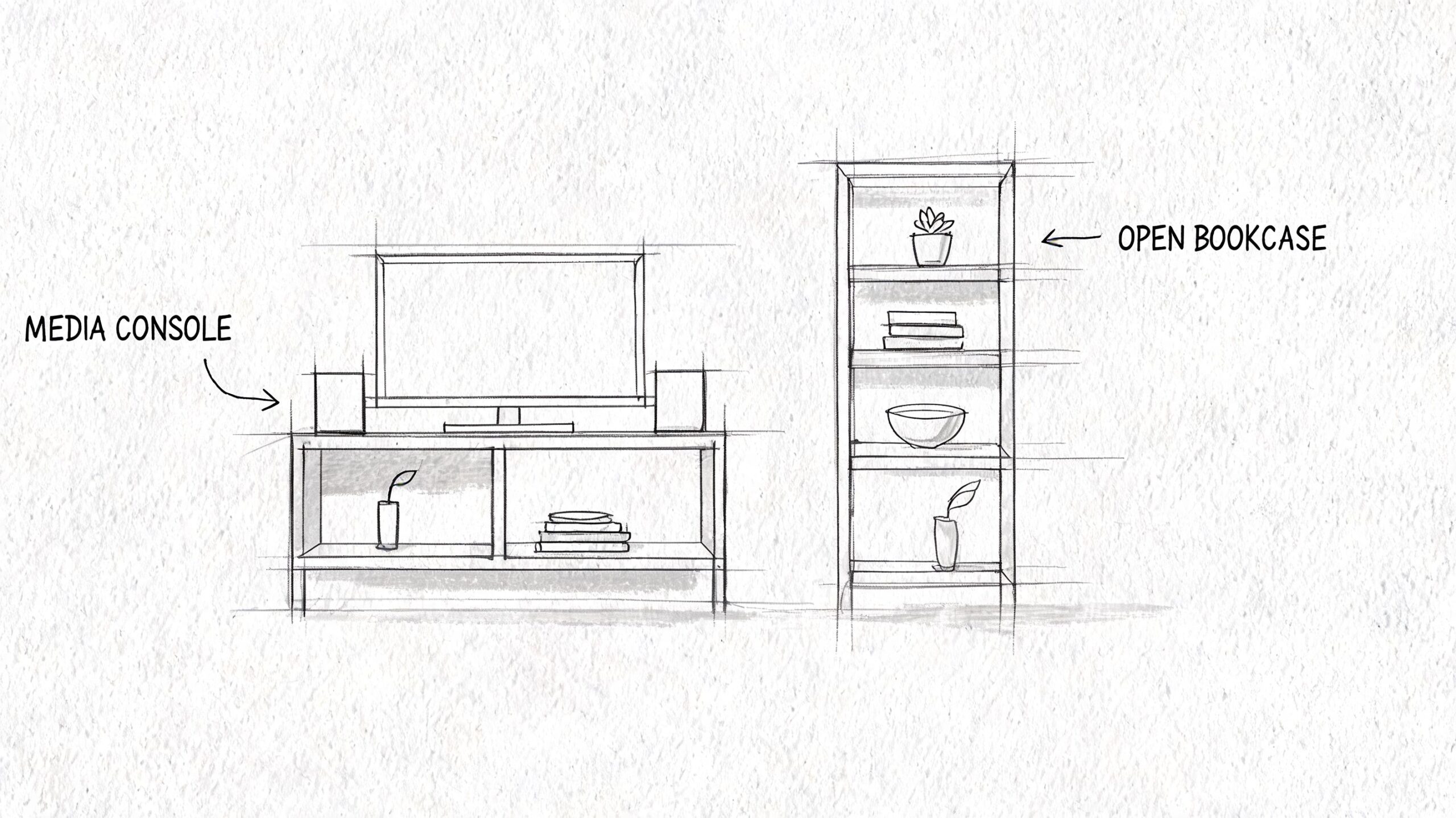
A media console is often one of the biggest hard-surface pieces in the room. Treating it like an afterthought is a mistake. It anchors the television wall, holds equipment, and contributes a lot of the room's visual weight.
Choose one based on these practical needs:
- Closed storage: Better if you want a cleaner look and less visual clutter
- Open shelving: Useful for components that need easy access
- Wood construction: Better for long-term stability and a richer finish presence
- Proper width: The console should support the scale of the television and wall, not look undersized
Cheap media pieces often look passable online and disappointing in a real room. Thin materials, weak hardware, and hollow construction tend to show up fast once you live with them.
Solid wood still wins
American-made furniture demonstrates its worth. Premium sofas and furniture often use solid hardwood frames and high-density foam designed for 7 to 10 years of daily use, while entry-level pieces with particleboard frames may last only 3 to 5 years (Dimensions living room furniture collection). That durability gap matters in storage pieces too, especially drawers, doors, shelving, and top surfaces that take daily wear.
If you want furniture that still feels respectable years from now, I'd lean toward collections from Kincaid and Bassett before I'd spend money on something built to look good for one move and one lease cycle.
Better storage furniture doesn't just hide clutter. It keeps the room from feeling temporary.
Bookcases and cabinets should earn their footprint
A bookcase can display books, framed photos, baskets, and collected pieces that make a house feel personal. An accent cabinet can hide the mess that every family accumulates. Both can add needed height when a room is heavy on low furniture.
The key is restraint. Don't crowd the room with storage just because there's a wall available. Every case piece should either solve a problem or bring strong visual balance.
For sizing and style ideas, this guide on how to shop for TV stands helps you think beyond “Will it hold the TV?” and toward “Will it make the room look finished?”
True customization that reflects your home, not a mass-produced catalog, matters here too. Wood tone, finish depth, hardware, and scale all affect whether storage blends in or cheapens the room.
Versatile Pieces Ottomans and Benches
Some of the most useful living room furniture types are the least flashy. Ottomans and benches rarely get top billing, but they solve real problems fast.
Ottomans pull more weight than people expect
A good ottoman can act as a footrest, extra seating, a soft-edged coffee table, or hidden storage. That kind of flexibility matters in family rooms, smaller homes, and spaces that have to work hard every day.
I like ottomans when you need one piece to do several jobs:
- Footrest: Obvious, but still one of the best ways to make seating more comfortable
- Extra seat: Handy when guests come over
- Soft coffee table: Add a tray and you get function without hard corners
- Storage: Great for blankets, kids' items, or the things you use often but don't want on display
Benches work where chairs can't
A bench is often the smarter choice when individual chairs would clutter the room. They fit under windows, behind sofas, along open walls, and in transition areas near an entry or hallway opening. They're especially useful in homes where space changes from room to room and every piece has to justify itself.
The best benches feel intentional, not leftover. Upholstered benches soften a room. Wood benches bring structure. Storage benches help keep the room tidy without adding visual noise.
If your living room has to flex between daily family use and occasional entertaining, these are the pieces that help make the room easier to live in.
Bringing It All Together With Expert Guidance
You get the sofa home, add a chair you liked in the store, bring in a coffee table later, and suddenly the room feels off. The problem usually is not the individual pieces. It is the mix. Size, seat height, fabric, wood tone, walking space, and storage all need to work as one plan.
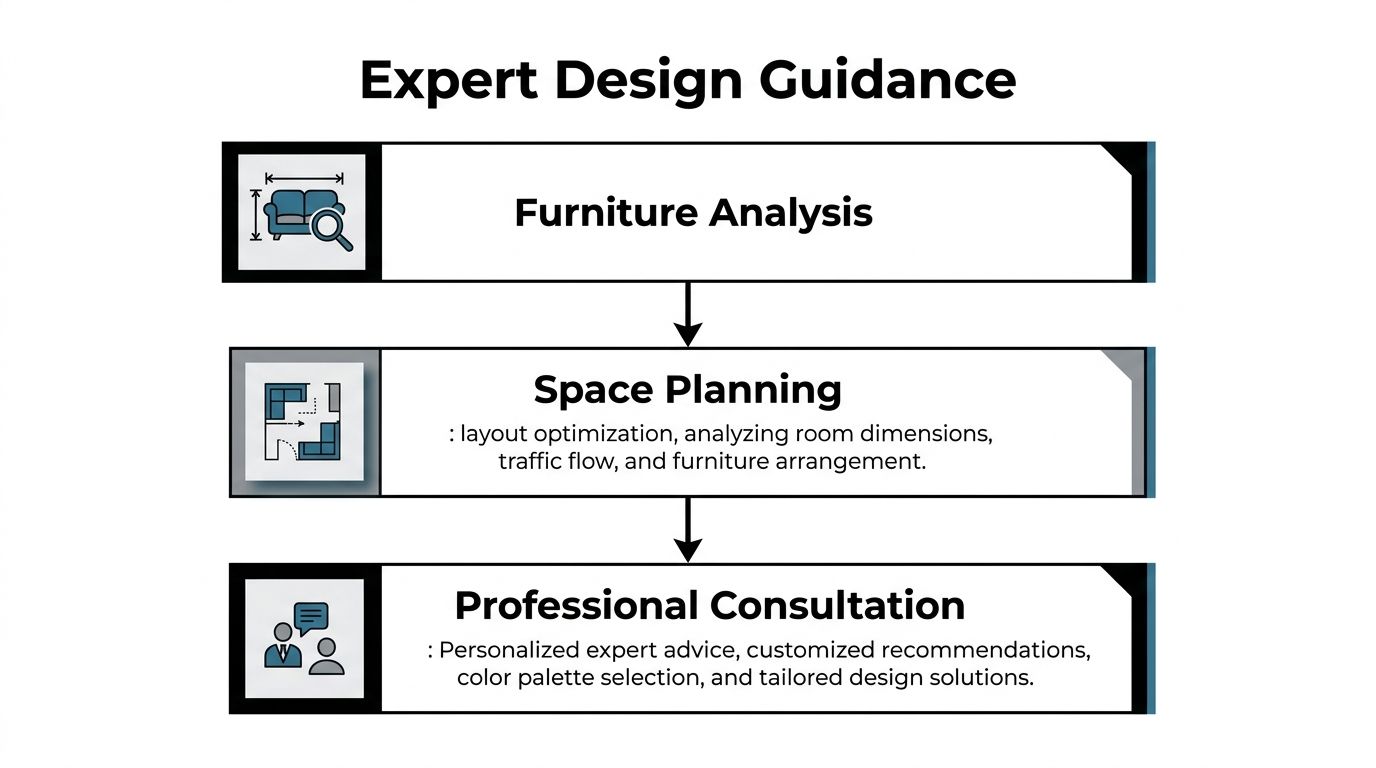
Flexibility matters. Service matters more.
Modular furniture gets a lot of attention because it promises options. Options are useful, but they are not the whole story. A living room lasts longer when you can replace a cushion, order the same fabric again, or repair a part instead of starting over.
As Bob Mills Furniture's awkward living room layout article points out, awkward rooms need thoughtful planning, not random purchases. I would add one more standard. Buy from a store that can still help you after delivery. That is one of the clearest differences between a local, service-driven business and a cart checkout on a website.
That matters in real homes around LaGrange. Kids grow up. Dogs claim a corner cushion. People rearrange rooms, downsize, or move to a different house. Furniture that can be maintained, adjusted, or reordered holds its value far better than furniture that is treated as disposable.
The kind of help that actually saves you money
Good design help is not about making the room look expensive. It is about preventing expensive mistakes.
Sometimes that means narrowing down two fabrics that both look good under your lighting. Sometimes it means catching a scale problem before a sectional blocks a walkway. Sometimes it means choosing a cleaner-lined sofa because your room already has enough visual weight from a fireplace, bookcase, or heavy wood tables.
The right guidance usually covers four things:
- Room use: how your household spends time in the space
- Layout: furniture placement that keeps the room open and comfortable
- Materials: fabrics, leather, finishes, and textures that belong together
- Long-term ownership: delivery access, future service, and how the furniture will wear over time
That is where a family business with history earns its keep. Watts Furniture & Mattress has been helping local families furnish real homes for decades, and that kind of experience shows up in the details. You get practical in-store help with fabrics and colors, and if you need more direction, you can get a full design plan with space planning and mood boards. That is a far better way to buy than guessing from a screen and hoping the scale, color, and comfort feel right when the truck shows up.
The best living rooms are not built by buying more furniture. They are built by choosing fewer, better pieces that fit the room and the people using it.
My final advice
Start with the main seat. Get that right first. Then add the chair, tables, storage, and flexible pieces that support the way your household lives every day.
Reconsider the room before you buy the last piece. Ask whether it feels comfortable, easy to move through, and durable enough for the next several years.
That is the standard worth using. A living room should feel settled, personal, and ready for real life.