Find Your Perfect Mattress with Our Guides

How to Choose a Sectional Sofa: A Definitive Guide


The old sofa usually tells on itself before you do. One cushion has become the family favorite, one arm has turned into a pillow, and nobody can quite agree on where to sit when everyone ends up in the living room at once. The room feels crowded and unfinished at the same time. You want it to feel gathered, comfortable, and easy to live in.
That’s why people start looking at sectionals.
A good sectional can turn a scattered room into a real living space. It gives everyone a place to land, helps define an open layout, and makes movie nights, game days, and everyday lounging feel a lot more natural. The problem is that sectionals also create expensive mistakes when people buy with their eyes instead of their floor plan.
Most online advice makes it sound simple. Pick a shape. Pick a fabric. Click buy. That’s exactly how people end up with a chaise blocking a walkway, a corner seat nobody likes, or a sofa that looked roomy on a screen and feels oversized at home.
If you’re wondering how to choose a sectional sofa, start with this thought. You are not just buying seats. You are choosing how your room works every day. The right sectional should fit your space, your people, and your routine. It should also hold up long enough to justify bringing it through your front door in the first place.
Around LaGrange, West Point, Pine Mountain, and across Troup County, plenty of homeowners are furnishing real family rooms, not catalog photo shoots. That takes a more practical approach. You need clear measurements, honest guidance, and options that reflect the way you live. That’s what this guide is built to do.
Introduction
A sectional usually starts as a solution to a very familiar problem. The living room has enough square footage, but not enough usable seating. One person ends up in a recliner, two squeeze onto the sofa, and somebody drags in a dining chair when company comes over. The room works, but it never feels finished.
Then you start shopping and hit the wall. Left arm. Right arm. Chaise. Corner wedge. Modular. Reclining. Storage. Sleeper. Leather. Performance fabric. After about ten minutes, a piece of furniture starts sounding like a geometry exam.
That confusion is normal. Sectionals ask you to make several decisions at once, and every one of them affects how your room looks and feels. If you get the size wrong, traffic flow suffers. If you get the layout wrong, the room always feels a little awkward. If you chase style and ignore construction, you’ll notice it every time the cushions lose support.
A sectional should solve problems, not create new ones.
The good news is that choosing one doesn’t have to be complicated when you break it into the right questions. How much room do you really have? Which shape supports the way your household uses the space? What kind of comfort feels right when you sit down for an hour, not just a minute? And what upholstery fits your home instead of fighting it?
Those are practical questions, and they’re the ones that matter more than trends. A sectional can be one of the smartest living room purchases you make. It can also be the biggest and most stubborn thing in the room if you rush it. Slow down, measure carefully, and make decisions in the right order. That’s how you buy something you’ll still be glad to own years from now.
Beyond Measurements Planning Your Room for Real Life
Saturday evening proves whether a sectional was chosen well. Somebody is carrying in pizza, a kid cuts through the room at full speed, someone else wants a lamp within reach, and the dog has already claimed the corner cushion. If the sofa blocks that routine, it was the wrong choice, even if the dimensions looked fine on paper.
A good room plan starts with how people live in the space. Wall length matters. Daily habits matter more. That is the part online size charts and showroom tags usually miss, and it is exactly where working with a local team helps. At Watts, we see shoppers relax once the conversation shifts from "Will it fit?" to "Will this room still work on a normal Tuesday night?"
Start with traffic flow
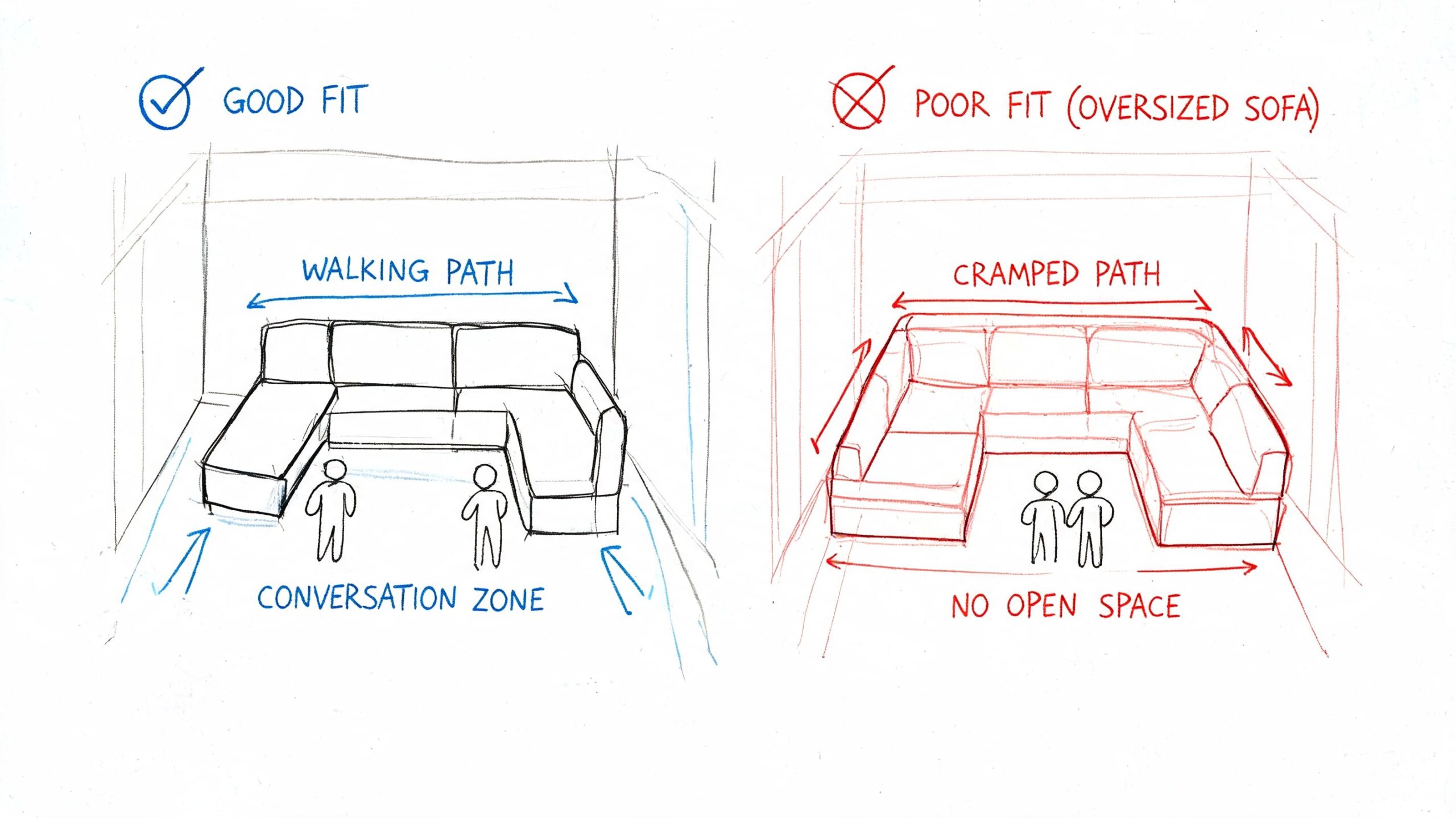
Before you choose arms, cushions, or chaise length, study the paths people use without thinking.
- Entry paths: How people come in and out of the room
- Everyday routes: The walk to the kitchen, hallway, coffee table, or favorite lamp
- Bottlenecks: Tight spots near doors, stairs, fireplaces, and adjacent furniture
Chairish advises leaving clear walkway space around a sectional and physically marking its footprint before buying in its sectional couch guide. That advice is sound because traffic problems show up fast in real life. If people have to turn sideways, reroute around the chaise, or bump a knee every time they pass through, the sectional is too large or shaped wrong for the room.
I tell customers this all the time. You do not feel square footage. You feel interruption.
Tape the footprint on the floor
Painter's tape will save you from an expensive mistake. Mark the full outline on the floor, including the depth of the chaise, the back, and any recliner extension if you are considering motion furniture. Then live with that outline for a day or two.
Walk through the room with a laundry basket. Sit where an end table would go. Open nearby doors. See whether a side chair still fits without crowding the room.
That simple test beats any online room planner because it shows what your household will deal with once the sectional arrives. If you want a practical step-by-step, use this guide on how to measure a room for furniture.
Good rule: If the taped outline already feels crowded, the real sectional will feel worse.
Plan the room as a living area, not a box
Sectionals shape a room. They do more than fill a corner.
In an open floor plan, the right sectional can define the living area without cutting it off from the rest of the house. In a family room, it should support conversation, TV watching, reading, and the ordinary back-and-forth of daily life. That means looking beyond the walls and checking the rest of the setup too.
| Room question | What to decide |
|---|---|
| Main activity | Lounging, conversation, TV, entertaining, or a mix |
| Focal point | Fireplace, television, windows, or conversation area |
| Support pieces | Space for end tables, lamps, ottomans, and side chairs |
| Breathing room | Whether the seating area feels settled instead of packed in |
Many rooms look better when the sectional sits slightly off the wall instead of being shoved tight against it. That small gap can make the arrangement feel more intentional and less cramped. It also gives you more flexibility with lamps, curtains, and side tables.
Match the scale to your household
Shoppers often buy for the rare big gathering and ignore the other 350 days of the year. That is backwards. Buy for the way your household lives every week, then make sure you still have enough flexible seating for guests.
A sectional should hold the people who use it most, support the posture they prefer, and leave enough open floor for the room to feel comfortable. If you have tall family members, that changes seat depth and back height. If someone naps there often, chaise placement matters. If knees or backs are a concern, getting in and out matters just as much as stretching out.
This is another place where local guidance earns its keep. A good furniture partner does more than repeat dimensions from a product page. They help confirm measurements, compare real proportions, and point out issues that are easy to miss online, like an oversized arm that steals usable seat space or a chaise that lands in the only natural walkway.
That kind of planning gives you a sectional that fits your room and your routine. That is the goal.
Finding Your Perfect Fit Configuration and Scale
A sectional should guide the room, not boss it around. You ought to be able to walk in, sit down, and move through the space without explaining the furniture to anybody.
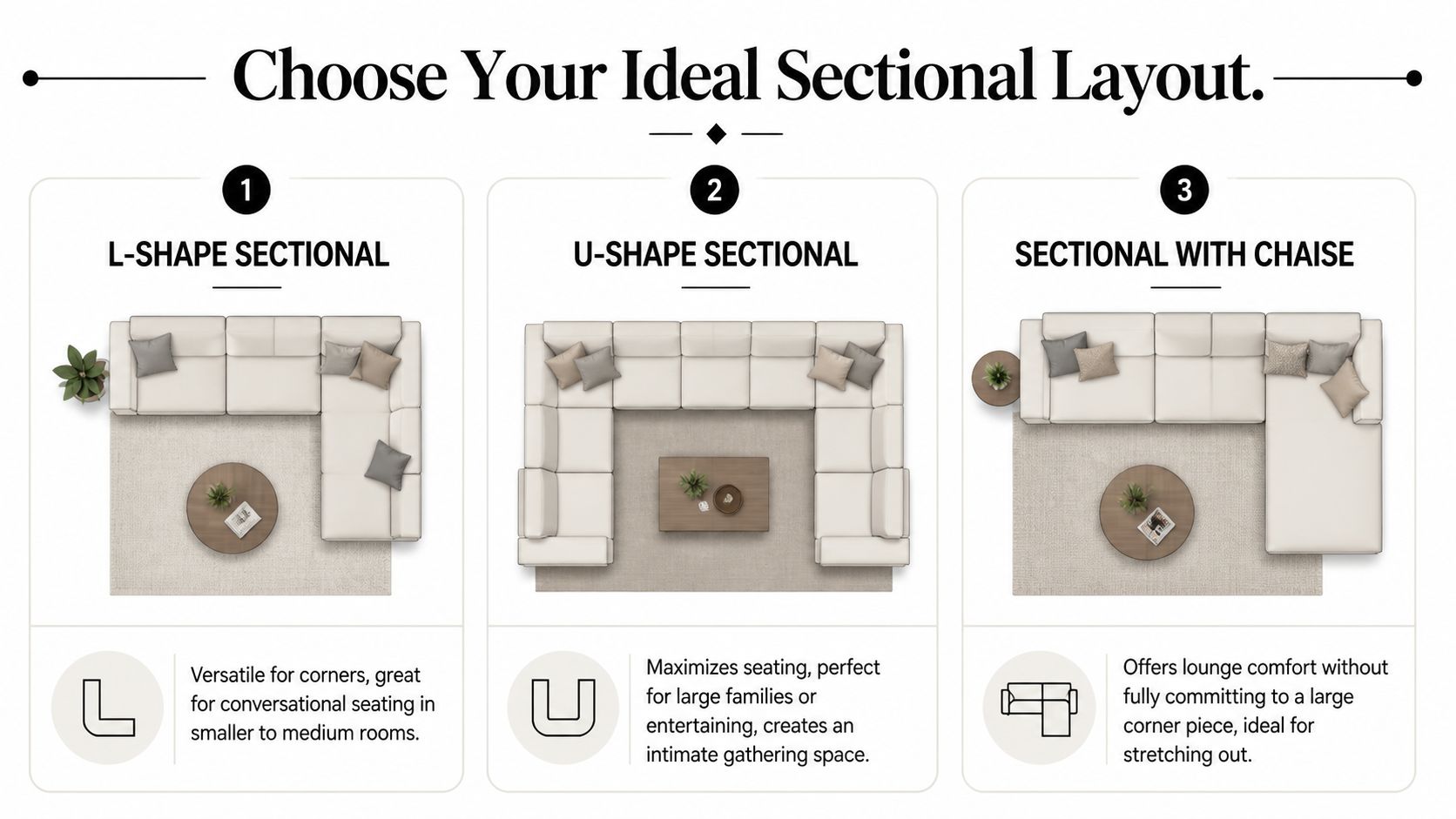
Choose the shape that fits the way the room works
Start with the floor plan, then pick the configuration that solves the room's actual job.
- L-shape: My go-to for many family rooms. It anchors a corner or defines an open seating area without making the room feel closed off.
- U-shape: Best in a large space where several people gather at once and you still have room for easy traffic on all sides.
- Sectional with chaise: A smart choice for households that lounge every night but do not need the footprint of a full wraparound sectional.
If you want a useful point of reference, this 4-piece sectional layout shows how a multi-piece design can create structure without looking bulky.
Online, these layouts often look smaller than they feel in person. That is where a local design partner saves people from expensive mistakes. At Watts, we help sort out whether the corner belongs on the fireplace side, whether a chaise blocks the better walkway, and whether the room wants one continuous sectional or a simpler arrangement with more breathing room.
Learn RAF and LAF once
These terms confuse shoppers more than they should.
Right-Arm Facing and Left-Arm Facing are identified while you stand facing the sectional. If the arm is on your right, it is Right-Arm Facing. If the arm is on your left, it is Left-Arm Facing. The same rule usually applies to chaise direction.
Use this test in the room before you order:
- Stand where the coffee table will sit.
- Face the sectional.
- Note which side the arm or chaise falls on.
That one habit prevents a lot of wrong orders. Plenty of shoppers describe the piece from the seat instead of from the room, and that is how a sectional arrives backward.
Get the scale right
Shape alone will not save a bad fit. A sectional can have the right configuration and still feel clumsy if the arms are too thick, the seats are too deep for the people using it, or the chaise is too short to be comfortable.
Pay attention to usable space, not just overall width. Big rolled arms can steal several inches from each seat. A low back may look clean in a photo and give poor support in real life. A chaise that appears generous on a screen can leave taller family members with nowhere to put their legs.
Use this quick guide:
| Household need | Better fit |
|---|---|
| Smaller room | Compact L-shape or sofa with chaise |
| Open-concept layout | L-shape that defines the seating area |
| Frequent lounging | Chaise sized for the person who uses it most |
| Large family room | U-shape only if walkways and table access still work |
This is another place where in-person help matters. A good local team does more than read dimensions off a tag. They compare proportions across brands, verify orientation, and flag the details that generic online guides miss, like a wedge that pushes the coffee table too far out or a corner seat that looks roomy but sits awkwardly.
Get the configuration right, and the whole room settles down. That is what you are after.
What's Inside Matters Evaluating Construction and Comfort
A sectional can look beautiful on the sales floor and still be a poor purchase. That’s why I always tell people to stop obsessing over silhouette for a minute and ask what’s under the fabric.
Quality quickly distinguishes itself. A well-built sectional keeps its shape, support, and comfort. A cheaply made one starts giving ground almost immediately, and once a frame loosens or cushions flatten, no styling trick can save it.
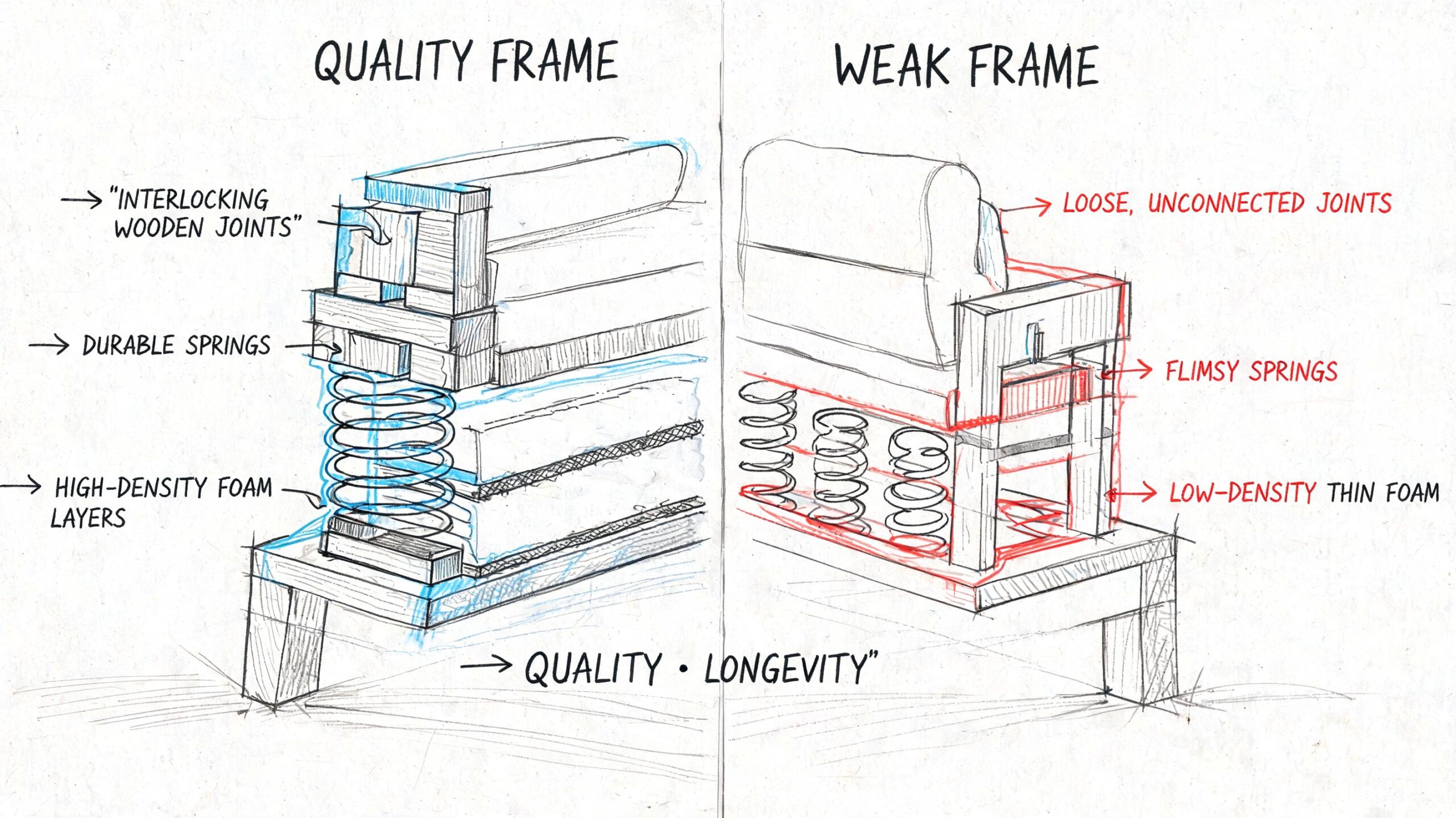
Start with the frame
If you want furniture built for generations, not just a few seasons, start with frame construction. This is not glamorous, but it’s the backbone of the whole piece.
When you sit on a sectional, the frame carries the load every single day. It handles weight shifts, kids flopping down after school, guests perching on the arm when there aren’t enough seats, and all the regular use a family room sees. If that frame is weak, you’ll feel it.
Look for the basics of serious construction:
- Hardwood framing: A stronger long-term choice than bargain-grade materials.
- Tight joints: A sectional shouldn’t feel loose, creaky, or flexible when pressure shifts.
- Balanced support: The seat should feel stable from end to end, not firm in one spot and hollow in another.
Mass-produced furniture often wins shoppers with appearance and price. It loses them later with sagging, wobble, and uneven comfort. That’s the part people don’t see in the product photo.
Suspension and cushions tell you how it will age
Comfort on day one doesn’t mean comfort next year. The internal support system matters just as much as the frame. Springs, webbing, and cushion cores all influence whether the sectional stays supportive or slowly collapses into a row of soft craters.
Here’s the plain-English test I like. Sit down normally, then shift your position the way you would at home. Lean back. Scoot to the corner. Sit on the chaise edge. A good sectional should recover well and feel supportive in more than one posture.
Questions worth asking in the showroom:
- What supports the seats underneath the cushions?
- What kind of cushion fill is used?
- Are the seat cushions designed to hold shape with regular use?
- Does the corner seat feel as supportive as the center seats?
If you want more guidance on long-term quality, this article on how long furniture should last is a useful companion.
American-made quality still matters
This is one area where I’m opinionated. If you care about longevity, construction standards matter more than trend appeal. Well-made upholstery from American-made furniture lines often reflects better attention to frame integrity, tailoring, and replaceable or serviceable components.
That’s one reason shoppers looking for custom furniture often gravitate toward names like:
- Kincaid
- Bassett
- La-Z-Boy
Those brands aren’t all built the same way, and every collection deserves a close look. But in general, better upholstery lines give you more transparency about how the piece is made and more confidence that it wasn’t designed to be disposable.
Cheap sectionals often feel fine when they’re empty on a sales floor. Real life exposes them.
Don’t confuse softness with comfort
A sectional that swallows you in the first thirty seconds can be miserable after an hour. Deep sink-in softness sounds nice until the seat loses support and standing up becomes work. The right comfort depends on who lives in the house and how the sectional gets used.
Some households want a supportive sit for conversation and everyday seating. Others want a deeper lounge feel for family movie nights. Neither is wrong. But don’t assume plush equals premium.
Comfort should feel intentional. The back should support you. The seat should hold you up. The cushions should feel like they were made to be used, not just admired.
Designing Your Dream Sectional Fabric Color and Customization
You can get the size right, spend good money, and still end up with a sectional that feels wrong the minute it lands in your home. That usually happens at the fabric and color stage. Online photos look clean and convincing. Real rooms have shadows, warm bulbs, kids, pets, and people who live there.
That is why I treat upholstery selection as a use decision first and a style decision second. The fabric has to wear well, feel right, and still look good at 7 p.m. under your lamps, not just in a bright studio photo.
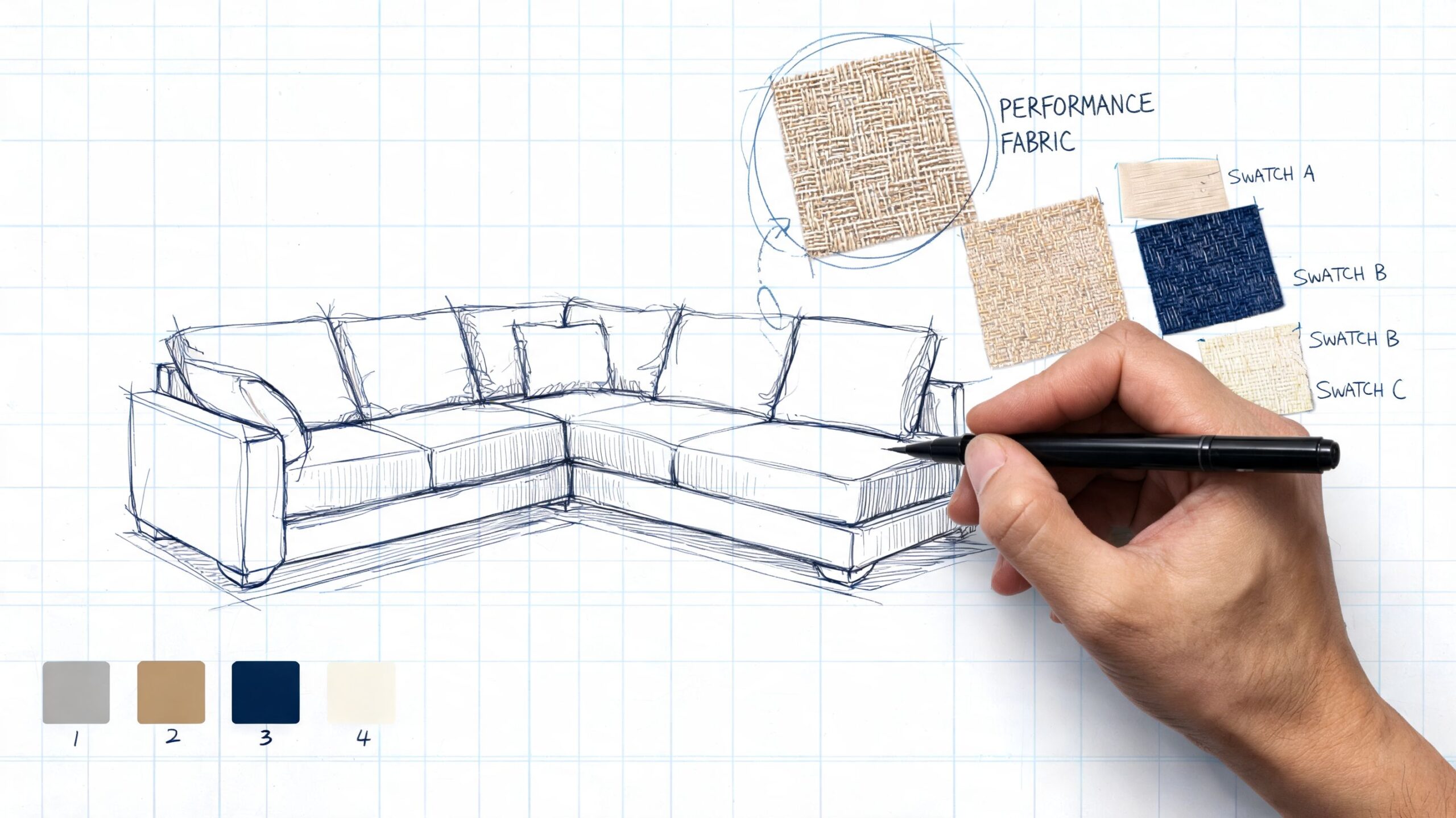
Touch it before you trust it
A swatch on a screen cannot show hand, weight, sheen, or how a fabric changes in your light. It cannot tell you whether a “soft neutral” reads creamy, gray, or flat in your room. It also cannot tell you if the weave is going to bother you after an hour of sitting on it.
See it in person. Sit on it. Rub the fabric between your fingers. Hold it next to your flooring, paint, and rug if you can.
Pay close attention when you compare:
- Performance fabrics: A smart choice for busy family rooms and everyday messes.
- Leather: Classic, durable, and a strong pick for buyers who want character that improves with age.
- Textured weaves and soft neutrals: Beautiful, but much more dependent on lighting and surrounding finishes than shoppers expect.
Good design help saves costly mistakes. Watts Furniture & Mattress offers in-store design assistance that helps shoppers narrow fabric and color options based on the room, the household, and how much upkeep they are willing to do. That kind of expert guidance beats guessing from a product page, and it solves one of the biggest problems with online shopping. You do not have to hope you chose well. You can verify it before you buy.
Fit the upholstery to the household
Choose fabric for the way the room gets used on an ordinary Tuesday, not for the way a showroom vignette looks.
A formal room can handle a more refined texture or a richer finish. A main family room needs forgiveness. If children climb across the cushions after school, or a dog claims the same corner every evening, pick an upholstery that hides wear and cleans up without drama.
Here is the simple version:
| Household reality | Better direction |
|---|---|
| Kids pile on after school | Durable fabric with forgiving texture |
| Pets claim the corner seat | Upholstery that handles regular use gracefully |
| You want a polished, classic look | Leather or a refined woven fabric |
| You redecorate often | Flexible neutral tones |
Honesty helps here. The best custom sectional is not the one with the fanciest fabric card. It is the one that still looks right and feels right after years of daily use.
If you want help sorting through materials, this guide on how to choose upholstery fabric for your sofa and sectional is a useful next read.
Comfort is personal, not generic
Fabric and color get attention first. Ergonomics decide whether you keep loving the sectional.
Seat depth, arm height, back support, and chaise placement all affect day-to-day comfort. A deep seat can be perfect for a tall lounger and miserable for someone shorter who wants support behind the knees and back. Low, sleek arms may look sharp and still be a poor choice for an older family member who likes to lean or push up when standing. Joint issues matter too, and chaise placement should reflect how your household relaxes, not just which side looks better in a floor plan. The team at Furniture Academy touches on several of these points in their video on ergonomic sectional considerations.
The right sectional should fit the room and the people using it.
That is another place a local showroom earns its keep. A good design partner does more than fan out fabric books. They help you compare finishes, confirm how the color reads in person, and match the final build to the way your family sits, lounges, and lives. That is how you end up with a sectional that feels personal, practical, and worth bringing home.
More Than a Sofa Sectionals with Smart Functionality
A sectional doesn’t have to be just a big sofa. In the right configuration, it becomes the command center of the living room. That matters for families who use one room for everything, from watching football to hosting overnight guests.
The best add-ons aren’t gimmicks. They solve real problems.
Features that actually improve daily life
Reclining seats are the first thing many shoppers ask about, and for good reason. If your household likes to stretch out after a long day, built-in recliners can turn a sectional from decent seating into the seat everybody wants. That’s one place where Custom La-Z-Boy recliners built into sectional layouts make a lot of sense, especially for buyers who want lounge comfort without adding separate chairs.
Other practical upgrades can be just as useful:
- Sleeper options: Helpful if your home needs guest space without dedicating a whole room to it.
- Storage chaises: Great for stashing throws, pillows, or the things that usually end up draped over an arm.
- Consoles with cupholders or charging features: Worth considering if the sectional is the main media seating zone.
- Power reclining sections: A strong choice for households that prioritize comfort and ease.
These features can also help a sectional work harder in a smaller home. Instead of adding more furniture, you build more function into the main piece.
Match the function to the room
Not every sectional needs every feature. In fact, piling on too many can make the piece bulky and visually heavy. Pick the upgrades that solve a real issue in your home.
A simple way to approach the decision:
- If the room is mostly for conversation, keep the layout cleaner.
- If the room is the family movie hub, reclining seats deserve a hard look.
- If guests stay over regularly, a sleeper can earn its footprint.
- If clutter gathers fast, storage is useful, not optional.
There’s also a comfort advantage here for multi-generational households. Reclining components can be easier for some people to use than a fixed deep seat. That kind of function matters more than trend-driven styling.
Don’t buy features you won’t use
Restraint helps. A sectional with every possible upgrade sounds exciting until you realize it no longer fits the room or suits the way you live. The smartest functional sectional is the one that supports your routine without turning into a gadget.
For shoppers considering Bassett recliners, integrated recline options, or other custom furniture configurations, the same rule applies. Don’t choose what sounds impressive. Choose what your household will use every week.
A sectional should make home life easier. If a feature doesn’t do that, skip it.
From Showroom to Living Room The Watts Experience
You finally pick a sectional you love. Then it arrives too large for the doorway, the chaise blocks the traffic path, and the fabric that looked warm on a screen reads cold in your room. That mess usually starts long before delivery. It starts with buying without enough real guidance.
A sectional asks for more than a checkout button. You need someone to confirm the measurements, question the layout, and steer you away from choices that look good online but fall flat in daily use. That is where a local store earns its keep.
Buy with your next few years in mind
Sectionals are not the easiest pieces to force into a new floor plan after a move. Homzie Designs makes that point clearly in Homzie Designs’ sectional buying guide. If your home situation may change soon, choose flexibility on purpose. Modular pieces and simpler configurations usually age better across different rooms.
If you are settling into a long-term home in LaGrange or nearby, a sectional can be one of the smartest furniture purchases you make. If a move is likely, buy with that reality in mind now. A good advisor will tell you the truth before you spend the money.
Good service cuts down expensive mistakes
Online shopping makes everything look simple. Large upholstery is not simple.
At Watts, the process should answer practical questions before the order is written. Will the sectional clear the door? Does the corner shape work with your traffic flow? Is the seat depth comfortable for the people who will use it every night, not just for five minutes in a photo-perfect setup? Those are the questions that protect you from buyer's remorse.
Useful help should include:
- In-store design guidance for narrowing fabrics, colors, and finishes
- Room planning help that verifies scale and layout before you commit
- Delivery and setup that places the piece correctly and checks every component
- Support after the sale if something needs adjustment or service
For large pieces like sectionals, white-glove delivery and setup service matters because proper placement and assembly are part of the purchase, not an afterthought.
Pay for quality without rushing the decision
Financing can help if it keeps you in a better-built sectional instead of pushing you toward the quickest cheap option. That only works if the piece is worth financing in the first place. Start with construction, comfort, and fit. Then decide how you want to pay for it.
I believe in buying once and buying wisely. A sectional handles daily traffic, long movie nights, naps, guests, and plenty of hard use in between. You want a buying process that respects that. Good guidance in the showroom, careful delivery into the home, and real support afterward are not extras. They are part of what makes the purchase a good one.
Conclusion Your Home Your Style Your Sectional
Choosing the right sectional comes down to four things. Fit the room. Fit the people. Fit the way you live. Buy quality that earns its space. If any one of those gets ignored, the sectional won’t feel right for long.
That’s why expert guidance matters. A screen can show you dimensions and swatches. It can’t tell you if the chaise will interrupt your walkway, if the arm height will feel comfortable every evening, or if the piece will suit your family room in LaGrange, Hogansville, Pine Mountain, or anywhere else nearby.
You don’t have to make this decision alone, and you shouldn’t have to gamble on a purchase this important. A sectional should bring confidence, comfort, and staying power into your home. When you choose carefully, it will.
Visit Watts Furniture & Mattress at 212 Commerce Avenue in LaGrange to experience the comfort of La-Z-Boy in person. Ready to transform your space? Book a consultation with our Interior Design Center today and let us help you curate a home you’ll love.