Find Your Perfect Mattress with Our Guides

LaGrange Buyer’s Guide: Ashley Gray Sectional

Your old sofa usually tells you when it’s time.
The cushions lean to one side. The fabric holds onto every pet hair in the house. One arm has become the favorite nap spot, and the whole room starts to feel tired because the biggest piece in it looks tired. That’s when a lot of people in LaGrange start searching the same phrase: ashley gray sectional.
That search makes sense. Gray works with almost anything. A sectional promises room for movie nights, guests, kids, and everyday life. And Ashley is one of the first names many shoppers see online when they begin comparing styles, sizes, and prices.
But a smart furniture search shouldn’t stop at the first popular result.
A gray sectional isn’t just a color choice or a seating choice. It’s the anchor of the room. It shapes traffic flow, sets the comfort level, and often decides whether your living room feels relaxed or cramped. If you’re buying for a busy family home in Troup County, West Point, Pine Mountain, or Hogansville, the better question isn’t only “Which ashley gray sectional looks good?” It’s “Which sectional will still work for my home after years of daily use?”
Your Living Room's Next Chapter Starts Here
A family comes in all the time with the same story. They started online, saved a few pictures, and noticed that many of the sectionals they liked had a similar look. Soft gray upholstery, clean lines, a chaise on one end, and enough room for everyone to pile in. That’s the appeal behind the ashley gray sectional search. It represents a practical, modern starting point.
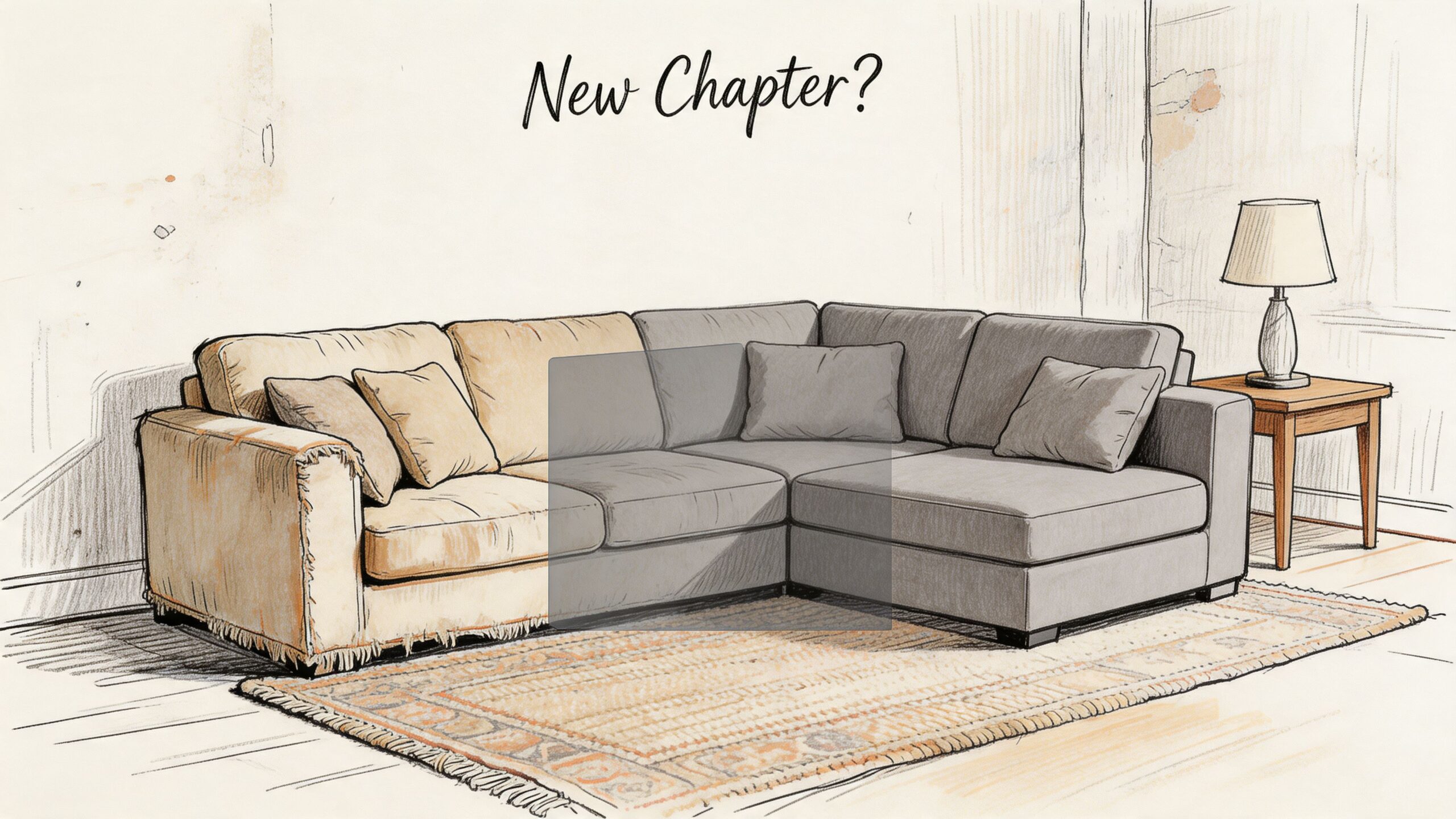
Gray sectionals have earned that popularity legitimately. They hide day-to-day wear better than many lighter fabrics. They blend with warm woods, painted walls, patterned rugs, and changing decor. They can feel casual in a family room or polished in a more formal living room.
Why this search is only the beginning
The challenge is that many shoppers focus first on the picture and only later on the practical details. Will it fit through the door? Will the chaise block the walkway? Will the cushions hold their shape? Will the fabric feel forgiving when life gets messy?
Those are the questions that separate a quick purchase from a good long-term decision.
If you’re still in the browsing stage, a practical next read is this guide on how to choose living room furniture for your home. It helps connect the look you love with the way your room functions.
A sectional should solve problems in a room, not create new ones.
What shoppers often mean when they search it
Often, those typing in ashley gray sectional aren’t committed to one exact model. They’re usually looking for some mix of these needs:
- More seating for family life. They need one piece that can handle everyday use.
- A neutral look. Gray feels easy to decorate around, even if wall colors or accent pieces change later.
- A room upgrade. They want the space to feel current without becoming trendy for just a season.
- Better comfort. They’re replacing a sofa that no longer supports the way they live.
That’s a good place to begin. The next step is learning how to judge a sectional by more than its photo.
How to Choose a Sectional That Truly Fits Your Life
A sectional can look perfect online and still be wrong for your room. That happens every week. The shape may be attractive, but the scale is off. The fabric may look soft, but it may not suit kids, pets, or heavy use. The seating may seem deep and cozy in a photo, but feel uncomfortable once you sit in it for an hour.
The best approach is simple. Start with fit, move to function, and then judge comfort and construction.
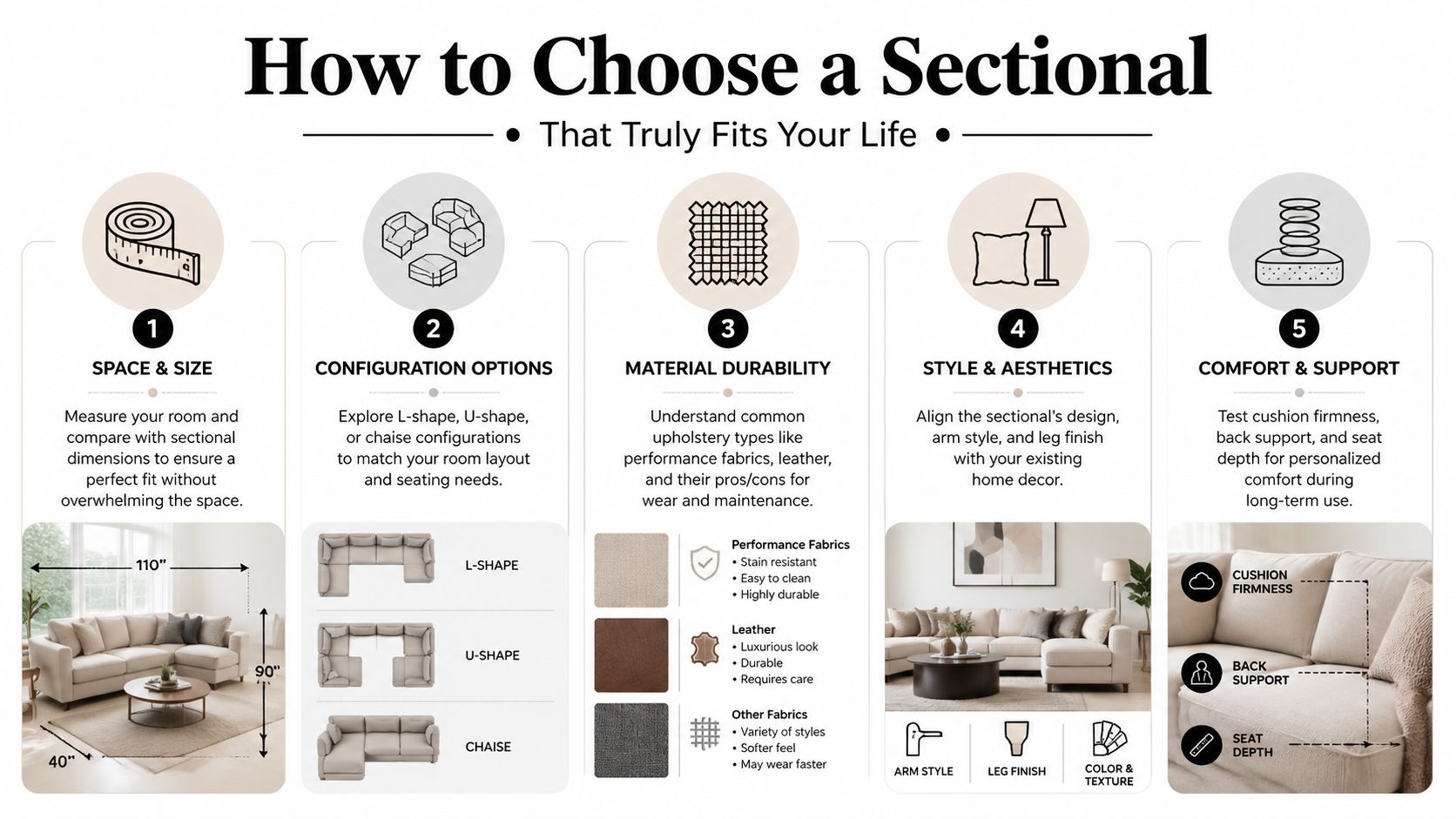
Start with the room, not the sofa
One useful benchmark comes from a typical mid-range model. The Ashley Skyler sectional is listed at 88"W x 88"D, needs a minimum door width of 32 inches for delivery, and uses removable foam cushions, according to the Ashley Skyler sectional product details. That same source notes foam density rated for 20,000 to 30,000 compression cycles, which gives shoppers a concrete way to think about day-to-day wear over time.
Those numbers matter because they turn vague shopping into practical shopping.
Before you fall in love with any sectional, measure:
- Wall length where the sectional will sit
- Open floor area in front of it
- Walkways to doors, halls, and adjoining rooms
- Entry path from the front door to the final room
A sectional that fits the room on paper can still fail the delivery test. That’s why many shoppers benefit from reading sectionals 101 before buying a sectional, especially if they’re furnishing an older home with tighter entries.
Choose the shape that matches your routine
Not every family needs the same layout. The most common confusion is thinking “bigger” automatically means “better.”
Here’s a quick comparison:
| Configuration | Best for | Watch out for |
|---|---|---|
| L-shape | Everyday family seating and corner placement | Can block a walkway if the chaise side is too long |
| U-shape | Large gatherings and open rooms | Needs more breathing room around it |
| Chaise sectional | Lounging and smaller households | The chaise can dominate a compact room |
| Modular sectional | Rooms that may change over time | Piece connections and fit need careful planning |
An L-shape often works well in a standard living room because it gives plenty of seating without taking over every inch. A U-shape shines when you have an open plan and want conversation seating. Modular pieces appeal to shoppers who like flexibility, but they need close attention to layout and delivery.
Practical rule: Leave enough open space so people can move through the room naturally without brushing the sectional every time they pass.
Fabric is about lifestyle, not just color
A gray sectional can come in chenille, microfiber, faux leather, leather, or performance upholstery. Shoppers often get distracted by softness in the showroom and forget to think about maintenance at home when considering these options.
If you have pets, young children, or frequent guests, ask practical questions:
- Will this fabric release pet hair easily?
- Can cushion covers be easily cleaned or maintained?
- Will a textured weave trap crumbs and lint?
- Does the material show dark clothing transfer or everyday marks?
Removable cushions are worth special attention because they make cleaning and rotation easier. That one feature can make ownership feel much simpler over time.
Comfort isn’t one-size-fits-all
Comfort depends on who uses the sectional most. A tall person, a grandparent, and a child won’t all judge the same seat depth the same way.
Test these parts carefully:
- Seat height. If it’s too low, getting up becomes a chore.
- Seat depth. Deep seats feel loungey, but not everyone wants to sit with pillows behind their back.
- Back support. Some sectionals look sleek but offer less support for long sitting sessions.
- Arm height. This affects napping, reading, and everyday relaxation more than people expect.
A sectional is one of those purchases where five minutes of sitting doesn’t tell the whole story. Sit the way you live. Lean back. Put your feet up. Shift positions.
Construction tells you what photos can’t
The outside gets attention. The inside decides how long the piece remains satisfying.
Look for signs that a sectional is built for repeated use:
- Removable cushions that can be rotated and maintained
- Stable legs and base support that don’t feel wobbly
- Consistent seams and tailoring with no pulling at corners
- Balanced sit across all seats, not just the center cushion
Many buyers focus on style details like nailhead trim, track arms, or leg finish first. Those matter, but they shouldn’t outrank support, seat feel, and ease of upkeep.
Common mistakes that cost people later
A few problems show up again and again:
- Buying by photo alone. The room looks different once the piece arrives.
- Ignoring delivery measurements. The sectional may fit the room but not the doorway.
- Choosing the softest seat without thinking long term. The first sit isn’t the same as year two.
- Picking a trendy texture over a practical fabric. Daily life has a way of exposing that mistake quickly.
The best sectional is the one that suits your room, your household, and your habits. That’s what gives it staying power.
The Watts Difference True Customization for Your Home
A mass-market sectional solves one problem well. It gives you a fast answer. What it usually doesn’t give you is much say in the final result.
That’s where custom furniture changes the conversation. Instead of asking whether you can live with the exact fabric, arm style, or configuration that happens to be in stock, you start asking what would fit your home best. That’s a much better question.
Why customization matters more than people think
Most living rooms aren’t identical. Light changes from house to house. Floor color changes. Family routines change. One home needs a stain-conscious fabric because of pets. Another needs firmer support for nightly TV watching. Another wants a sectional that coordinates with inherited wood tables or a favorite rug.
That’s why custom furniture has long-term value. It reflects your home, not a mass-produced catalog.
Some premium sectionals from brands such as Bassett or La-Z-Boy can include zero-draw USB technology and power headrests, and those engineering features are often paired with 10-year mechanism warranties, according to the power reclining sectional feature overview. That kind of detail tells you you’re shopping in a different category than a basic, ready-to-go floor model.
What better options often include
When shoppers move beyond entry-level browsing, they usually start caring about details like these:
- Fabric and leather selection that works with the rest of the house
- Seat feel choices that suit the way they relax
- Power features for comfort and convenience
- Finishes and silhouettes that feel more personal than off-the-shelf inventory
American-made lines often stand out here because they focus on longer ownership and better materials. Kincaid and Bassett are good examples of brands associated with quality-minded shoppers who care about craftsmanship and a more refined result.
Furniture built for generations, not just a few seasons, almost always starts with better choices before the order is placed.
The value of made-for-you furniture
Customization isn’t only about luxury. It’s also about avoiding compromise.
If the only gray sectional available today has the wrong arm height, a fabric you’re unsure about, or a shape that almost fits the room, that “good enough” decision can stay in your home for a long time. A made-for-you approach gives you a better chance of being happy with the piece years from now.
For shoppers comparing options, this guide on getting started with a custom furniture order is helpful because it breaks the process into simple decisions instead of making custom ordering feel intimidating.
A better standard than quick convenience
The appeal of fast furniture is obvious. You click, wait, and hope for the best. The weakness shows up later when comfort fades, support declines, or the piece never quite felt right in the room to begin with.
Higher-value sectionals ask for more thought upfront, but they return that effort with better comfort, stronger design fit, and a sense that the room was furnished on purpose.
That’s a better way to buy a living room centerpiece.
Expert Guidance from Your Hometown Design Center
A lot of furniture regret starts before delivery day. It begins when a shopper has six browser tabs open, two saved screenshots, and no confidence that any of the choices will work together.
That’s why design help matters. It removes uncertainty from a purchase that affects your home every single day.
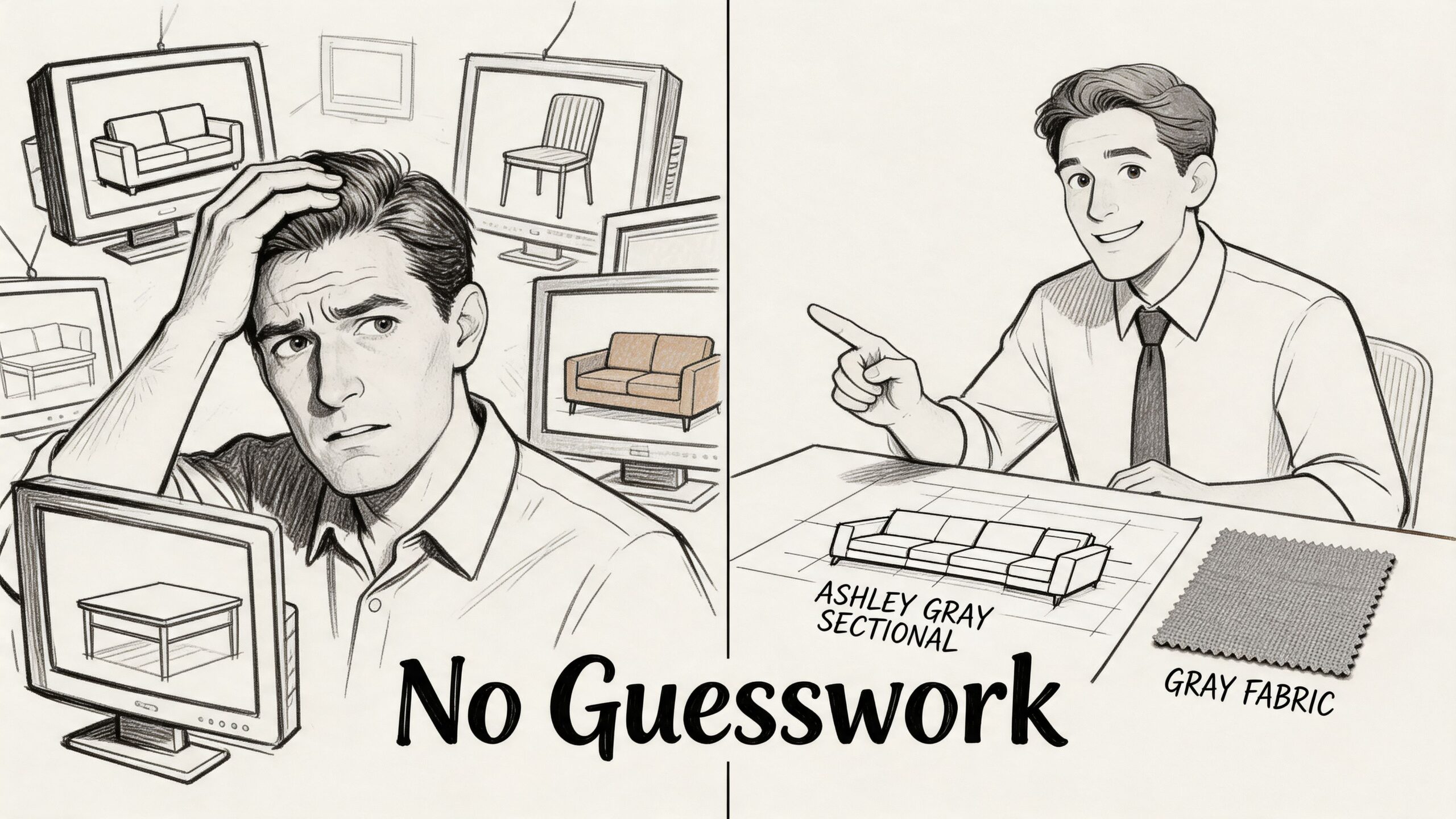
Why online shopping creates so much confusion
A sectional can look roomy in one product photo and oversized in your actual home. Color samples can shift from screen to screen. A configuration that seems flexible online may turn into a headache when it meets an older doorway, a narrow hall, or a room with awkward traffic flow.
Industry data suggests that more furniture returns are happening because of DIY assembly problems or pieces that don’t fit through doorways in older homes, which is exactly why professional planning matters, as noted in this sectional shopping reference from Ashley Furniture.
That’s a key benefit of design support. It helps you avoid the guesswork of online shopping before a mistake lands in your living room.
Two kinds of design help make the process easier
A strong design center usually helps in two ways, and both matter.
First is complimentary in-store advice. This is ideal when you already know the general piece you need, but want help narrowing fabric, color, or finish. Maybe you’re deciding between two grays, wondering whether leather is too formal, or trying to match a sectional to an existing coffee table.
Second is premium design service. Details become more extensive with this offering. Space planning, mood boards, and whole-room coordination help shoppers who are moving, renovating, or furnishing from the ground up.
If you want help sorting through layout or style concerns, a free interior design consultation is one of the smartest early steps you can take.
Good design help doesn’t push a room toward trend. It pulls the room toward balance, comfort, and everyday usefulness.
What professional guidance catches early
Designers and experienced furniture teams often notice issues that shoppers miss in the excitement of buying. Those include:
- Traffic flow problems around the chaise or corner seat
- Scale mismatch between the sectional and existing tables
- Fabric choices that don’t suit pets, children, or direct sunlight
- Delivery trouble spots in older homes around LaGrange and nearby communities
That kind of planning is especially helpful in homes that weren’t built with oversized modular furniture in mind. Older entries, tighter turns, and smaller formal rooms all need a little more foresight.
Confidence changes the whole experience
People often think design service is only for elaborate homes or major remodels. In practice, it’s often most valuable for ordinary decisions that need to be right the first time.
A sectional is expensive enough, large enough, and visible enough that uncertainty costs real money and frustration. Expert guidance turns that into confidence. You choose with more clarity, and the room comes together with less trial and error.
Seamless Delivery and Financing in the LaGrange Area
Buying a sectional doesn’t end at the register. In many ways, the hardest part starts after the decision is made. Getting a large piece into the house, set in the right place, and ready to enjoy is where service matters.
That’s one reason local buying still has an edge. You’re not left managing every step alone.
Why delivery service matters so much
A sectional is awkward, heavy, and easy to damage if handled carelessly. It can scrape door frames, bump corners, or arrive in pieces that confuse a homeowner who expected a simple setup. White-glove delivery changes that experience because the team handles transport, placement, and setup with the home in mind.
For many families, that’s the difference between excitement and stress.
This matters even more when fabric quality and long-term wear are part of the buying decision. High-performance fabrics can withstand over 50,000 double rubs on the Wyzenbeek test, according to this upholstery durability reference. That kind of benchmark helps shoppers compare upholstery quality, especially if pet-friendliness and stain resistance are high priorities.
What a smoother purchase looks like
A full-service local experience usually helps at several points:
- Before delivery. The team confirms what’s being delivered and helps reduce surprises.
- At the home. Placement happens in the room where the sectional will live, not just at the front door.
- During setup. Pieces are assembled and positioned correctly.
- Afterward. Support is available if questions come up later.
That hometown service matters in LaGrange, West Point, Pine Mountain, Hogansville, and across Troup County because homes vary so much. A one-size-fits-all delivery approach rarely fits real households.
Financing can make better furniture more reachable
Many shoppers assume quality furniture always means an uncomfortable upfront payment. It doesn’t have to. Flexible financing can make a stronger sectional, better fabric, or a more customized option realistic without pushing buyers toward a lower-quality shortcut.
If you’re comparing payment options, this furniture financing guide is a helpful place to start. It explains how financing can support a better long-term choice rather than a rushed short-term one.
The cheapest piece in the moment isn’t always the most affordable piece over time.
Service is part of the product
People often talk about a sectional as if the product is only the frame and cushions. In real life, the service around it becomes part of what you bought. Delivery quality, setup support, and financing flexibility all shape whether the experience feels worth it.
That’s especially true when you’re furnishing a main living space that the whole family uses every day.
Caring For and Styling Your New Sectional
A gray sectional earns its keep when it still looks inviting after everyday life has had its say. Good care helps with that. Good styling makes the piece feel like it belongs in your home instead of occupying space without purpose.
Neither part has to be complicated.
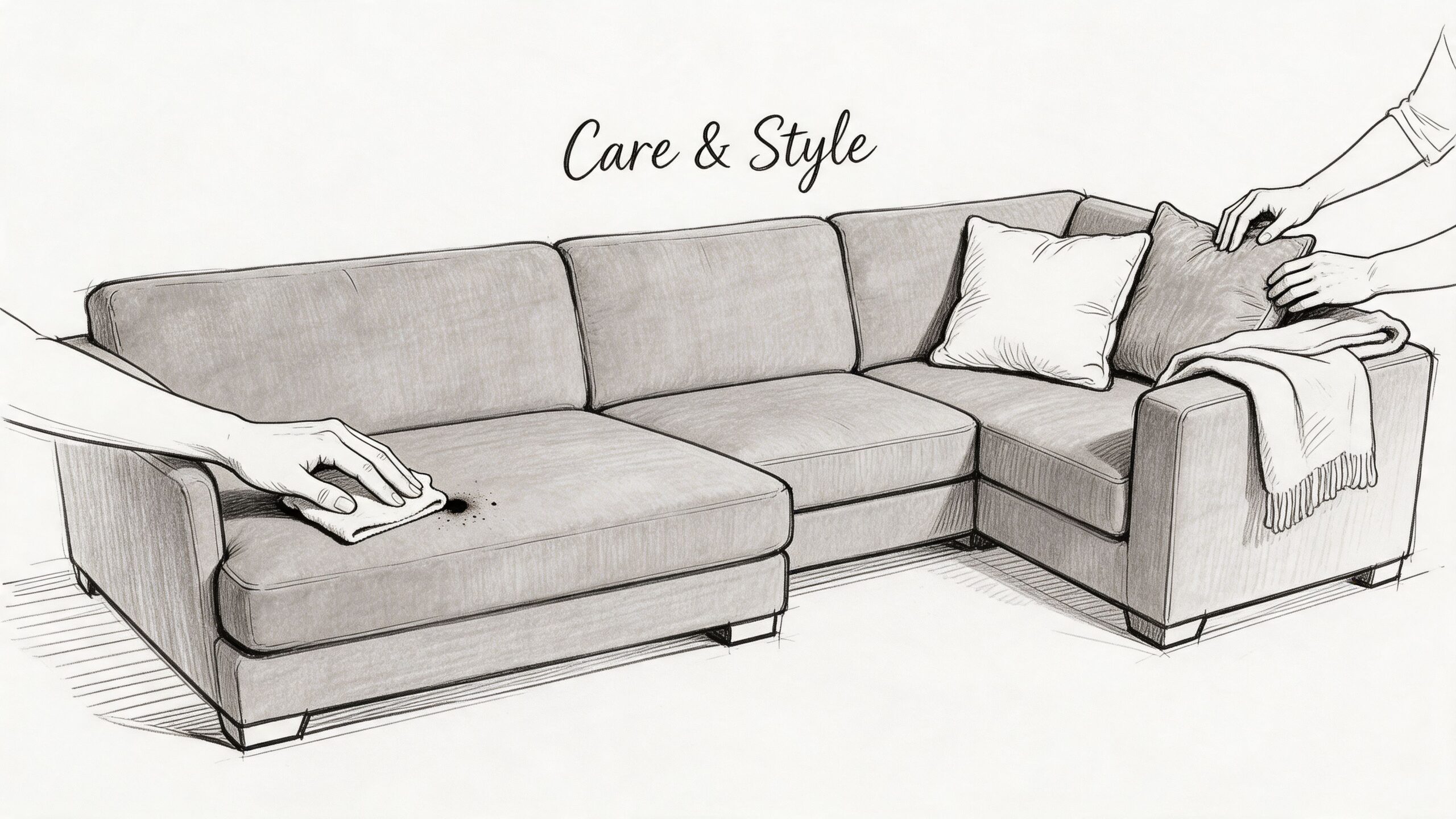
Simple habits that help it wear better
Start with the basics and stay consistent. A sectional lasts better when the maintenance is light but regular.
- Rotate use across seats so one cushion doesn’t carry all the daily wear.
- Vacuum creases and corners often enough to keep grit from settling into the fabric.
- Blot spills quickly instead of rubbing them deeper into the upholstery.
- Fluff and reset back cushions so the sectional keeps its shape.
If your sectional has removable cushions, take advantage of that. Being able to shift, clean, and maintain those pieces separately makes ownership easier.
Clean gently and early. Most upholstery problems get harder to solve after they sit too long.
How to style gray without making the room feel flat
Gray works because it plays well with other materials. That also means the room needs some contrast. If everything around the sectional is gray, beige, or black, the space can start to feel dull.
A few easy ways to add life:
- Bring in texture with throws, woven pillows, or a rug with some pattern.
- Warm up the palette through wood tables, brass accents, or earthy greens.
- Use pillows intentionally by mixing solid fabrics with one or two patterned choices.
- Add height nearby with lamps or tall plants so the seating area feels balanced.
Arrange the room around conversation and comfort
The sectional is the anchor, but the rest of the room decides whether it feels finished.
A coffee table should be easy to reach from the main seats. End tables should land where someone can set down a drink or book. Lighting matters too. One overhead fixture rarely makes a room feel comfortable at night.
Try this simple checklist:
| Area | What to look for |
|---|---|
| Coffee table | Easy reach without crowding knees |
| End tables | Practical placement beside the most-used seats |
| Lighting | A mix of lamp light and overhead light |
| Rug | Large enough to connect the seating group visually |
Keep the look flexible
One strength of a gray sectional is that you can refresh the room without replacing the furniture. Switch pillow colors with the seasons. Add a different throw. Change the rug or wall art. The sectional stays steady while the room evolves around it.
That’s part of why gray remains such a dependable choice. It gives you room to change your mind later.
Create a Living Room You Will Love for Years
An ashley gray sectional is often where the search begins. It’s familiar, practical, and easy to picture in a real home. But the best furniture decisions come from looking deeper than the first image, first price, or first popular brand name.
A strong sectional should fit your room, support the way your family lives, and hold up over time. It should feel comfortable on an ordinary Tuesday, not just in a showroom test sit. And when you can pair that with expert planning, better customization, and dependable local service, the value becomes much clearer.
That’s the ultimate goal. Not just buying a gray sectional, but creating a living room that feels settled, useful, and welcoming for years to come.
Visit Watts Furniture & Mattress at 212 Commerce Avenue in LaGrange to experience the comfort of La-Z-Boy, explore Bassett recliners, and shop with a trusted local team that understands furniture store LaGrange GA, living room sectionals, custom furniture, and even Mattresses LaGrange GA needs. Ready to transform your space? Book a consultation with the Interior Design Center today and let their experts help you curate a home you’ll love, with American-made furniture, white-glove delivery, helpful support, and financing options that make lasting quality easier to bring home.