Find Your Perfect Mattress with Our Guides

What Is Space Planning in Interior Design: Mastering Your

A lot of folks don’t start by asking, “What is space planning in interior design?” They start with a feeling.
Something about the room just isn’t working. The sofa blocks the path to the hallway. The dining table feels squeezed in. Guests don’t know where to sit, and even a pretty room feels tiring to live in. That’s usually the moment when people realize decorating and planning aren’t the same thing.
Space planning is the part that makes a room work before you worry about the finishing touches. If you’re furnishing a home in LaGrange, West Point, Pine Mountain, or anywhere around Troup County, understanding that one idea can save a lot of stress, wasted motion, and furniture that never quite fits.
From Frustrating to Functional Why Your Room Layout Matters
A family moves into a house and does what most of us do. They place the sofa where the longest wall is, put the chair near the window, slide in a coffee table, and call it done. Then real life begins.
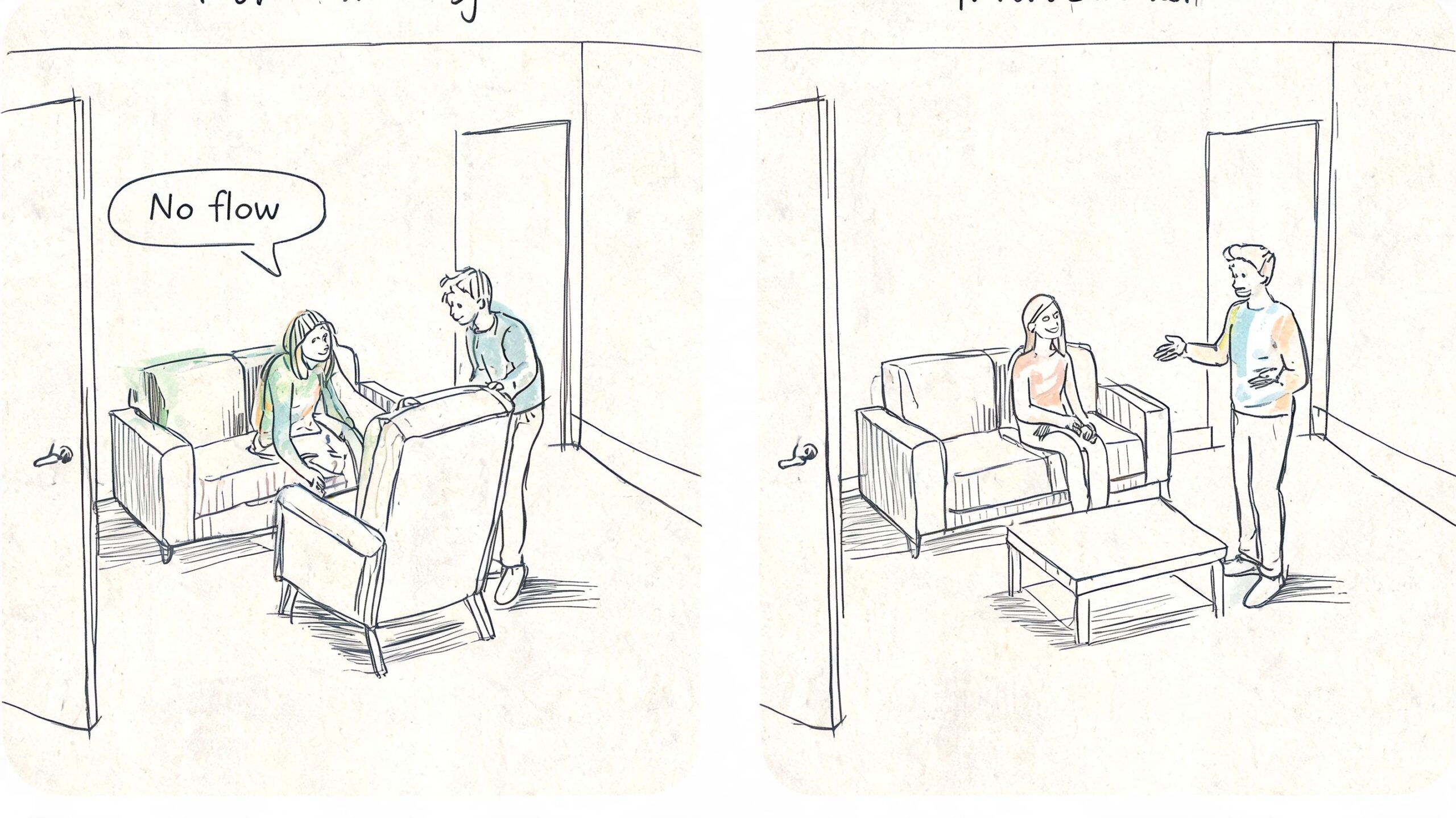
People cut through the seating area to get to the kitchen. The recliner bumps the end table. One person has to scoot sideways to reach the lamp. Nothing is terribly wrong, but nothing feels easy either.
That’s the difference between owning furniture and having a plan.
A room should support daily life
A good layout helps you move naturally, sit comfortably, and use the room the way you live. If you host family dinners, the dining area needs breathing room. If you watch movies every evening, the seating should support conversation and screen viewing without making the room feel crowded.
That’s why space planning matters so much. It isn’t a fancy design term for professionals only. It’s a practical way to decide what belongs in a room, where it should go, and how much open space needs to stay open.
A beautiful room can still feel awkward if the layout fights the way you live.
Homeowners are paying more attention to that than they used to. The global interior design market was valued at $136.12 billion in 2023 and is projected to exceed $228.01 billion by 2033, reflecting stronger demand for functional, personalized homes, as noted in these interior design market statistics.
Why this matters in LaGrange homes
Around LaGrange, many homes have real-life quirks. Some have open living and dining spaces. Some have older-room proportions. Some have angled corners, narrow pass-throughs, or one room doing double duty as a family room and homework station.
That’s where planning helps most. It turns “we’ll make it fit” into a layout that feels intentional. If you want a practical starting point, this guide on how to plan a room layout is a helpful next step.
Understanding Space Planning The Blueprint for Your Home
The simplest answer to what is space planning in interior design is this. It’s the blueprint for how you live in a room.
Before anyone chooses fabric, wood finish, or wall color, space planning answers the big practical questions. What happens in this room? Who uses it? How do people move through it? What furniture belongs here, and what’s just taking up floor space?
Think of it like a recipe, not a shopping list
Many homeowners start with a shopping list. Sofa, chair, rug, lamp, media cabinet. The trouble is, a shopping list doesn’t tell you whether those pieces belong together in your room.
A space plan works more like a recipe. It gives structure. It shows what the room needs first, what should come second, and what amount of open space keeps the whole thing balanced.
That planning usually comes down to three goals:
- Function means the room supports real activities, such as dining, reading, hosting, working, or relaxing.
- Flow means people can move through the space without bumping into furniture or cutting awkwardly across the room.
- Feeling means the room feels calm, welcoming, and sensible instead of crowded or unfinished.
It happens before you buy
Many people often get tripped up. They think space planning happens after the furniture arrives. In truth, it should happen first.
If you measure first, map the room first, and think through traffic flow first, you’re far less likely to order a sectional that overpowers the room or a coffee table that leaves no legroom. That’s also how people make smarter choices about custom furniture, because the size, shape, and configuration are based on the room instead of guesswork.
Practical rule: Don’t shop for a room until you can clearly describe how the room needs to work.
A tape measure helps, of course. So does knowing how to measure a room for furniture before you fall in love with a piece online or in a showroom.
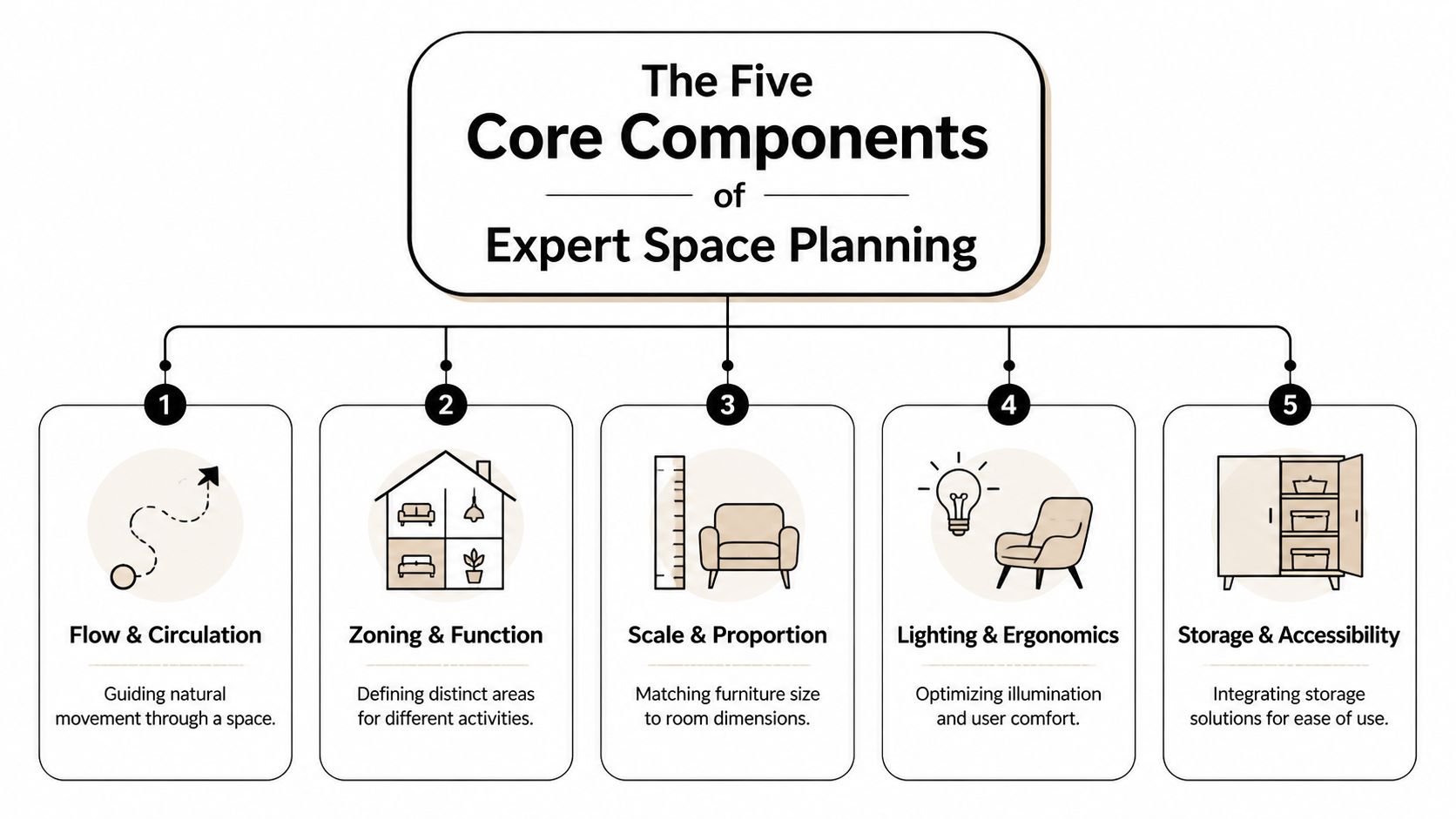
The Five Core Components of Expert Space Planning
When designers build a layout that feels easy and comfortable, they’re usually paying attention to the same core pieces. This is the part homeowners often don’t see, but it’s where the room either succeeds or struggles.
Start with the room, not the furniture
The first step is simple, but it’s the one people skip most.
Accurate measurements
Measure the room itself first. That includes wall lengths, window locations, door swings, fireplaces, vents, and any opening into another room. If you skip those details, even a well-made piece can land in the wrong place.Zoning
Every room has jobs. In an open-concept area, one zone might be for watching TV, another for eating, and another for a reading chair near the window. Zoning helps each part of the room feel purposeful instead of random.
Protect the pathways
A room needs clear routes through it. Designers call this circulation, but most homeowners just know it as whether they can walk through the room comfortably.
Professional guidelines help here. Major traffic paths should allow at least 36 inches of clearance, sofas should sit 14 to 18 inches from coffee tables, and dining tables need 36 to 48 inches between table edge and wall for movement, according to these space planning standards for furniture clearances.
That may sound technical, but it’s really common sense measured out.
If people have to turn sideways, shuffle, or move chairs every day, the layout needs work.
Match scale to the room
A room can be large and still feel crowded if the furniture is heavy, deep, or visually bulky. A smaller room can also feel unfinished if every piece is too petite.
Here’s where scale and proportion come in:
- Large rooms often need substantial pieces so the furniture doesn’t look scattered.
- Smaller rooms benefit from pieces with the right depth and shape, not just smaller everything.
- Multi-use rooms need furniture that serves more than one purpose without making the space feel overstuffed.
One helpful way to think about it is this:
| Room issue | What usually caused it |
|---|---|
| Room feels cramped | Furniture is too deep or too numerous |
| Room feels empty | Pieces are too small or too far apart |
| Room feels awkward | Main seating doesn’t relate to the focal point or path |
Finish with placement, not guessing
Furniture placement is the visible result of all the earlier decisions. The sofa doesn’t go on a wall just because there’s a wall. The chair doesn’t go in a corner just because there’s a corner.
Placement should support conversation, comfort, reach, lighting, and storage. That’s why many homeowners benefit from comparing options before they commit. This article on choosing furniture for your home’s layout can help you think through those choices with more confidence.
Common Space Planning Mistakes That Undermine Your Home
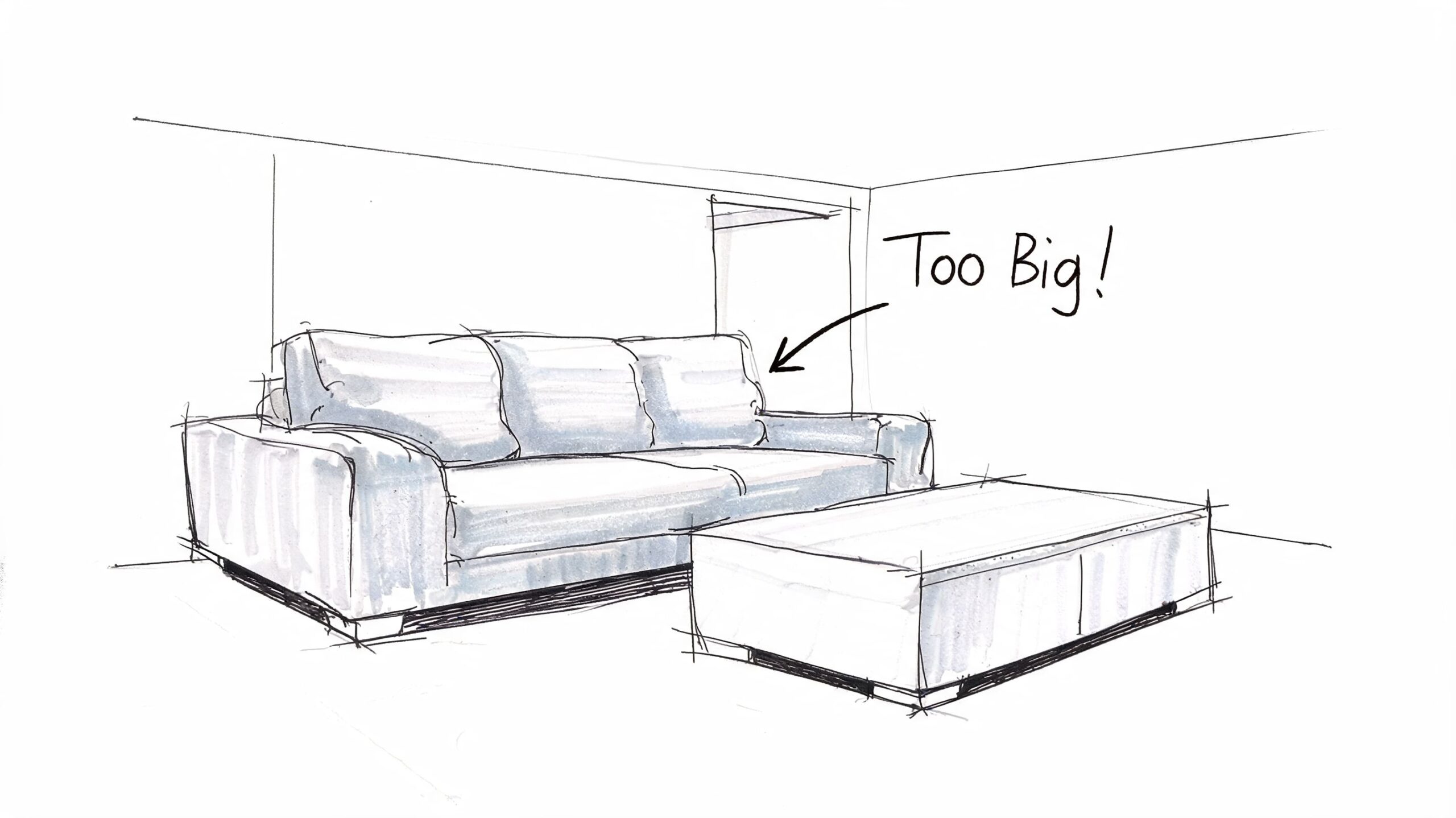
The most common mistake isn’t bad taste. It’s buying furniture without respecting the room’s scale.
A sofa may look just right on a showroom floor and completely take over a living room once it’s delivered. On the other hand, a rug or chair can be so small that the whole room feels skimpy and disconnected.
Mistakes that show up every day
Here are a few layout problems homeowners run into all the time:
Oversized seating
The symptom is obvious. The room feels full before anyone sits down. The fix is measuring depth, width, and clearance before purchase.Blocked pathways
If people walk around the coffee table, behind the sofa, and then back again just to cross the room, the circulation path isn’t working.Everything pushed to the wall
Many people assume this creates more room. Often it creates a hollow center and a room that feels like a waiting area instead of a conversation space.Lighting that doesn’t match the layout
A lamp in the wrong place can make reading uncomfortable and corners feel dim, even in a nicely furnished room.Ignoring vertical space
Some rooms need shelves, taller case pieces, or wall art to feel balanced. Otherwise everything sits low and flat.
The awkward-room problem
Some homes around LaGrange and Hogansville have another challenge. The room itself isn’t straightforward. Maybe there’s an angled wall, a clipped corner, or a layout that seems to waste square footage.
That’s where homeowners often give up and try to force a standard arrangement into a non-standard room. It rarely works well. As explained in this guide to working with angled walls in floor plan design, designers handle those spaces by using custom furniture to anchor the room, folding angles into storage, or using pivot hallways so the odd shape feels intentional instead of accidental.
Furniture built for generations, not just a few seasons, deserves a plan that respects the room it’s going into.
One small shift can solve a lot
Sometimes the answer is moving the sofa off the wall. Sometimes it’s replacing two small pieces with one properly scaled one. Sometimes it’s rethinking the TV wall entirely.
If your biggest struggle is screen placement and seating distance, this guide on the best placement for your sofa and television can help you avoid one of the most common living room frustrations.
From Idea to Reality The Tools of a Designer
A room plan usually starts with a pencil, a tape measure, and a problem that keeps bothering the homeowner. The sofa blocks the walkway. The dining area feels squeezed. The guest room also has to work as an office. In many LaGrange homes, the challenge is not picking a pretty chair. It is figuring out how the room can do its job without feeling crowded or unfinished.
Designers solve that problem by building the room on paper first. It works like laying out a garden before you start digging holes. You decide what belongs where, how much room each part needs, and how people will move through it.
It often starts loose and becomes exact
The first draft may be simple. A designer might sketch circles or rough shapes to mark activity zones such as conversation seating, dining, storage, or a reading spot. That early sketch helps the homeowner see the room as a set of uses, not just a collection of furniture.
Then the sketch tightens up.
Rough zones become furniture footprints. Walkways become measured clearances. Door swings, windows, traffic paths, and sightlines all get worked into a scaled floor plan. In a room with an angled wall or an awkward corner, that step matters even more because standard layouts from online inspiration boards often do not fit the actual shape of the house.
Some projects also move into digital modeling. As described in this explanation of space planning tools and BIM-based floor plan development, designers can turn early concepts into more detailed plans that account for structural limits and furniture sizing before anything is ordered.
Mood boards help with style. Floor plans help with living
These two tools get mixed up all the time, so it helps to separate them.
A mood board shows the visual direction of the room. It may include colors, wood tones, fabrics, finishes, and reference images that help a homeowner decide what feels right. A floor plan answers different questions. Will the sectional fit without crowding the fireplace? Can someone pull out a dining chair without bumping into the sofa? Does the room still work if it needs to serve two purposes?
Both matter, but they do different jobs. A room can be beautiful on a board and still feel clumsy in real life. If you want a clearer picture of the style side, this guide explains what a mood board is in interior design.
Where a local design service helps
That is the practical role of the Interior Design Center at Watts Furniture & Mattress. Homeowners can get help with layouts, finishes, and room plans that reflect the actual shape of their homes, not a generic template built for a perfectly square room.
That local help matters in places like LaGrange, where one room may need to handle everyday family life, guests, work, and storage all at once. Online retailers can sell a sofa. They cannot stand in your room, notice the tight turn by the hallway, and suggest a better scale or arrangement before a costly mistake is delivered.
For homeowners choosing American-made furniture or comparing custom options from brands like Bassett or Kincaid, that planning step brings the idea down to earth. It turns a good-looking piece into one that properly fits the room and the way the family lives.
Real-World Examples Space Planning for Every Home
Good space planning shows its value fastest in rooms with competing needs. That’s where a smart layout can turn a frustrating house into a comfortable one.
An open living and dining room
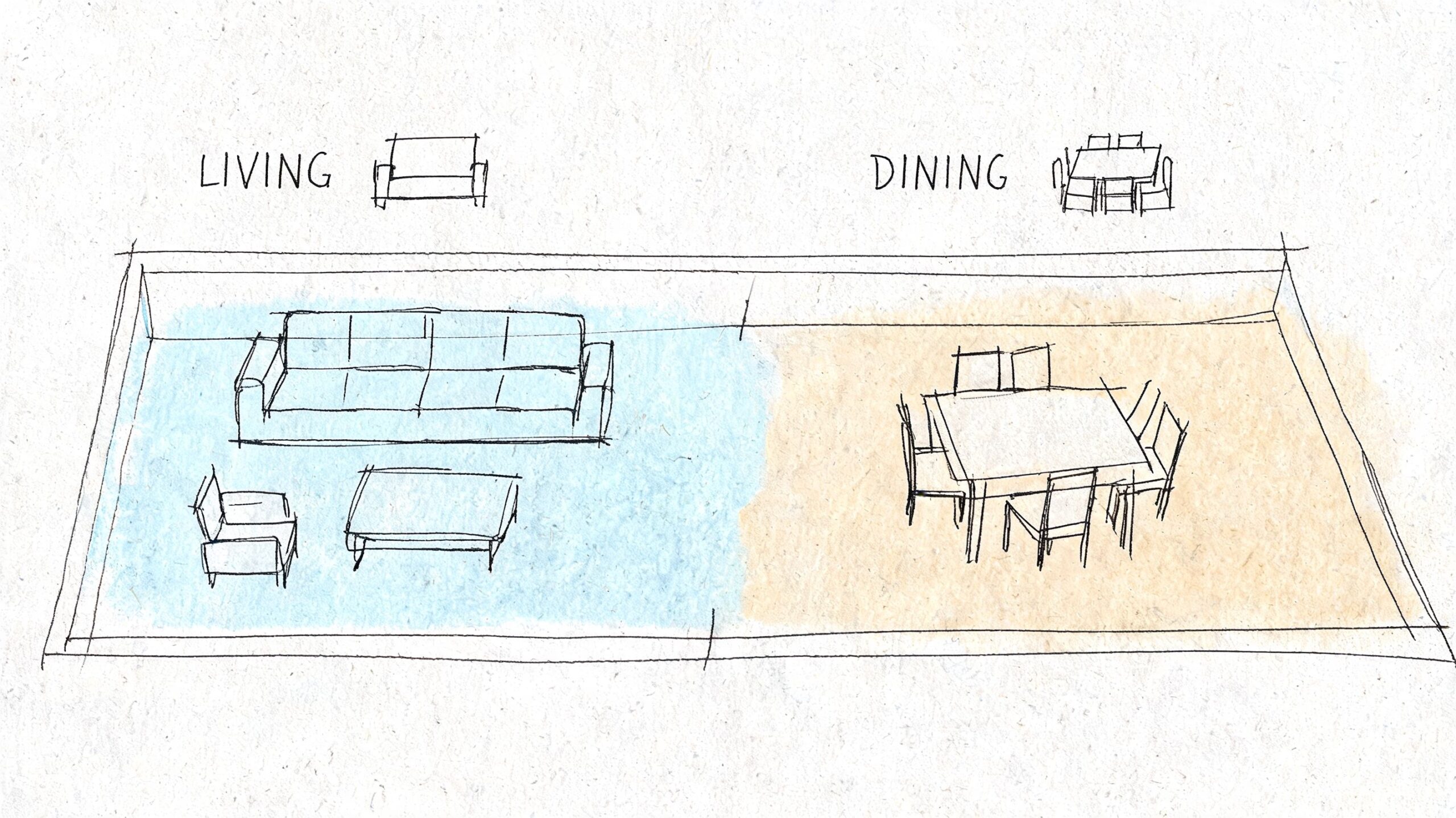
This is common in newer homes and renovated older ones. Without zoning, the room can feel like one big undecided area.
A better plan gives each zone a job. The rug defines the living area. The sofa faces the main focal point. The dining table sits where chairs can move comfortably without interfering with the living space. Matching finishes or fabrics tie the spaces together, but the layout does the heavy lifting.
A narrow townhouse living room
Narrow rooms are tricky because every inch of passage matters. Bulky furniture can choke the flow fast.
In that kind of room, it often helps to use fewer, better-sized pieces. A sleek sofa, a properly scaled chair, and storage that uses wall space can make the room feel wider. The goal isn’t to cram in more furniture. It’s to keep movement easy and make the room feel settled.
A bedroom planned for aging in place
This is one topic more families are thinking about now, and for good reason. Inclusive design matters in real homes, not just healthcare settings. The need is growing, with 73 million Americans projected to be over 65 by 2030, and space planning for that future includes wider doorways, intuitive navigation, and adaptable furniture choices, as outlined in this article on inclusive design for underserved populations.
In practical terms, that can mean:
- Clearer pathways around the bed and major furniture
- Easier navigation at night, with lighting and arrangement that reduce confusion
- Adaptable seating such as custom La-Z-Boy recliners
- Long-lasting case goods like American-made Kincaid pieces selected with future use in mind
A well-planned room should work for the people in it now and still make sense as life changes.
That’s one of the strongest arguments for professional planning. It doesn’t just help the room look finished. It helps the home support the people who live there.
Your Partner in Creating a Home You Love
By now, the answer to what is space planning in interior design is probably clearer. It’s the careful work of shaping a room around daily life so the space feels natural, comfortable, and useful.
That kind of planning matters whether you’re furnishing one room, settling into a new house, or reworking a home you’ve loved for years. It helps you avoid furniture mistakes, solve awkward layouts, and choose pieces that fit the room instead of fighting it.
For homeowners in LaGrange and nearby communities, there are usually two levels of help worth knowing about through an Interior Design Center:
- Complimentary In-Store Advice for color choices, fabrics, and pull-together guidance
- Premium Design Service for full room planning, including layouts and mood boards, with the deposit credited toward your purchase
That combination gives people flexibility. Some need a little direction. Others need a full plan for a complicated room, a multipurpose space, or a whole-home update.
If you’re shopping for a Furniture store LaGrange GA option that helps with more than just transactions, or comparing pieces for Mattresses LaGrange GA, Bassett recliners, Serta mattresses, living room sectionals, or other custom furniture, having a clear room plan makes every decision easier.
Ready to transform your space? Visit Watts Furniture & Mattress at 212 Commerce Avenue in LaGrange to experience the comfort of La-Z-Boy in person, or book a consultation with the Interior Design Center today and let the team help you curate a home you’ll love.