Find Your Perfect Mattress with Our Guides

Best Recliners for Back Support: Expert Guide


You get home, ease into a chair, and wait for that “finally” feeling. Instead, your lower back still feels tight, your shoulders creep forward, and ten minutes later you’re shifting around trying to get comfortable. A lot of folks in LaGrange and across Troup County know that routine better than they’d like.
That’s usually the moment when a recliner stops being a casual furniture purchase and starts becoming a wellness decision. The best recliners for back support don’t just feel soft for a few minutes. They hold your body in the right places, let you change position without strain, and help you settle in without that sagging, slouched feeling that many chairs create.
In a family furniture business, you see the same pattern for decades. People often walk in saying they want “a comfortable chair,” but what they really need is a chair that fits their frame, supports their spine, and works with the way they live every day. That’s a different conversation, and it’s a much more helpful one.
If you’ve started browsing and feel overwhelmed by terms like power lumbar, zero-gravity, seat depth, or lift assist, you’re not alone. A good place to start is this detailed recliner buying guide, but the plain truth is simpler than the jargon makes it sound. A supportive recliner should fit you the way a good pair of shoes fits your feet. It shouldn’t force your body to adapt to it.
Your Search for the Perfect Recliner Starts Here
A recliner can look wonderful in a photo and still be wrong for your back.
That’s one of the biggest frustrations people face when shopping online. The chair may have plush cushions, attractive fabric, and glowing reviews, but none of that tells you whether your lower back is fully supported or whether your legs land comfortably when you sit down. A chair can be popular and still be a poor match for your body.
Back pain is common enough that many shoppers now start their furniture search with support in mind. Chronic back pain affects approximately 80% of adults at some point, and 46% of shoppers prioritize extra back support when buying a recliner, according to research summarized here. That tells you something important. People aren’t just shopping for a place to sit. They’re looking for relief, prevention, and everyday comfort that lasts beyond the showroom visit.
Comfort and support are not the same thing
Softness can feel good for the first few minutes. Support is what still feels good after an hour.
A supportive recliner keeps contact with your lower back, supports your neck without pushing your head forward, and lets your hips and knees rest in a natural position. If any one of those pieces is off, your body starts compensating. You scoot forward. You prop a pillow behind you. You lean to one side. None of that is a sign the chair “just needs breaking in.” It’s usually a sign the fit isn’t right.
A good recliner should help your body relax, not ask your muscles to keep correcting your posture.
Why this search matters more than most furniture purchases
A dining chair might be used for meals. A guest bed gets occasional use. A recliner often becomes the place where you end your day, recover after work, read, watch television, or even rest when you’re not feeling your best.
That’s why choosing carefully matters. You’re not looking for a quick fix. You’re looking for furniture built for generations, not just a few seasons, and for a chair that supports daily life instead of adding to daily strain.
The Anatomy of a Superior Back-Support Recliner
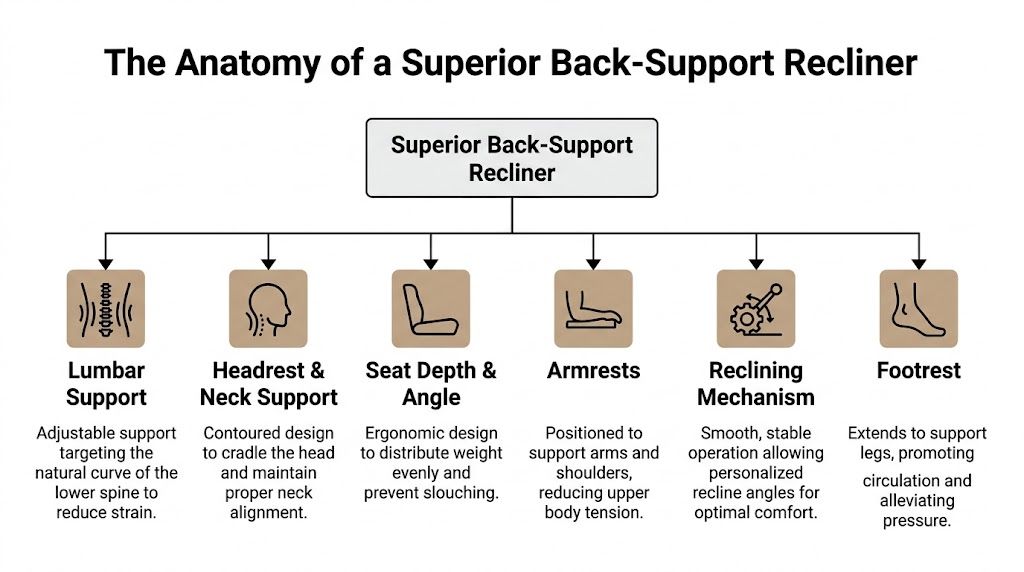
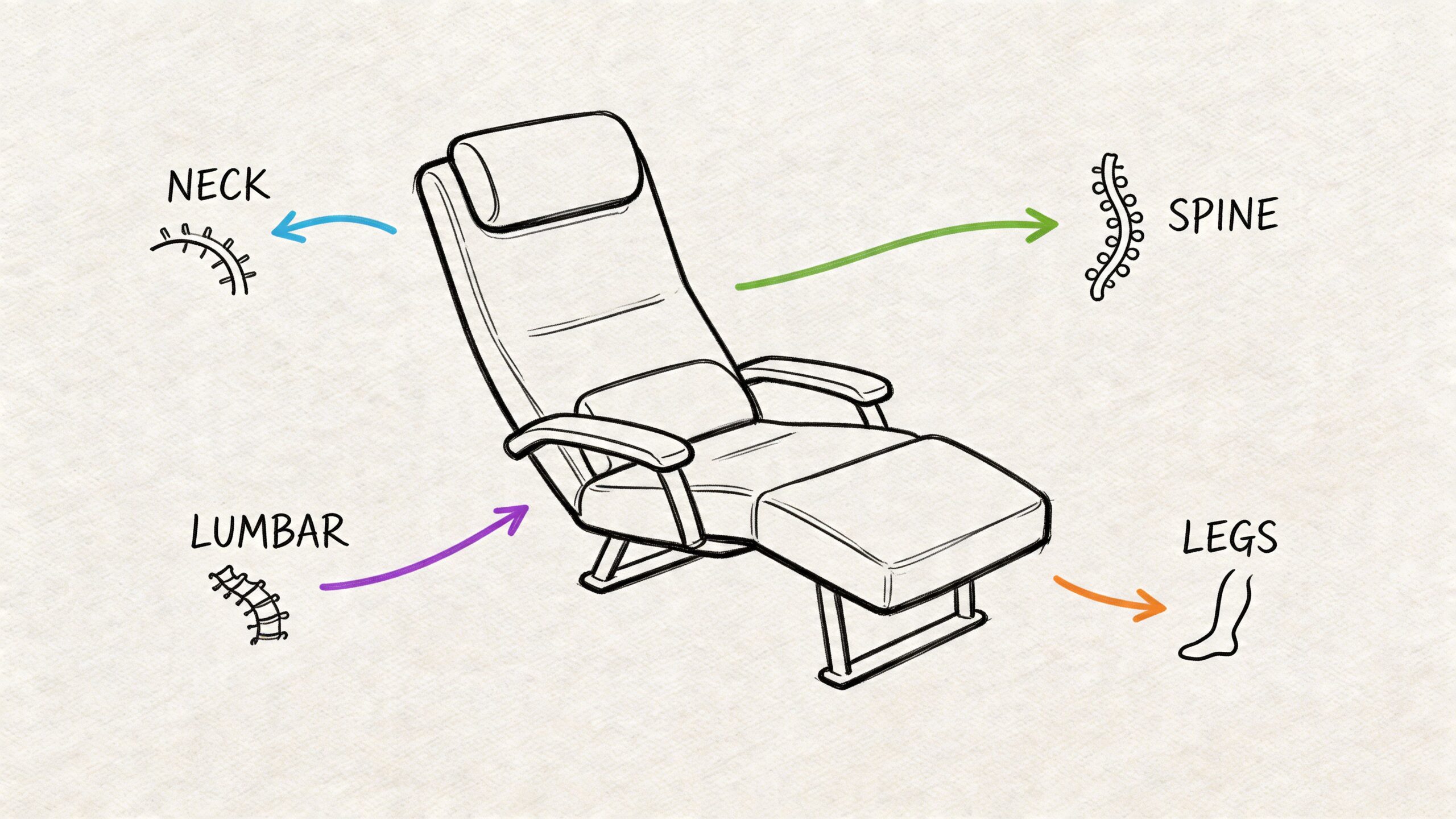
The easiest way to judge a recliner is to stop thinking about it as one big cushioned chair. Think of it as six parts working together. If one part is off, the whole sitting experience changes.
Start with the lower back
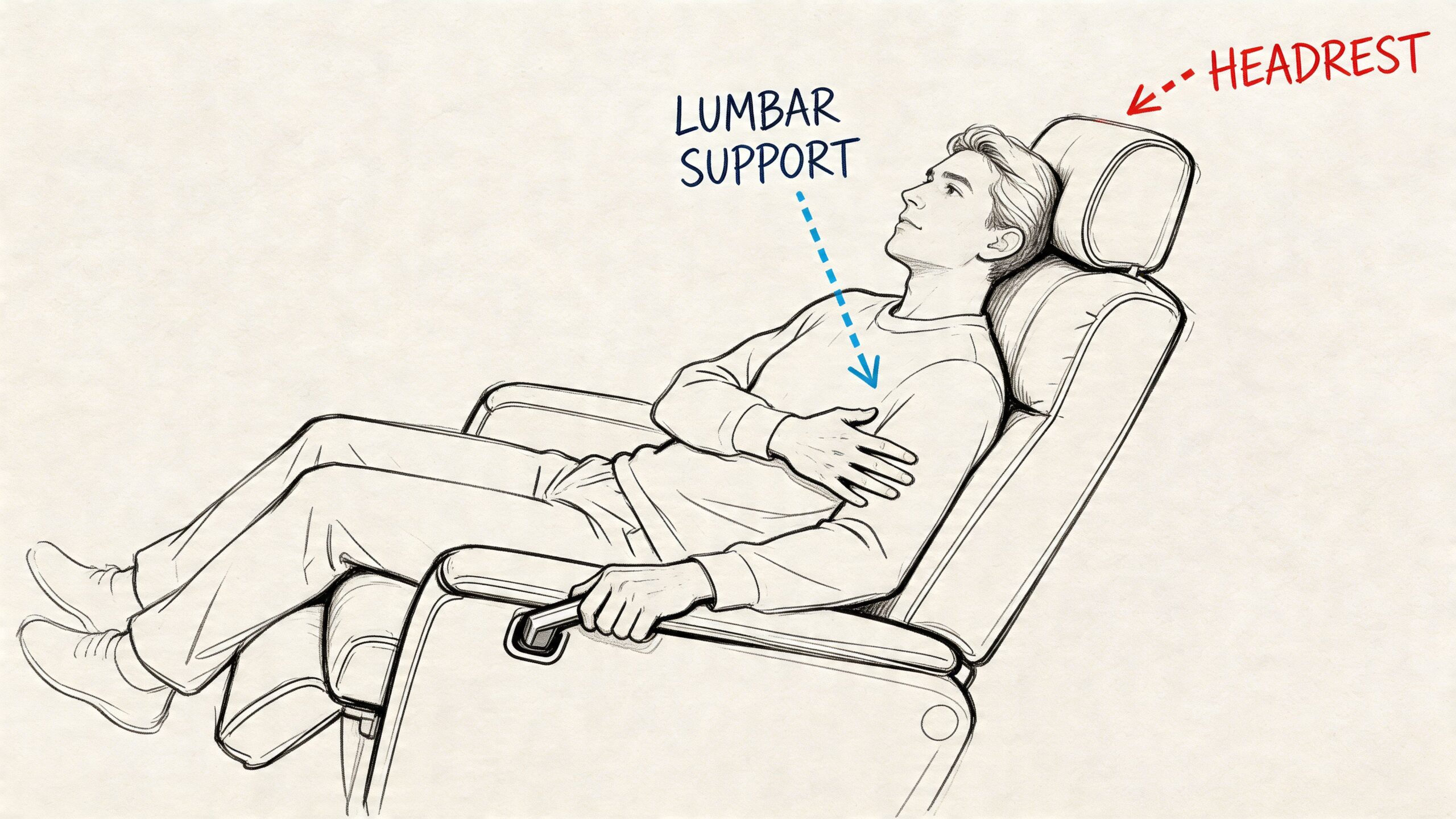
Lumbar support is the heart of a back-friendly recliner. Your lower spine has a natural inward curve. When a chair leaves a gap there, your body tends to slump to fill it. That’s when many people start feeling fatigue, pressure, or that dull ache that builds over the evening.
The simplest way to picture lumbar support is this. It’s like placing your hand in the small of your back while you sit. Not a shove. Not a lump. Just enough contact to keep your spine from collapsing backward.
Some chairs offer fixed lumbar cushioning. Better models let you adjust it. If you want to understand the mechanics behind those features, this overview of types of power reclining seating gives a useful breakdown.
Seat shape matters more than people expect
A lot of buyers focus on the back cushion and forget the seat itself. But the seat controls where your hips land, how your thighs are supported, and whether your knees bend naturally.
Here are the pieces that matter most:
- Seat height: Your feet should rest flat on the floor when the chair is upright.
- Seat depth: You should be able to sit all the way back without the front edge pressing hard behind your knees.
- Seat firmness: You want support that holds you up, not foam that lets you sink and roll backward.
- Seat angle: A well-shaped seat helps distribute weight instead of concentrating pressure in one spot.
A useful analogy is shoe sizing. You wouldn’t buy a shoe just because the leather feels nice if the size is wrong. Recliners work the same way. Great upholstery can’t fix a poor fit.
Recline mechanics change the whole experience
High-quality recliners outperform basic models. Controlled power recline lets you fine-tune your position instead of settling for a few preset stops.
According to this ergonomic recliner analysis, high-quality recliners feature controlled power recline mechanisms that achieve 135-165° angles. The same source notes that reclining to 135° can reduce pressure on lumbar discs to approximately 25% of the load experienced when sitting upright, while a zero-gravity position can minimize spinal compression by up to 75%.
That sounds technical, but the takeaway is simple. The right angle can take pressure off your back in a way an upright chair can’t.
Practical rule: If a recliner only feels good in one exact position, keep looking. A well-designed chair should support you through the full range of motion.
The full support system
A superior back-support recliner usually includes more than one helpful feature at once:
| Component | What it should do |
|---|---|
| Headrest | Support your head without tipping your chin too far forward |
| Armrests | Let your shoulders relax instead of hunching |
| Back cushion | Keep contact along the spine, especially at the lumbar area |
| Footrest | Support your legs fully so tension doesn’t travel back to the hips and lower spine |
When all of those parts work together, the chair feels balanced. You stop noticing pressure points and start noticing relief.
Key Features to Prioritize for Lasting Comfort
Once you know how support works, the next question is what features are worth paying for. Not every upgrade matters equally. Some are convenience items. Others can make a real difference in how your back feels day after day.
Power recline versus manual recline
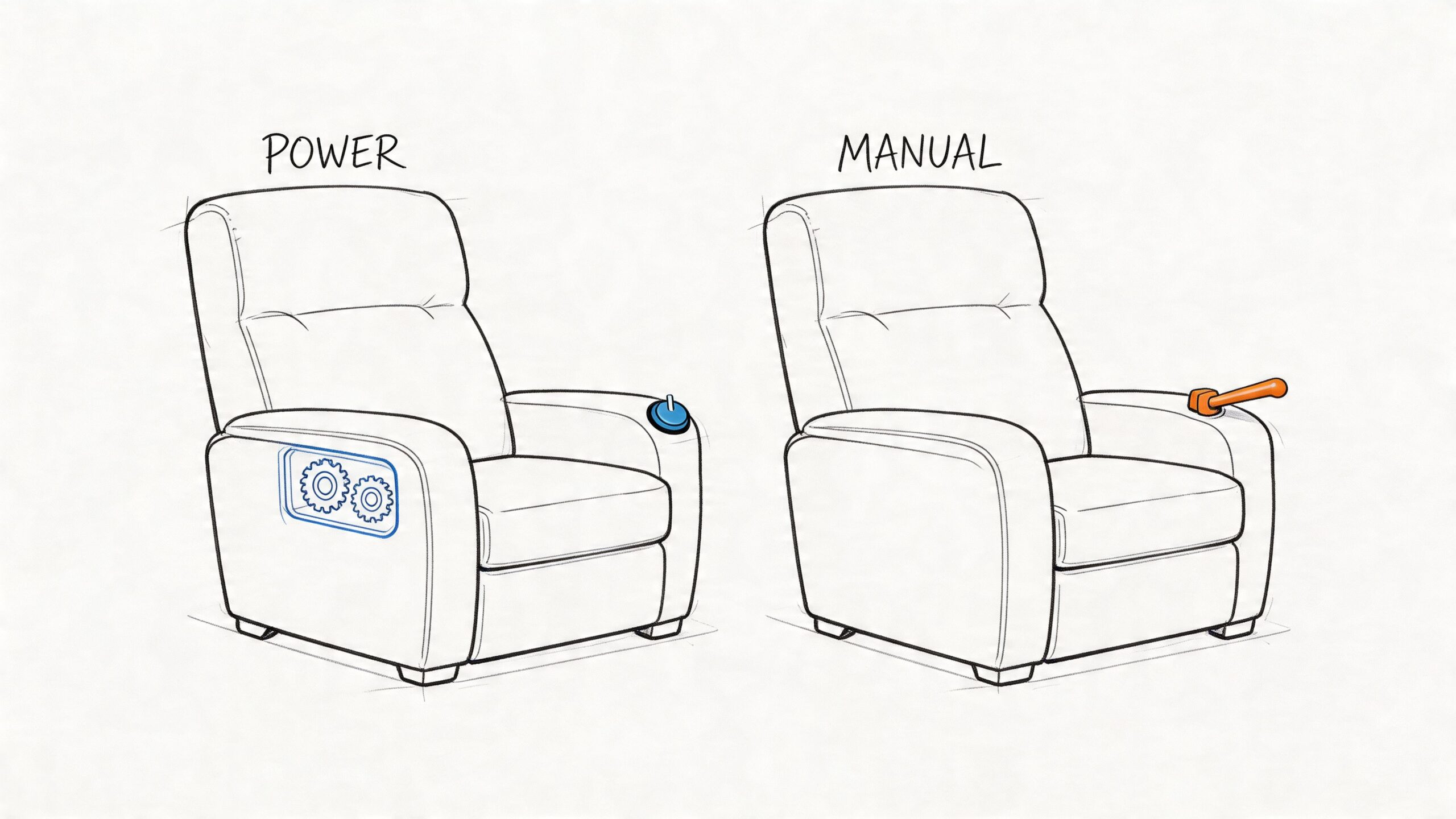
Manual recliners still have a place. They’re straightforward and familiar. Many people enjoy the simplicity.
Power recliners, though, give you finer control. Instead of pushing back and hoping you land in a comfortable spot, you can ease into the angle your body likes best. That matters if your back feels different from one day to the next, or if you need a little neck adjustment without changing the leg position too much.
This is especially helpful with power lumbar support. According to this recliner support guide, adjustable power lumbar support can decrease lower back pressure by 25-40%, and 65% of back pain sufferers report relief from properly fitted seating. That’s why many shoppers looking at La-Z-Boy power recliners focus less on bells and whistles and more on how precisely the chair can be fitted to their posture.
When a lift recliner makes sense
A lift recliner isn’t just for medical recovery. It can also be the right answer for anyone who struggles with the sit-to-stand motion, whether that comes from joint pain, reduced strength, or simple caution after a fall scare.
The biggest benefit is confidence. A lift chair helps you transition up without that hard forward push that can bother the back, knees, or hips. For many families, that feature isn’t about luxury. It’s about independence at home.
Upholstery and construction deserve attention too
Support doesn’t come only from the mechanism. It also comes from what the chair is made of.
Consider these details:
- Performance fabrics: Often a smart choice for busy households because they’re easier to live with day to day.
- Top-grain leathers: A strong option for buyers who want a refined look and long-term wear.
- Dense, resilient cushions: Better for maintaining shape and support over time.
- Solid construction: Important if the recliner will get heavy daily use.
A recliner should feel good now and hold up later. That’s the difference between buying for a season and buying for the long haul.
Features that matter most for real life
If your goal is lasting comfort, prioritize features in this order:
- Fit to your body
- Adjustable lumbar support
- Smooth recline control
- Reliable seat and back cushioning
- Material that suits your household
That order keeps you focused on function first. The style still matters, of course, but support should lead the decision.
How to Test a Recliner in Our LaGrange Showroom
A recliner can be measured on paper, but your body will tell the truth faster than any spec sheet. That’s why in-person testing matters. It takes the guesswork out of online shopping and replaces it with something better. Actual feedback from your back, hips, neck, and legs.
If you’re visiting from LaGrange, West Point, Pine Mountain, or Hogansville, come in with a plan. This guide to shopping for furniture smartly pairs well with the five checks below.
The five-step fit test
1. Put your feet flat first
Sit all the way back in the chair while it’s upright. Your feet should rest flat on the floor without stretching or dangling. If they don’t, the seat height is probably wrong for you.
2. Use the three-finger rule
Check the space between the front edge of the seat and the back of your knees. You want a small gap, about the width of a few fingers. Too much space can mean the seat is too shallow. No space usually means it’s too deep.
3. Check the lumbar lock
Settle your hips fully to the back. Then notice your lower back. You want gentle, steady contact in that curve. If you feel a hollow gap, the chair isn’t supporting you where it needs to.
If your first instinct is to reach for a throw pillow behind your back, that recliner probably isn’t doing its job.
What to test once you start reclining
A chair can feel fine upright and fail once it moves.
Pay attention to these details as you recline:
- Head position: Your neck should feel supported, not pushed forward.
- Back contact: The support should stay with you as the chair opens up.
- Leg support: The footrest should support your legs comfortably instead of stopping too short.
- Control placement: Buttons or handles should be easy to reach and easy to use.
Stay seated longer than you think you need to
Many people decide too quickly. Sit in the chair for a while.
Read on your phone. Rest your arms. Try one position, then another. The best recliners for back support usually reveal themselves after a few minutes, not a few seconds. A chair that seems plush at first can start feeling unsupportive once your body settles into it.
Compare, don’t just sample
Don’t sit in one recliner and assume you’ve found the answer. Try several.
Even among quality brands, the feel can vary quite a bit. One chair may fit your lower back better, another may support your neck better, and a third may feel easier to enter and exit. Side-by-side testing is where shoppers often gain the confidence they couldn’t get from photos alone.
Matching Your Recliner to Your Specific Needs
People often ask for “the best recliner for back support” as if there’s one perfect chair for everybody. There isn’t. The better question is which recliner features match the discomfort you’re trying to reduce.
For lower back pain
If your pain sits mostly in the lumbar area, start with support that fills that inward curve consistently. Adjustable lumbar support is ideal for addressing this need.
Look for a chair that lets you make small changes instead of forcing one fixed shape. If the support is too aggressive, it can feel like a jab. If it’s too weak, it disappears under body weight. The sweet spot feels like the chair is meeting your back, not poking it.
For sciatica and pressure sensitivity
Sciatica can be tricky because the problem isn’t always the back alone. Many people feel pain through the hip, seat, or down the leg. In those cases, a recliner should do two things well. It should reduce pressure in the seated position, and it should let you raise your legs comfortably.
A softer top layer over a supportive seat can help with pressure points. So can a recline system that allows you to change angle gradually instead of dropping backward into one deep position.
The right recliner for sciatica usually feels calm, not dramatic. You’re looking for reduced pressure and easier positioning, not a chair that swallows you.
For posture improvement
Some people aren’t chasing pain relief as much as prevention. They’ve noticed they slump more in the evening, crane their neck while reading, or feel shoulder tension after sitting for a while.
For posture, a firmer and more structured recliner often works better than an ultra-plush one. You want:
- A supportive backrest: It should encourage upright sitting without feeling rigid.
- A helpful headrest: It should keep your head from drifting too far forward.
- Balanced arm support: It should allow your shoulders to relax naturally.
For daily multi-use living
Sometimes the recliner needs to do a little bit of everything. It needs to be comfortable for television, supportive for reading, easy to get in and out of, and attractive enough to fit a well-furnished room.
That’s where model-by-model guidance helps. A local team can help you compare Bassett recliners, custom La-Z-Boy options, and other supportive styles based on your height, room size, and how you’ll use the chair. One factual example is that Watts Furniture & Mattress offers the La-Z-Boy Dorian Wall Recliner with Headrest & Lumbar, which includes both headrest and lumbar adjustability.
The key is to match the chair to the person, not just the problem.
The Watts Difference Customization and Hometown Service
A supportive recliner should fit your body, but it also needs to fit your home. That’s where many big-box and online options fall short. They tend to treat recliners like boxed products with a few color choices. Real customization goes further.
Customization changes comfort and appearance
As an Authorized La-Z-Boy Comfort Studio, the showroom offers access to custom La-Z-Boy recliners in a wide range of fabrics and leathers. That matters because support and style don’t have to compete with each other. You can choose a chair that helps your back and still looks right with your floors, wall color, and other upholstery.
The same is true when shoppers look at Bassett recliners and other American-made furniture lines. Better furniture gives you room to personalize instead of settling for a mass-produced catalog look.
Design help removes a lot of stress
Some customers know exactly what they want. Others know they need a chair but aren’t sure how to coordinate it with an existing sofa, sectional, rug, or wood tones.
That’s where the Interior Design Center makes the process easier:
- Complimentary in-store advice: Helpful for comparing fabrics, colors, and finishes.
- Premium design service: Useful for larger projects that need space planning and mood boards, with the deposit credited toward the purchase.
That kind of guidance helps people avoid a common mistake. They buy a chair for comfort, then regret how it fits the room. With expert eyes on both function and design, you don’t have to make that tradeoff.
Advanced comfort features are worth considering
Some shoppers need more than standard recline. Zero-gravity positioning is one example. According to this explanation of zero-gravity recliners, elevating the legs above the heart at a 120-130° angle can reduce lumbar disc pressure by up to 60%. For someone dealing with ongoing strain, that can be a meaningful feature to test in person.
Not everyone needs zero-gravity. But if your back tends to feel compressed after long workdays or you want a recliner that supports extended relaxation, it’s a feature worth asking about.
Service matters after the sale too
A premium furniture purchase should come with real follow-through.
That includes:
- White-glove delivery and setup
- Flexible financing through Affirm
- A local team you can call if questions come up later
That’s part of what hometown service means. You’re not left sorting out delivery, setup, or support by yourself. For many homeowners in LaGrange, Troup County, and nearby communities, that peace of mind is just as valuable as the chair itself.
Protecting Your Wellness Investment for Years to Come
A good recliner should age gracefully. That takes quality construction, but it also takes regular care. The daily habits are simple, and they make a difference.
A few care habits go a long way
Keep the chair clean according to the material. Fabric needs routine attention so dirt doesn’t settle in. Leather benefits from appropriate conditioning so it stays supple instead of drying out.
It also helps to use the mechanism gently and consistently. Don’t force a footrest closed. Don’t let children treat the chair like playground equipment. A recliner is built for comfort, not rough use.
Pay attention to changes early
If a chair starts sounding different, reclining unevenly, or feeling less supportive than it did at first, don’t ignore it. Small issues are easier to address before they become larger problems.
A recliner that supports your back well should feel consistent. Sudden changes in motion or comfort are worth checking.
Know your warranty and where to turn
Before you buy, review the warranty details so you understand what’s covered and for how long. This page on furniture warranties is a useful place to start.
Local support matters here too. A Service Request and Support Hub gives you a hometown point of contact if something needs attention later. That’s part of the long-term value of buying well. You’re investing in a chair and in the support behind it.
Experience True Comfort at Watts Furniture
The best recliners for back support do more than recline. They support your lumbar area, fit your frame, ease pressure, and help you sit in a way that feels better now and holds up over time.
That’s why this decision is worth slowing down for. A quick click can buy a chair. It usually can’t tell you whether the seat depth is right, whether the lumbar support fits your back, or whether the headrest will help or bother your neck after an hour.
For families in LaGrange, West Point, Pine Mountain, and across Troup County, expert guidance still matters. So does in-person testing. So does customization that reflects your home instead of a warehouse inventory list.
Visit Watts Furniture & Mattress at 212 Commerce Avenue in LaGrange to experience the comfort of La-Z-Boy in person. Ready to transform your space? Book a consultation with the Interior Design Center today and let the team help you curate a home you’ll love.