Find Your Perfect Mattress with Our Guides

How to Furnish a New Home: A LaGrange Guide


There’s a moment that catches almost every new homeowner off guard. You open the door, step inside, and the rooms feel full of promise and strangely intimidating at the same time.
The walls are clean. The floors are bare. Every corner asks for a decision.
That’s why learning how to furnish a new home has less to do with buying everything quickly and more to do with making the right decisions in the right order. A house doesn’t become comfortable because it’s full. It becomes comfortable because the scale works, the seating fits your family, the bedroom helps you rest, and the whole place feels like it belongs to you.
Around the country, homeowners are still investing in where they live. In 2024, 41% of U.S. homeowners undertaking renovation or decor projects purchased large furniture, up from 37% in 2023, according to the 2025 Houzz & Home takeaways reported by Nationwide Group. That lines up with what families in LaGrange, Troup County, West Point, Pine Mountain, and Hogansville often find after a move. They’d rather make smart, lasting choices than keep replacing pieces that never quite worked.
Your New Home Is a Blank Canvas Let's Create a Masterpiece
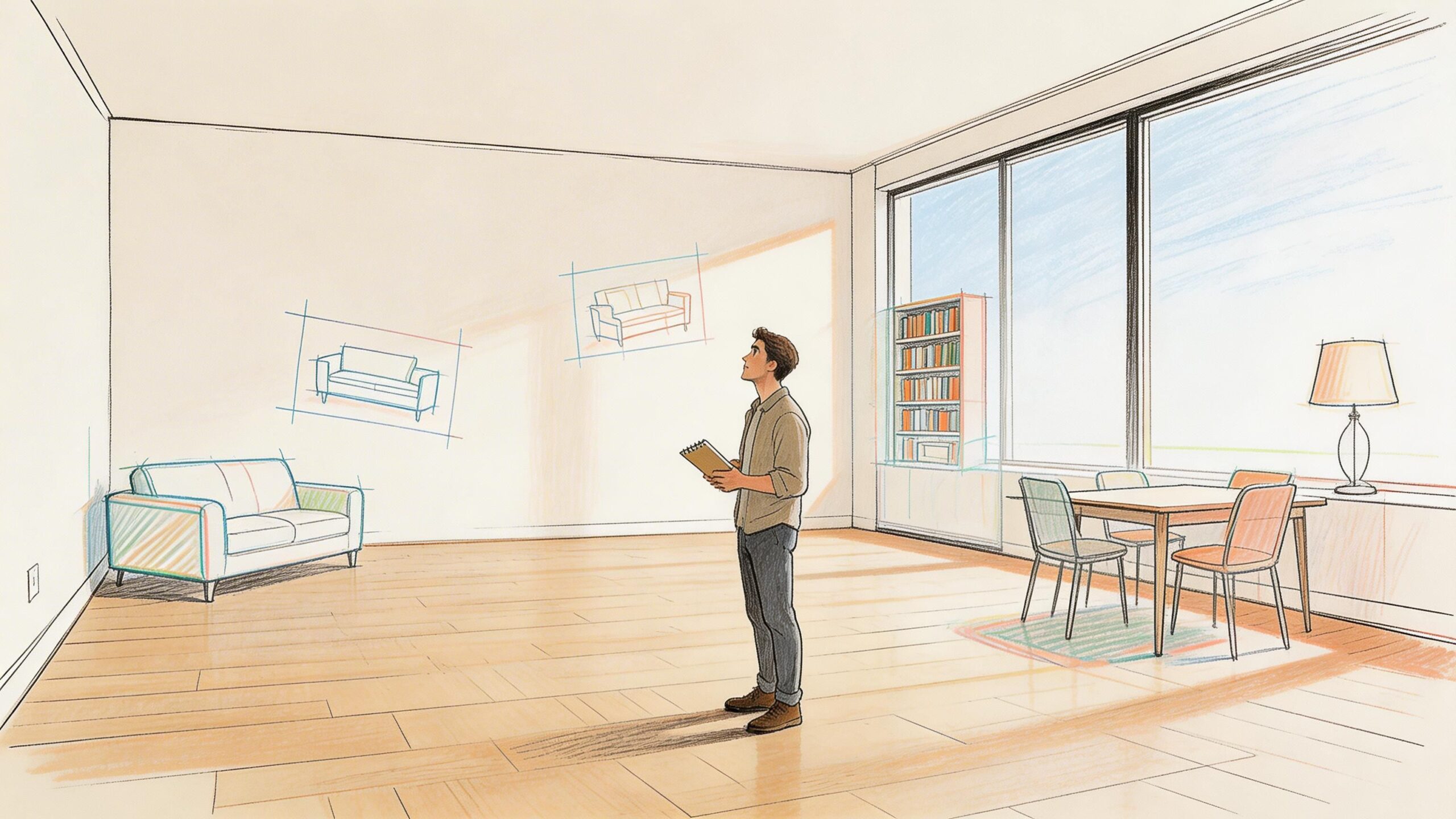
An empty living room can do two things at once. It can make you excited about what’s ahead, and it can make you second-guess every choice before you’ve even started.
That feeling is normal.
Homeowners don’t struggle because they lack taste. They struggle because an empty home demands dozens of decisions all at once. Sofa or sectional. Wood tones or painted finishes. King bed now or later. Formal dining or casual breakfast seating. Open concept rooms make it even harder because one choice affects the next one.
Start with the life you want to live there
A new home shouldn’t be furnished like a display model. It should be arranged around the way your household moves through the day.
If you host family often, your living room needs conversation seating and durable upholstery. If you work from home, the dining area may need to multitask. If you have children or pets, fabrics, finishes, and scale matter more than trend pieces ever will.
Practical rule: Buy for the way the room will be used on an ordinary Tuesday, not just the way you want it to look on a holiday weekend.
That mindset saves people from a lot of regret.
A home should feel settled, not rushed
The mistake I see most often is trying to finish everything at once. That usually leads to compromise pieces. They fill space, but they don’t hold up, fit properly, or connect with the rest of the house.
Better homes come together in layers. Foundational furniture first. Supporting pieces second. Personality last.
Here’s what works better than a panic purchase:
- Choose anchors early. Sofa, bed, dining table, and mattress decisions shape everything else.
- Let each room earn its priority. The rooms you use daily should get attention before guest spaces.
- Think beyond move-in week. A good recliner, a properly sized sectional, or a solid wood bedroom piece should still make sense years from now.
That’s the difference between filling a house and making a home. The first is fast. The second lasts.
Define Your Vision and Set a Realistic Furniture Budget
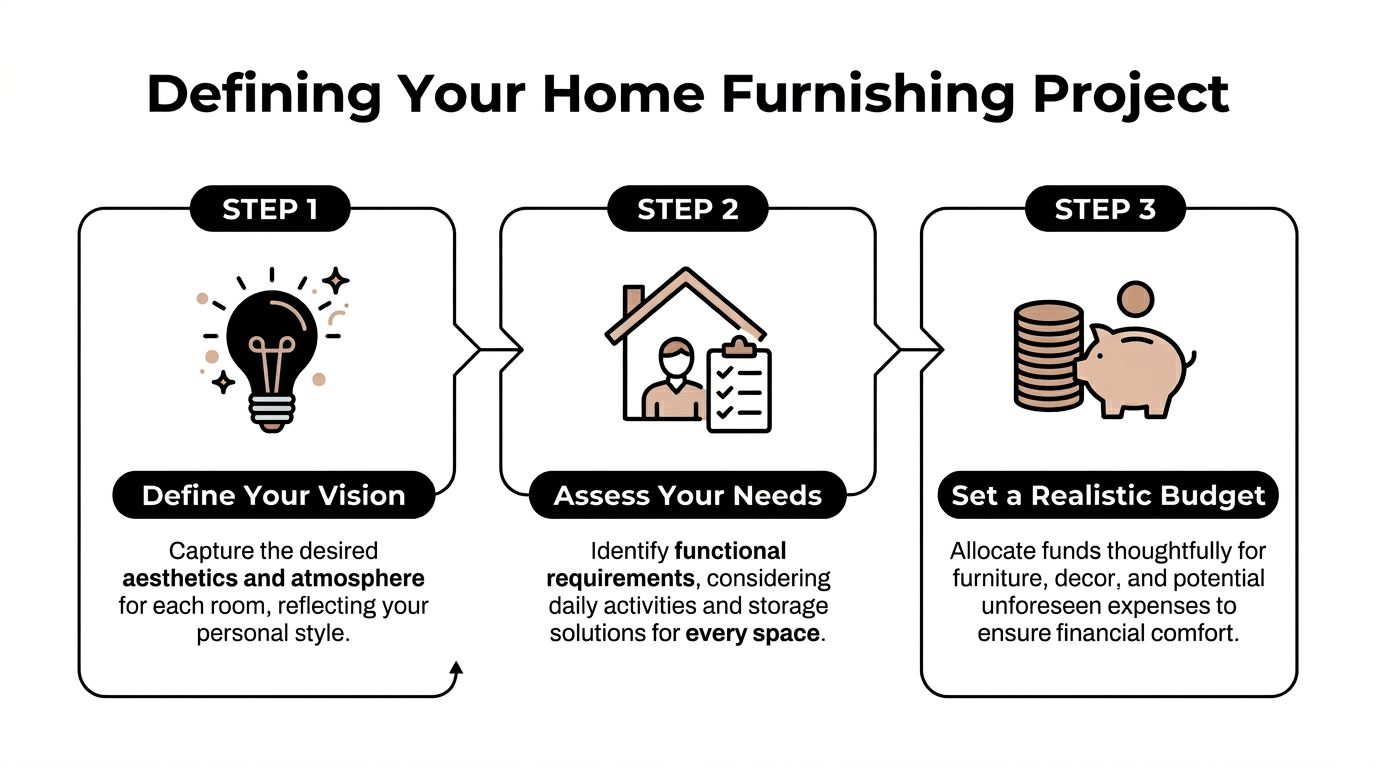
Planning is often underestimated. Before you buy a single lamp or side chair, decide what the home needs to do and what you’re willing to spend to do it well.
That doesn’t mean squeezing all the joy out of the process. It means giving your choices a framework so you’re not making emotional decisions in a showroom or on a website at the end of a long day.
Define your style by function, not labels
“Modern farmhouse,” “traditional,” and “transitional” can be helpful shorthand, but they’re not enough on their own. Two people can use the same style label and want completely different homes.
Start with a short list of questions:
- How do you spend evenings. Reading, watching movies, hosting, working, or chasing kids through the house?
- What do you want the room to feel like. Calm, polished, cozy, formal, relaxed?
- What pieces do you already own and love. A table finish, a leather color, a rug pattern, a bed style?
- What do you dislike immediately. Low seating, delicate fabrics, sharp modern lines, dark wood, glass tops?
A simple mood board helps. It can be digital or done the old-fashioned way with saved photos. What matters is consistency. When you look at the images together, common threads start to show up. Softer arms. Warmer woods. Cleaner lines. Lighter fabrics. More texture. Less clutter.
Build a budget around priorities
A furnishing budget works best when it reflects usage, not just room count. The spaces your family lives in every day deserve the stronger share of the budget.
The living room, primary bedroom, and mattress decisions usually carry the most weight because they affect daily comfort. Accent tables and wall art still matter, but they shouldn’t steal budget from the pieces that take the wear.
Professional planning can make a real difference here. According to Red Awning’s guide to furnishing your home, timelines can be reduced by as much as 73% with professional space planning, and ROI on design services can exceed 550% by helping people avoid expensive measurement and style mistakes.
That matters when you’re trying to balance quality with timing.
Good budgeting isn’t about buying the cheapest option. It’s about knowing where quality will matter every single day.
If you need ideas for making the living room work without losing sight of quality, this guide on smart budget living room ideas is a good place to start.
Decide room order before you shop
Most furnishing stress disappears when room order is clear. Without that order, people bounce between categories and end up with a cart full of accents and no real plan.
A practical furnishing sequence often looks like this:
Primary bedroom first
Sleep affects everything. Start with the mattress, bed, and basic bedroom storage.Living room next
Households gather, unwind, and host here. It needs seating that fits both the room and the routine.Dining area after that
Some homes need a full dining setup right away. Others can phase this in if casual seating handles daily meals.Secondary rooms last
Guest rooms, bonus rooms, and decorative corners can come together once the high-use spaces are settled.
Use design help when decisions start colliding
There’s a point where fabric, finish, scale, and budget all start bumping into each other. That’s when expert guidance saves time.
A strong design center should be able to help in two ways:
| Need | Best kind of help |
|---|---|
| Quick help choosing fabrics, colors, or coordinating pieces | Complimentary in-store design advice |
| Whole-room planning, layout help, and visual direction | Premium design service with floor planning and mood boards |
That’s the value of an Interior Design Center. Some homeowners only need a second set of eyes on fabric and color. Others need full room layouts, mood boards, and help solving the whole house one step at a time.
Mastering Your Floor Plan with Smart Space Planning
Most furnishing mistakes don’t start with bad taste. They start with bad measurements.
A sofa can be beautiful and still be wrong. A dining table can be well made and still block the room. A bed can fit on paper and still make the bedroom frustrating to use every morning.
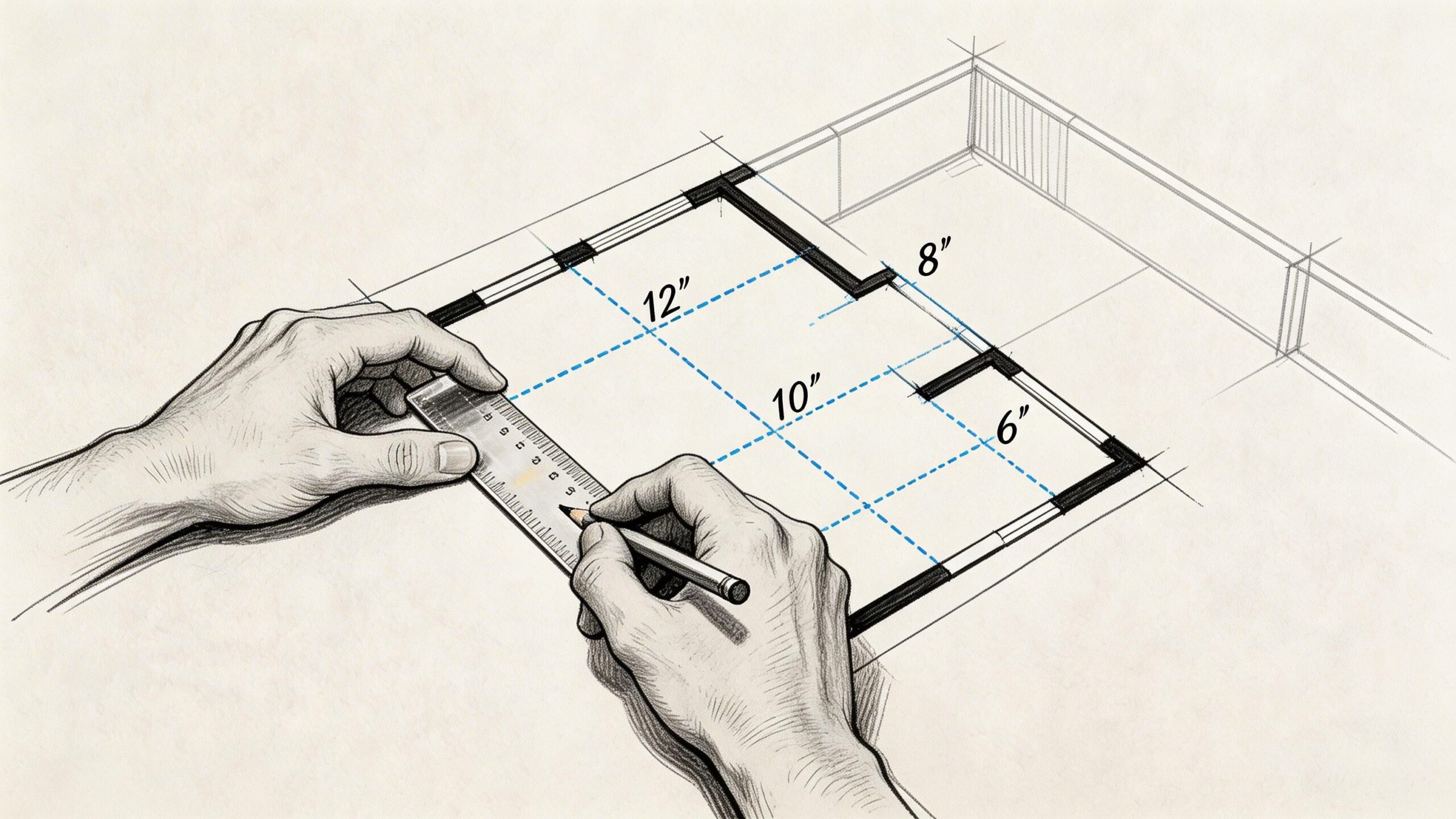
Measure the room, then measure the path
People usually measure wall length and stop there. That’s only the first half of the job.
You also need to measure the route the furniture will travel. Doorways, stair turns, hallway width, ceiling drops, and entry clearance all matter. If the piece can’t get into the room, it doesn’t matter how perfect it looked online.
To keep a room comfortable, ASID standards call for a minimum of 36-inch pathways for traffic flow, as noted by the Home Staging Institute. That one rule explains why some rooms feel easy to move through and others feel cramped from the day furniture arrives.
Watch scale, not just dimensions
A room can technically fit a piece and still feel off.
That happens when the visual weight is wrong. A bulky sectional can overwhelm a modest room. A tiny rug can make good furniture look disconnected. Slim chairs around a heavy table can feel mismatched even when every measurement checks out.
Use this quick reference when planning:
- Wall length tells you placement
- Walkway clearance tells you comfort
- Seat depth tells you how the piece will live
- Arm height and back height affect visual weight
- Rug size determines whether the room feels grounded or scattered
Avoid the guesswork of online shopping with our expert Design Center. Scale is one of the hardest things to judge from a screen.
If you want a deeper walkthrough before you start sketching, this article on how to plan a room layout is useful.
Awkward corners need purpose
Open plans and newer builds often create strange spaces. A niche near the fireplace. A wall that’s too short for a standard sofa. A corner that collects clutter because nothing seems to belong there.
The fix isn’t always to fill every gap. Sometimes the right move is to leave breathing room. Other times, a custom chair, a smaller-scale recliner, a narrow console, or a properly sized sectional solves the issue cleanly.
Here’s a simple comparison:
| Common problem | What usually fails | What usually works |
|---|---|---|
| Oversized seating in a modest room | Pushing all furniture to the walls | Correct scale with clear walk paths |
| Narrow entry or stair turn | Buying first, measuring later | Mapping access before ordering |
| Floating furniture in open concept layouts | Tiny rugs and random tables | Anchoring the zone with correctly sized pieces |
| Odd alcove or angle | Forcing a standard-size item | Choosing custom scale or a different function |
A paper floor plan still goes a long way. So does professional space planning when the room is doing more than one job. The less guesswork you allow at this stage, the easier every purchase becomes.
Choosing Key Furniture Pieces Built for Generations
After the measurements are done and the layout makes sense, the next decisions shape how your home feels for years. This is the stage where rushed buying usually shows up later as regret.
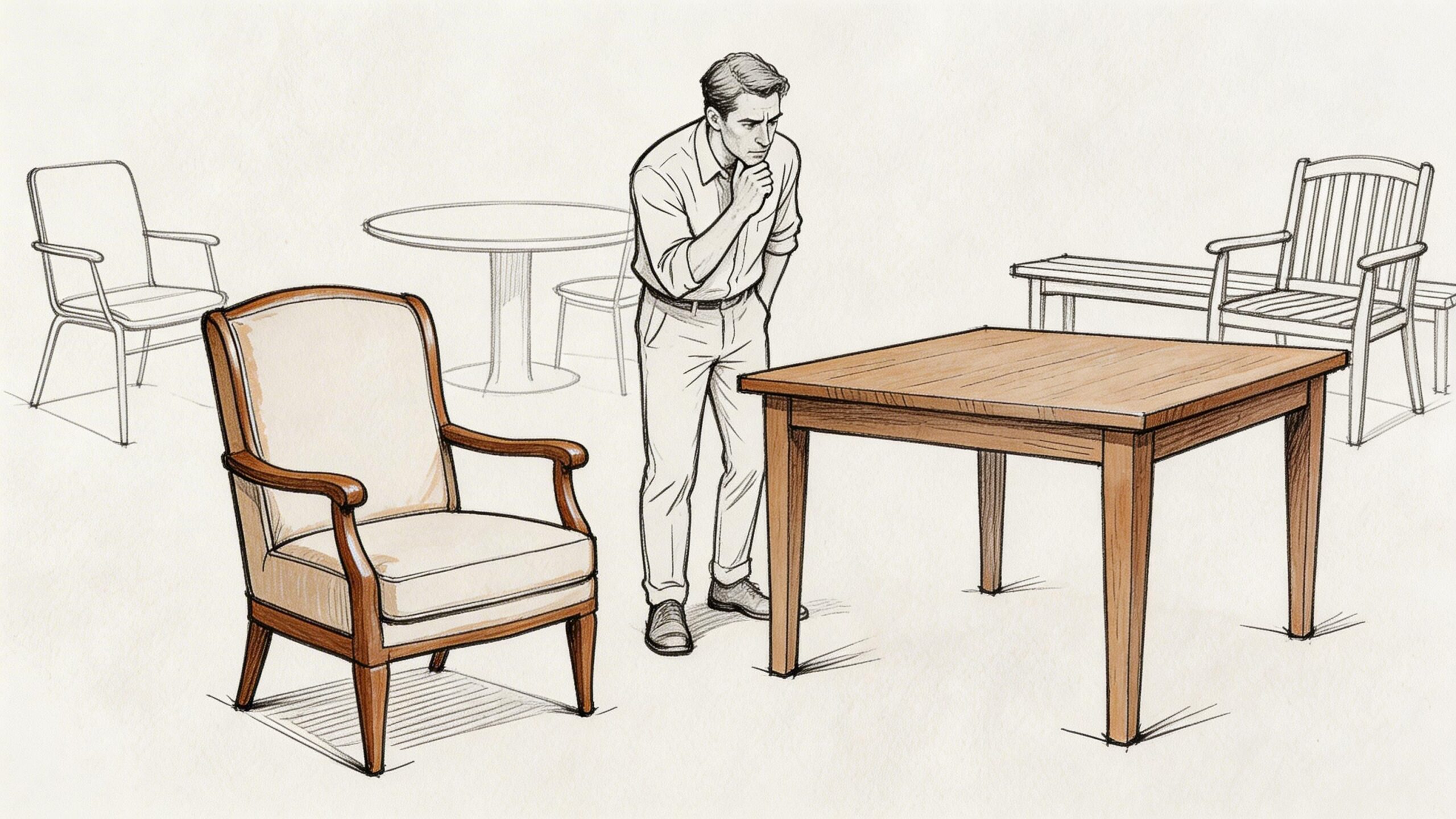
Foundational pieces need to do more than look good on delivery day. They need to fit the room, support daily use, and still feel right after holidays, houseguests, and ordinary Tuesday nights. Around LaGrange, I usually tell people to spend the most care on the furniture you sit on, sleep on, and gather around.
Start with the living room anchors
The living room takes a beating. It handles TV time, conversations, naps, kids, pets, and company, so the main seating needs honest comfort and construction you can trust.
Focus first on these pieces:
- Sofa or sectional
- Recliner or occasional chair
- Cocktail table and end tables
- Rug that anchors the seating group
- Lighting for reading, relaxing, and everyday use
A sectional earns its place in a room that has the scale for it and a household that gathers there often. A sofa with one or two chairs usually gives you better flexibility, easier traffic flow, and more freedom if you rearrange later.
Recliners deserve the same attention. Custom La-Z-Boy recliners and Bassett recliners stand out because comfort is personal. Seat depth, back height, arm shape, and fabric all change whether that chair becomes the best seat in the house or the one nobody claims.
Don’t treat the bedroom like an afterthought
I see this mistake often after a move. Families pour the budget into the main living area, then push the bedroom to the bottom of the list.
That choice catches up fast.
A good mattress, a solid bed, and storage that works with your routine affect daily life more than another decorative piece in the den. Serta mattresses make sense for many households because you can test support and comfort in person instead of guessing from online descriptions.
Build the room in a sensible order:
- Mattress and support system first
- Bed frame second
- Nightstands that fit your real habits
- Dressers or chests that hold what you own
Matching sets are not the goal. A bedroom works better when each piece earns its spot.
Dining furniture should serve the way your family lives
Dining rooms reveal buying mistakes quickly. A formal table that rarely gets used can become a catchall. A delicate finish in a busy breakfast area can show wear before the first year is over.
Buy for the life happening in the room. If the table handles weeknight meals, homework, and holiday hosting, choose materials that can take that load. If you entertain often, extension leaves and chairs that move easily are worth the extra thought.
Solid wood still matters here. It wears in a way many cheaper materials do not, and it usually gives you a better chance of refinishing, repairing, or keeping the piece through style changes. If you want a practical benchmark, this guide on how long quality furniture should last helps set expectations.
That staying power is one reason American-made furniture from collections like Kincaid and Bassett continues to make sense for long-term homes.
Custom options solve real room problems
Customization is not only about color selection. It solves fit problems, family-life problems, and architecture problems that boxed furniture often leaves behind.
A 2023 Houzz report cited by Decorating Den found that 42% of new homeowners struggle with awkward spaces such as niches and odd angles. Custom scale, fabric, finish, and configuration become especially useful in those situations.
Custom choices help when:
- A standard sectional is too deep for the room
- A recliner needs the right scale for a narrow wall or reading nook
- A wood finish should coordinate with existing floors or cabinetry
- A performance fabric is needed for children, pets, or frequent guests
- A room needs character without relying on mass-produced pieces
Furniture looks more settled when it suits the house instead of fighting it.
An Interior Design Center earns its keep by solving those problems. In-store guidance helps when you need to compare fabrics, leathers, finishes, and proportions side by side. Full design help matters even more when several pieces need to work together across one room.
Watts Furniture & Mattress offers both in-store design help and full planning support, along with customizable lines such as La-Z-Boy, Bassett, and Kincaid. That kind of local, hands-on service is the difference between filling a room and building a home you will still be proud of years from now.
What holds up, and what disappoints
A simple comparison helps:
| If you choose for | What often happens |
|---|---|
| Lowest upfront price | You replace sooner and rarely feel satisfied with the room |
| Fast shipping alone | Scale, comfort, and finish details get missed |
| A catalog look | The room feels generic and disconnected from the home |
| Construction, comfort, and customization | The room feels personal, settled, and easier to live with |
Not every piece has to become an heirloom. The key pieces should be strong enough to carry the home well. Sofas, recliners, dining tables, beds, and mattresses deserve the most care because you live with them every day.
Bringing Your Vision to Life with Financing and White-Glove Service
Even a well-planned home usually isn’t furnished in one sweep. That’s not a failure. It’s often the wisest way to do it.
Moves come with competing expenses. Utility deposits, moving costs, paint, window treatments, and all the little things people forget to budget for. That’s exactly why the order of purchases matters.
Buy in sequence, not in panic
For many households, a phased approach is the most practical one. For the 58% of new movers who face cash-flow issues after a move, a sequenced purchasing plan supported by flexible financing is critical, according to NewHomeSource.
That makes good sense in practice.
A quality mattress, main seating, and dining essentials usually deserve priority over decorative fillers. If you use financing, use it to secure the pieces that affect comfort and function first.
Useful priorities often look like this:
- First purchase group. Mattress, bed, sofa, or sectional
- Second group. Recliner, dining set, primary storage pieces
- Final group. Accent chairs, occasional tables, lamps, art, and finishing layers
If you’re comparing options, this guide on how to finance furniture can help explain the process.
Financing should support quality, not excuse impulse buying
Flexible payment options can be a smart tool. 0% APR financing can make a better-quality purchase possible without forcing you into a rushed compromise.
The key is discipline.
Use financing to buy durable, foundational pieces you already planned for. Don’t use it to stack random decor buys that weren’t part of the original vision. A financed mistake is still a mistake.
Delivery day should reduce stress, not create it
Service matters more than people expect here.
White-glove delivery and setup aren’t small perks. They change the whole experience. A trained team can place the furniture properly, assemble it correctly, and help prevent damage to both the piece and the home.
That matters when you’re bringing in:
- Large sectionals
- Recliners with motion features
- Solid wood bedroom pieces
- Dining tables that need careful assembly
- Mattresses and adjustable bases
The final stage of a furnishing project should feel like relief. If delivery creates confusion, scratches, or missing setup details, the whole purchase loses value.
Long-term support matters too. A reliable retailer should have a clear path for follow-up questions, service needs, and issue resolution after the sale. That’s where a Service Request and Support Hub becomes part of the value, especially for larger purchases and custom orders.
Adding Personality and Protecting Your Investment
Once the main pieces are in place, the room starts asking for warmth. Rugs, lighting, art, pillows, and accent decor do their work here.
The trick is restraint.
A room usually feels better with a few intentional layers than with too many decorative items competing for attention. Add texture through a rug. Add height with lamps. Add character with art and a few objects that mean something to your family.
Finish with purpose
A good finishing layer often includes:
- A rug that connects the seating or dining area
- Lamps that soften overhead lighting
- Wall art sized to the furniture below it
- Pillows or throws that add contrast without clutter
Care is part of the purchase
Protection starts with routine habits. Use coasters on wood. Dust regularly with appropriate products. Keep leather conditioned according to the manufacturer’s guidance. Rotate cushions and follow care instructions for performance fabrics.
For wood pieces especially, prevention matters more than repair. This guide to protecting wood furniture from scratches and stains covers the basics well.
A well-made piece rewards simple care. It doesn’t need babying, but it does deserve attention.
Your Partner in Creating a Home You Love in LaGrange
A new home rarely comes together by accident. It comes together because the choices were thoughtful.
That means starting with a real plan. Measuring carefully. Buying the foundational pieces first. Choosing comfort and construction over quick fixes. Using customization where the room needs a better answer. Finishing with service that makes delivery and setup feel easy, not chaotic.
That approach works especially well for families in LaGrange and nearby communities because homes here are lived in. Rooms need to hold up to everyday life, weekend guests, school nights, and the kind of comfort that makes people want to stay awhile.
A local furnishing experience should help remove pressure, not add to it. Complimentary in-store design advice can help with fabrics and colors. A premium design service can take on layout planning, mood boards, and room-by-room coordination when the project gets more complex. White-glove delivery and a service path after the sale matter just as much as what sits on the showroom floor.
If you want a home that feels personal, settled, and lasting, don’t rush the process. Choose pieces with staying power. Choose support that keeps the process manageable. Choose quality that still makes sense years from now.
Visit Watts Furniture & Mattress to start building a home that feels right from day one. Visit the showroom at 212 Commerce Avenue in LaGrange to experience the comfort of La-Z-Boy in person. Ready to transform your space? Book a consultation with the Interior Design Center today and let the team help you curate a home you’ll love.