Find Your Perfect Mattress with Our Guides

How to Plan a Room Layout: A Watts Furniture Guide

You’re standing in the room with a tape measure, a few saved photos on your phone, and a strong feeling that the space should work better than it does.
Maybe it’s a brand-new place in LaGrange. Maybe it’s a family home in Troup County with a tricky corner, narrow passage, or a fireplace that seems to control everything. Maybe the room already has furniture, but nothing feels settled. The sofa looks too large. The chair that seemed perfect in the store blocks the walkway. The whole room feels busy and unfinished at the same time.
That feeling is common, with many homes now needing to do more than one job. A 2025 NKBA survey found that 68% of U.S. renters under 35 need convertible furniture for dual-purpose spaces (Livingetc). Homeowners in compact homes face the same challenge. One room often has to serve as a living room, office, dining spot, and catch-all.
A good layout solves more than a decorating problem. It changes how a room feels when you walk into it and how it supports everyday life. That’s why learning how to plan a room layout matters before you buy a single new piece.
From Empty Space to Dream Room
Most first room projects go wrong in one of two ways. People either buy too fast, or they freeze because they’re afraid of making an expensive mistake.
Both reactions make sense. Furniture is a big purchase, and layout decisions affect everything after that. If the sofa goes in the wrong place, the rug size changes. If the desk lands in the only clear traffic path, the room starts working against you.
Older homes around LaGrange, Hogansville, and West Point often bring extra personality along with extra layout puzzles. Newer homes can be challenging in a different way. Open plans sound easy until you realize the room has no natural stopping point and every piece needs to earn its place.
A room doesn’t need more furniture first. It often needs a clearer plan.
Homeowners often find relief when they stop thinking in terms of “What should I buy?” and start thinking in terms of “How should this room live?”, the process gets simpler.
One helpful early exercise is building a visual direction before you commit to a layout. A quick mood board for interior design can help you separate what you like from what your room needs. Sometimes people love a look online that doesn’t fit the scale, architecture, or daily use of their own home.
The practical answer is usually a mix of DIY effort and professional thinking. That middle ground works well. You don’t need a design degree to create a polished room, but you do need a method.
And if you care about furniture built for generations, not just a few seasons, planning becomes even more important. Better furniture deserves a better layout. So does your home.
Laying the Groundwork Measure Twice Buy Once
Rooms rarely go wrong because of taste alone. They go wrong because the numbers were off by a few inches, a doorway was overlooked, or a favorite piece looked smaller online than it feels in person.
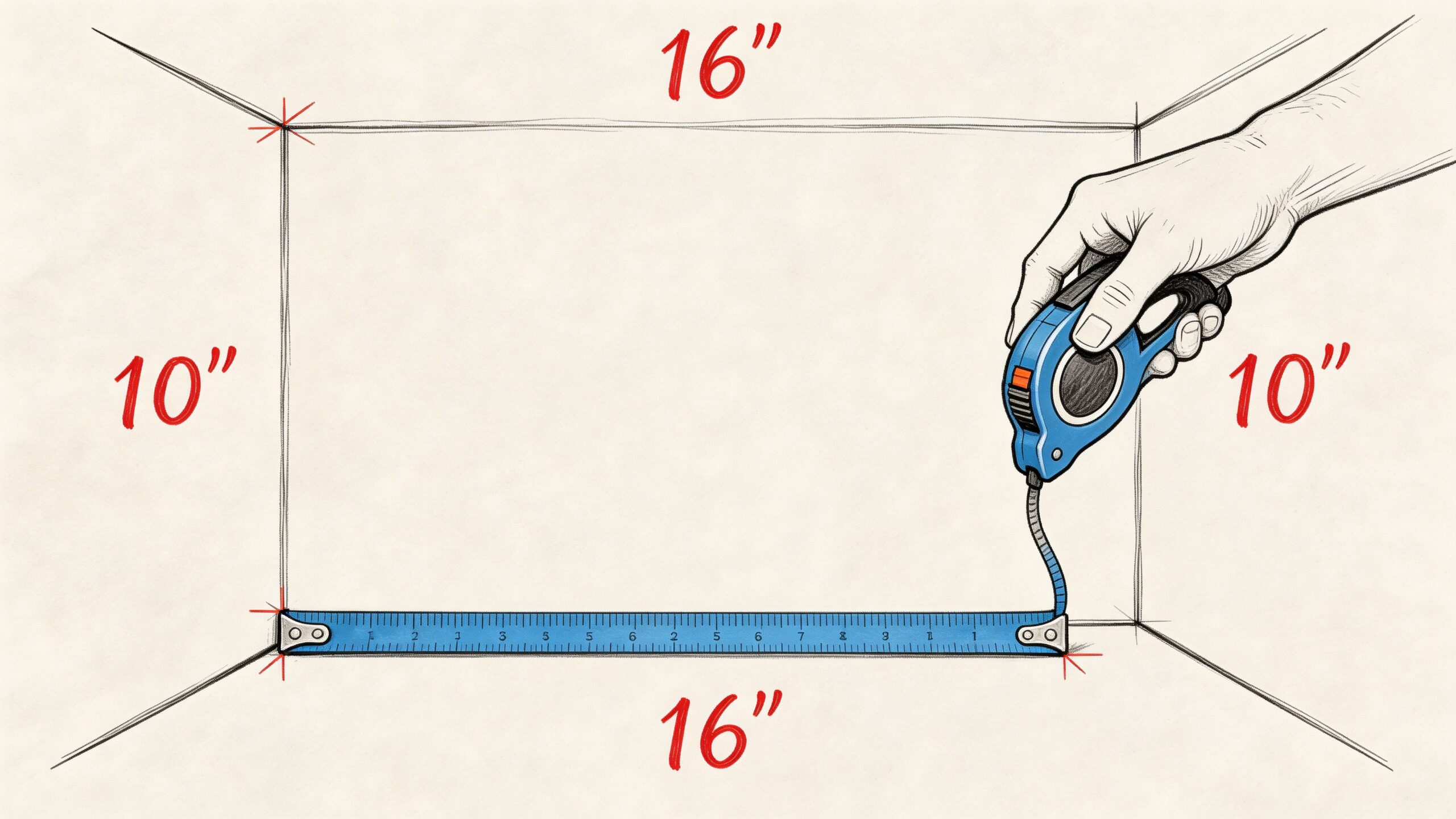
Good layout work starts with the room as it exists today, not the version you hope it becomes after shopping. That means measuring every surface and every obstacle before you look at sofas, beds, or sectionals. In older LaGrange homes, that might mean noting a chimney bump-out or uneven wall. In newer open-plan homes, it often means defining where one zone ends and the next begins.
What to measure first
Start with the shell of the room, then work inward.
- Wall lengths: Measure each wall section separately. Small jogs and recesses matter.
- Ceiling height: This affects tall storage, headboards, art placement, and how heavy a room can feel.
- Door openings: Record the width and note the swing direction.
- Window size and placement: Include trim, sill height, and distance from the nearest corner.
- Fixed features: Fireplaces, built-ins, columns, radiators, floor vents, and returns all shape the plan.
Then record the details that tend to get missed on a first pass.
- Outlet locations: These affect lamps, charging tables, motion furniture, and media placement.
- Light switches: Keep them clear and easy to reach.
- Air vents and returns: Furniture can sit near them, but it should not block airflow.
- Baseboards and trim depth: These change how closely case pieces can sit to the wall.
A quick sketch on graph paper works fine. The goal is accuracy, not a perfect drawing.
Why this step matters so much
A layout can look balanced on paper and still fail in daily life. I see that when a dresser covers part of a window, a recliner clips the walkway when extended, or a dining chair backs into a traffic path every time someone stands up.
The other common problem is buying to the room’s appearance instead of its dimensions. Photos flatten scale. Deep seating, thick arms, and oversized nightstands often read smaller in a product image than they do in a real house.
Measure the room. Then measure the route into it.
That second step saves people more frustration than they expect. A well-made sofa is still the wrong choice if it cannot clear the front door, turn down a hallway, or make it up the stairs. If you want a solid reference before choosing pieces, this guide on how to measure furniture before delivery helps with both room fit and access fit.
A simple measuring checklist
Keep one page, or one note on your phone, with these dimensions in one place:
| Item to record | Why it matters |
|---|---|
| Overall room length and width | Establishes the usable footprint |
| Each wall section | Catches niches, offsets, and uneven spans |
| Door location and swing | Protects clearance and everyday function |
| Window width, height, and sill height | Helps place seating, storage, and beds |
| Fireplaces, built-ins, and vents | Limits placement and preserves function |
| Outlets and switches | Supports lighting and media planning |
This is also how professional planning starts at Watts Furniture. Before fabric choices, wood finishes, or custom sizing, the room gets measured properly. That groundwork is what makes better furniture feel like it belongs in the home for years, not just until the first layout mistake becomes too annoying to ignore.
Finding Your Focus and Defining the Flow
Once the room is measured, the next job is deciding what the room is about.
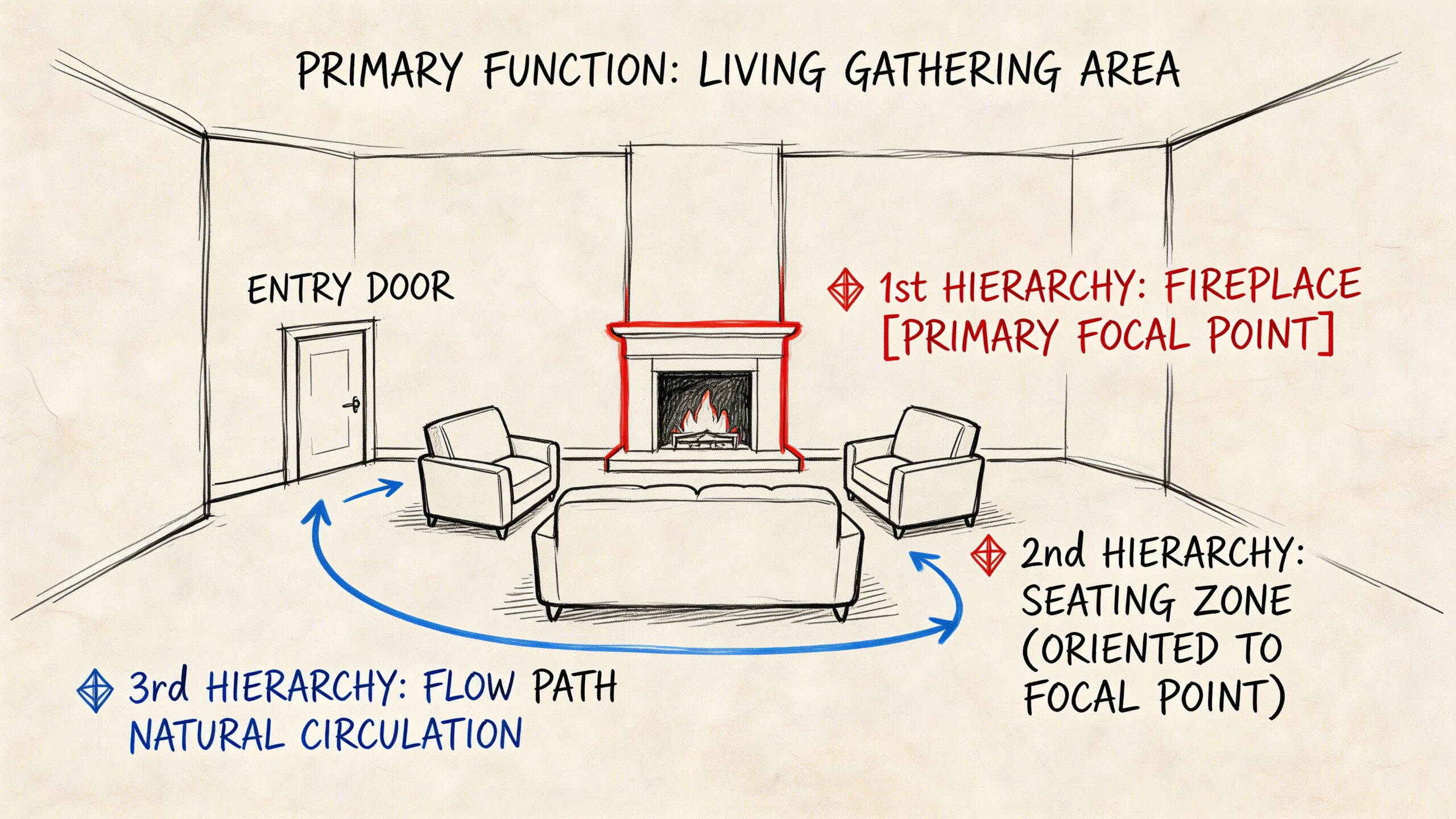
That sounds obvious, but many frustrating layouts come from trying to make every wall equally important. A room needs a visual leader and a clear way to move through it. Without those two things, even expensive furniture can feel random.
Pick the focal point before you place the big pieces
The focal point might be architectural, like a fireplace or large window. It might be functional, like the TV in a family room. In some spaces, it’s a bed, a dining table, or a striking cabinet.
The mistake is forcing the wrong focal point.
If the room has a gorgeous bank of windows, don’t let an awkward media cabinet become the star unless the room’s daily use demands it. If the family gathers around the TV every night, don’t pretend the wall art is the true center of the room. Good layouts work with real life, not just aspiration.
A seating arrangement should support that focal point without making conversation feel strained. In living spaces, people connect more naturally when seats aren’t placed too far apart or lined up like a waiting room.
Use clearance rules that make daily life easier
Traffic flow is what separates a pretty room from a comfortable one.
A core principle of interior design is maintaining clear traffic paths. Experts recommend a minimum of 36 inches for major walkways, 16-18 inches between a sofa and coffee table, and 24-42 inches between armchairs for comfortable movement (Mix & Match Design).
Those numbers aren’t stiff design rules. They’re practical comfort rules.
- Major walkways: Keep them open so people can move naturally through the room.
- Sofa to coffee table: Close enough to reach a drink, far enough to avoid banged shins.
- Armchair spacing: Wide enough for breathing room and, in many cases, a side table.
If people have to turn sideways, step around corners, or apologize while passing through the room, the layout isn’t finished.
One of the easiest ways to improve a room is to stop pushing every piece to the perimeter. That can create a giant empty center, weakens conversation, and makes the room feel less intentional. Floating furniture can work well when it preserves a clean path and supports the focal point.
For more examples, these uncommon furniture arrangements that work wonders can help you think past the standard “sofa on the longest wall” habit.
From Bubble Diagrams to Scaled Layouts
A good layout usually starts rough.
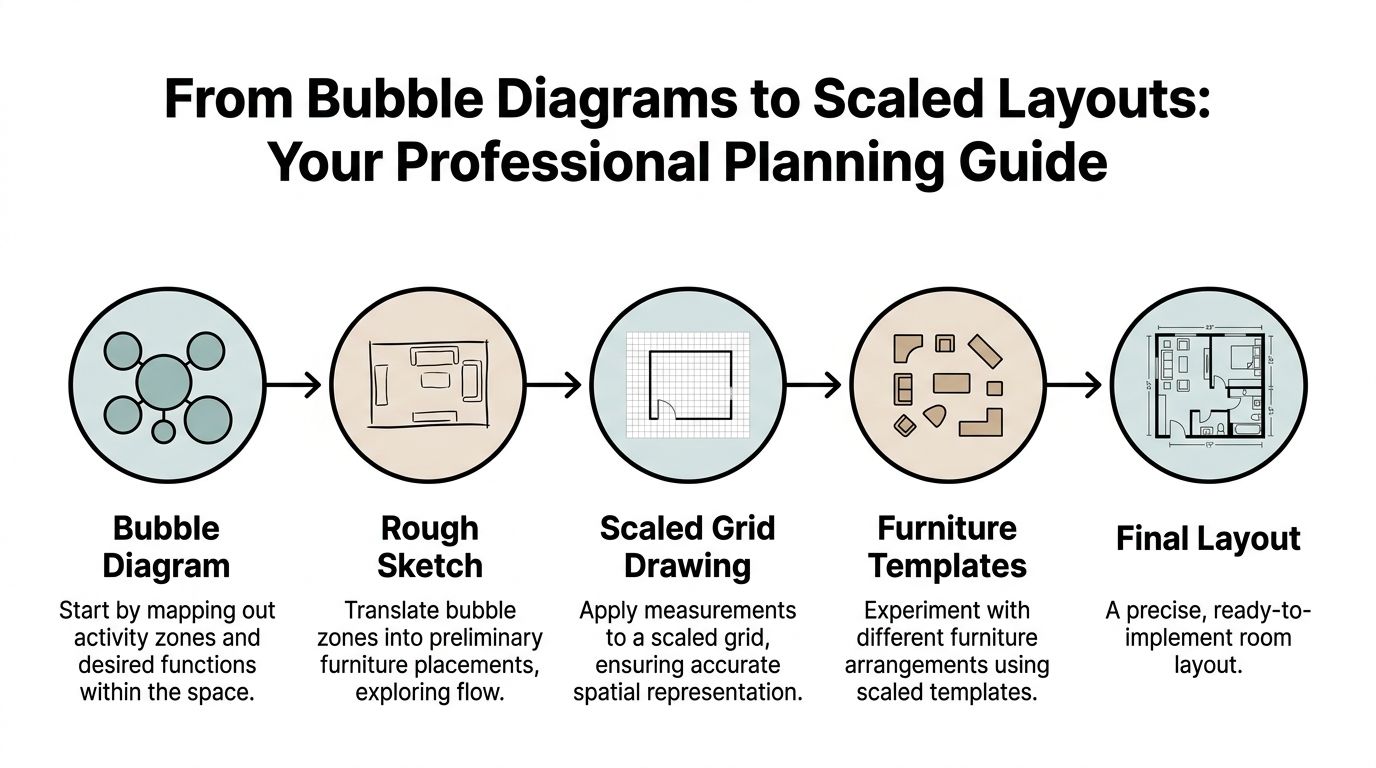
Before picking exact furniture pieces, map how the room needs to work. That first draft keeps you from forcing a sofa, desk, or sectional into a room that wants a different arrangement.
Start with bubbles, not furniture
Bubble diagrams are loose by design. Draw simple shapes for the activities the room needs to support, such as conversation, reading, TV watching, desk work, toys, or occasional guests.
This step helps homeowners in LaGrange and the surrounding area solve the problem in the right order. Function comes first. Style decisions get easier after that.
Hybrid rooms benefit the most. A family room that also handles homework, remote work, or overnight guests needs zones that cooperate. A desk used two hours a day should not control the whole room. A sleeper needs enough open space to function when it is extended, not just when it looks good folded up.
Turn the bubbles into a scaled plan
After the zoning is clear, put the room on paper at a consistent scale.
Designers do this because scale exposes problems early. Oversized furniture is one of the most common buying mistakes, and a measured plan gives you a much better shot at getting the room right the first time, as noted earlier.
A practical process looks like this:
- Draw the room to scale on graph paper or in a digital planning tool.
- Add fixed features such as doors, windows, vents, fireplaces, and floor outlets.
- Make furniture cutouts using each piece's width and depth.
- Test multiple arrangements instead of stopping at the first one that fits.
- Walk through the plan on paper and make sure each zone still works.
That last step matters more than people expect. I have seen plenty of layouts fit mathematically and still feel awkward once you notice the recliner blocks a window trim line, the dining chair backs catch a walkway, or the bed leaves no comfortable spot for a nightstand.
Use tools that help you see the room
Graph paper works. Painter's tape works. Digital room planners work too.
The best tool is the one you will use carefully. For many first-time planners, a tape measure, paper cutouts, and a marked floor do the job better than a fancy app. If you need help gathering accurate dimensions first, this guide on how to measure a room for furniture gives you a clear starting point.
A room-planning service adds another layer of confidence. That can be helpful when the room has multiple doorways, an awkward fireplace wall, or a hard-working layout that needs to balance everyday comfort with long-term furniture quality.
A plan on paper catches problems while they are still easy to fix.
One last step separates a decent layout from a dependable one. Tape the footprint of the main pieces onto the floor. Walk the path to the kitchen. Open the door fully. Sit where the chair will go. That quick test brings scale to life, and it often reveals whether you need a smaller piece, a different orientation, or a custom option that fits the room instead of fighting it.
Choosing Furniture That Fits Your Life and Layout
A good floor plan narrows your choices in a useful way. It doesn’t limit creativity. It keeps you from buying pieces that fight the room.
That’s where many people make the biggest shift. They stop asking, “Do I like this sofa?” and start asking, “Does this sofa support the room I planned?”
Match the furniture to the room’s pressure points
Every room has one or two design pressures.
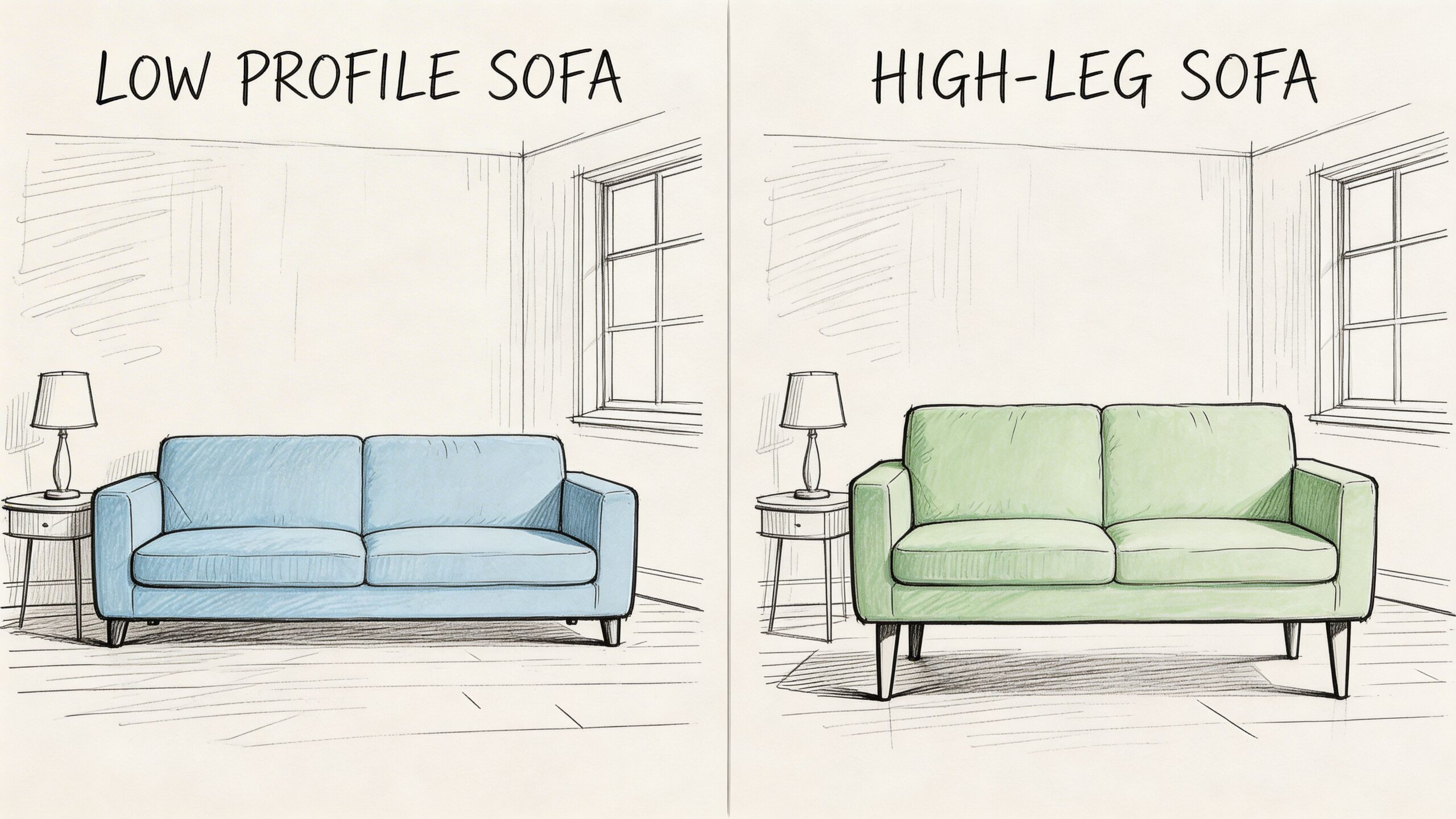
Sometimes it’s scale. In a tighter room, a high-leg sofa can feel lighter than a boxy piece that sits heavy to the floor. Sometimes the pressure is flexibility. In a multi-use room, modular seating or a reconfigurable sectional may solve more problems than a sofa-and-chair pairing.
Sometimes the pressure is architecture. A long, narrow room may need pieces that float away from the walls and define zones. A room with multiple doorways may need lower-profile seating so sightlines stay open.
Here’s a simple way to think through common trade-offs:
| If the room needs… | Consider… | Be careful with… |
|---|---|---|
| More openness | High-leg seating, lighter visual profiles | Bulky arms and deep bases |
| More seating in one zone | A sectional | Overcrowding corners |
| Flexibility | Swivels, modular pieces, movable ottomans | One oversized fixed piece |
| Better storage | Console tables, closed storage pieces | Adding storage that blocks circulation |
Leave breathing room
Discipline pays off here.
A Goldilocks scaling methodology recommends leaving 15-20% negative space and using blue painter’s tape for life-size mockups before ordering. That step helps avoid the 50% return rate for purchases made from unscaled plans (LRL Builders).
Negative space is not wasted space. It’s what lets the room breathe.
People often fear a room will feel unfinished unless every wall has something on it. The opposite is often true. A crowded room feels more incomplete because nothing can stand out and nothing can function smoothly.
Buy for use, then refine for style
When clients struggle between two good choices, the better answer is usually the one that supports daily habits.
If you read every evening, the chair matters as much as the sofa. If your family gathers for movies, seat depth and orientation matter more than a trendy silhouette. If you host often, a sectional may outperform separate seating because it keeps the conversation zone connected. Custom furniture also earns its value. With Custom La-Z-Boy recliners, Bassett upholstery options, and American-made furniture from lines such as Kincaid, it’s possible to match finish, fabric, and scale to the actual plan instead of settling for “almost right.” That’s a very different experience from mass-produced catalog shopping.
A well-planned room deserves pieces that fit the plan, the home, and the people using it.
Bringing It All Together Lighting Color and Final Touches
A room layout isn’t finished when the furniture is placed. It’s finished when the room feels balanced, usable, and easy to be in.
Lighting does a lot of that work. Most rooms need a mix of ambient light for general visibility, task light for reading or working, and accent light to bring attention to artwork, shelving, or texture. A single overhead fixture seldom carries the whole room effectively.
Light the zones you created
If your layout includes a reading chair, that seat needs its own lamp. If one end of the room handles desk work, that area needs focused light that doesn’t spill harshly into the rest of the space. If the room opens into another area, layered lighting helps each zone feel intentional rather than blurred together.
For more guidance on that side of planning, this article on putting your living room in the best light is worth keeping handy.
Use a color ratio that keeps the room calm
The 60-30-10 color rule is one of the simplest ways to make a room look polished. It suggests 60% of a room’s color for walls, 30% for secondary elements like upholstery on a Bassett sofa, and 10% for accents, and this balanced approach is proven to reduce visual stress by 35% (Jaipur Rugs).
That framework helps especially when people love many colors and don’t know where to stop.
- 60% dominant color: Usually walls or the broadest visual surface.
- 30% secondary color: Upholstery, drapery, or larger case pieces.
- 10% accent color: Pillows, art, lamps, and accessories.
The layout makes the room work. Color and lighting make it feel finished.
Texture matters too. Wood tones, woven rugs, leather, linen, and metal finishes keep a room from feeling flat, even when the palette is restrained. Complimentary in-store design help can be useful in this context. Bringing in a floor plan, paint sample, or fabric swatch often makes those final decisions easier.
Your Hometown Partner in Home Design
A polished room does not happen by accident. It comes from measuring carefully, planning thoroughly, and choosing furniture that fits both the space and the way you live.
That’s the encouraging part. You don’t have to guess your way through it.
If you need a quick second opinion, fabric help, or guidance pulling colors together, the Interior Design Center offers complimentary in-store advice. That’s a practical option when you’ve done the measuring and need help refining the room.
If the project is more complex, the Premium Design Service takes it further with space planning and mood boards, and the deposit is credited back toward your purchase. That’s helpful for larger rooms, full-home projects, or awkward layouts where one wrong decision can throw off the whole plan.
This approach also pairs well with what many shoppers want most:
- True customization with fabrics, leathers, and finishes
- American-made furniture from trusted names like Bassett and Kincaid
- White-glove delivery and setup
- Ongoing support through the Service Request and Support Hub
That combination helps take the pressure off. You can avoid the guesswork of online shopping and build rooms that feel considered, comfortable, and lasting.
For families in LaGrange, Pine Mountain, West Point, Hogansville, and across Troup County, that kind of guidance turns a big room project into a manageable one.
Visit Watts Furniture & Mattress at 212 Commerce Avenue in LaGrange to experience the comfort of La-Z-Boy in person, explore living room sectionals, Bassett recliners, Serta mattresses, and other thoughtfully made pieces, and get expert help from the Interior Design Center. Ready to transform your space? Book a consultation today and let the design team help you curate a home you’ll love.