Find Your Perfect Mattress with Our Guides

What Size Dining Table for Your Room to Find the Perfect Fit

The secret to getting your dining table size just right comes down to one simple rule: leave 36 to 48 inches of breathing room on all sides. This isn't just a design guideline; it's the space you need to actually live in the room—to pull out chairs, walk behind seated guests, and clear plates without anyone feeling boxed in.
Finding Your Perfect Fit: A Quick Guide to Table Sizing
Bringing a new dining table into your LaGrange home is a big moment, but it's easy to get it wrong. As a third-generation family business, our trusted local team has seen it happen time and again over our 65 years at Watts Furniture: someone falls for a grand, beautiful table that completely swallows their space, turning a welcoming room into a cluttered obstacle course.
The goal is to find that sweet spot where your table fits your family and your room. It all starts with your room’s dimensions.
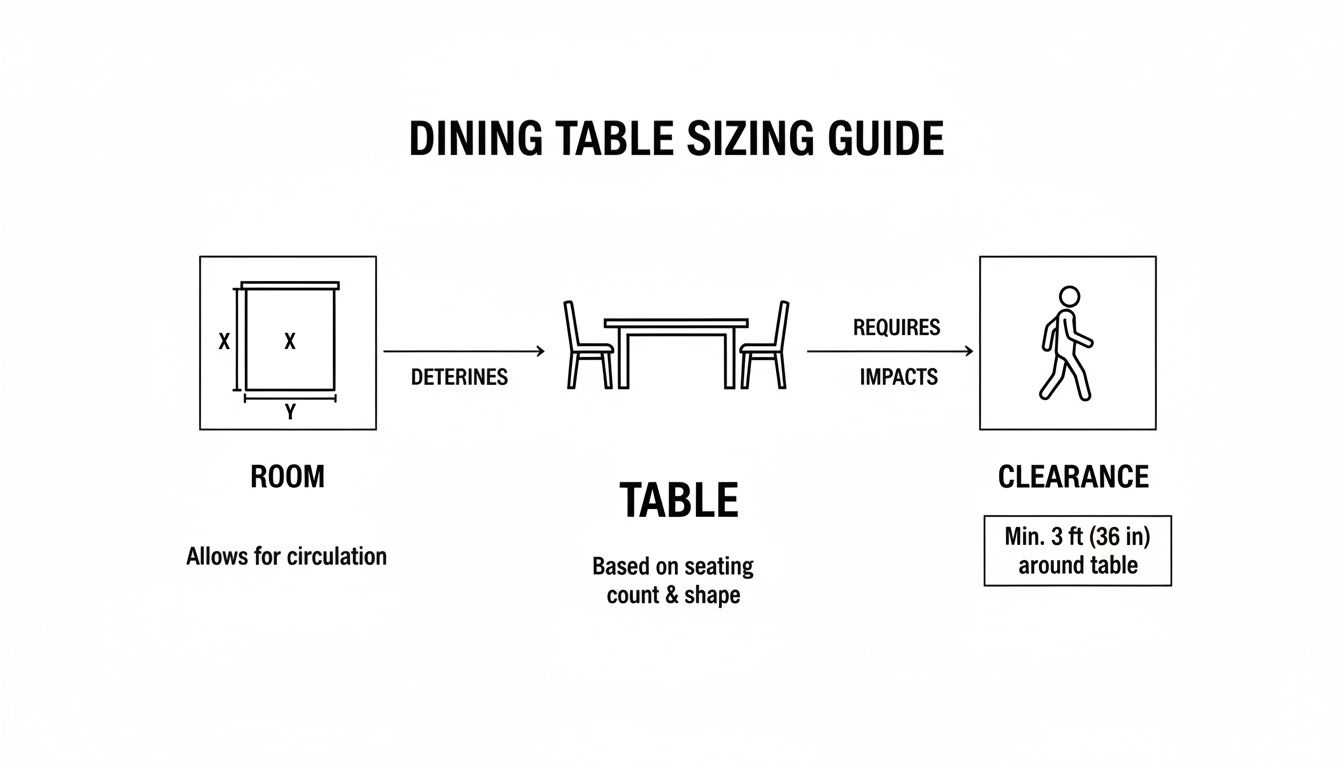
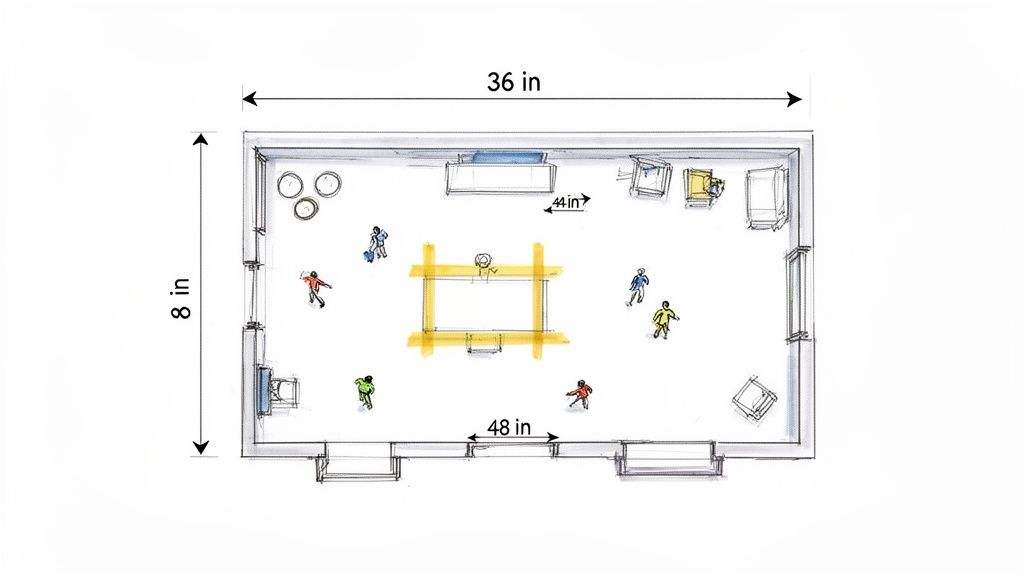
This visual shows how your room's measurements are the foundation for every other choice, ensuring everything works together beautifully.
Quick Guide to Dining Table Size by Room Dimensions
To give you a head start, we put together this quick-reference chart. It’s a simple way to match common dining room sizes with the right table dimensions, so you can start to picture what will work best.
| Room Size (Feet) | Recommended Rectangular Table (Seats) | Recommended Round Table (Seats) |
|---|---|---|
| 9' x 11' | 36" x 60" (4-6) | 42" Diameter (4) |
| 11' x 14' | 42" x 72" (6-8) | 54" Diameter (4-6) |
| 12' x 15' | 48" x 96" (8-10) | 60" Diameter (6-8) |
| 14' x 18' | 48" x 120" (10-12) | 72" Diameter (8-10) |
Think of this chart as a great starting point. It doesn't factor in that heirloom buffet you inherited or the main traffic path to the kitchen, which is where real-world expertise comes in. You can avoid the 'guesswork' of online shopping by visiting us in the showroom. Our team is always here to offer Complimentary In-Store Advice to help you make the perfect choice.
If you're just getting started with your room's layout, take a look at our guide on designing a dining room from scratch. By building on the right foundation, you can choose furniture built for generations, not just a few seasons, and create a space where your family will make memories for years to come.
Mastering Your Room Measurements
Before you even think about falling in love with a new dining table, the most critical step happens right in your own dining room. Getting a handle on your space's exact dimensions and natural flow is the secret to choosing a piece that feels like it was made just for you. Think of it less as a chore and more like drawing the map for future family dinners and holiday feasts.
It all starts with a tape measure. Get the full length and width of the room, but don’t stop there. Make sure to note any features that eat into your floor space, like built-in cabinets, a fireplace hearth, or a bay window nook. These are permanent parts of your room's landscape, and they directly define the real estate you have to work with.
The Essential Clearance Rules
Once you have your room’s measurements, it’s time to think about movement. A dining room isn’t static; people need to pull out chairs, walk around to serve food, and get up from the table without bumping into walls or each other. You need to create a "no-fly zone" around your table.
This is where our expert guidance comes into play:
The 36-Inch Rule: This is your non-negotiable minimum. You need at least 36 inches of space between the edge of your table and the nearest wall or piece of furniture. It’s just enough room for a guest to comfortably slide their chair out and sit down.
The 48-Inch Rule: For any main walkways—like the path from the kitchen doorway to the other side of the room—you’ll want to aim for 48 inches of clearance. This wider path ensures people can walk behind a seated guest without anyone having to do the awkward sideways shuffle.
Following these guidelines will immediately tell you the maximum size table your room can truly handle, taking all the guesswork out of the process. For a deeper dive into getting your measurements spot-on, check out our guide on how to measure a room for furniture.
A Pro Tip to Visualize Your Space
Numbers on a notepad can feel abstract. To get a real feel for how a table will occupy your room, grab a roll of painter's tape and mark out the dimensions of a potential table right on your floor. This simple trick allows you to physically walk around the "table" and see if the clearance feels comfortable or cramped.
This hands-on approach helps you avoid the 'guesswork' of online shopping and truly understand how much space you'll have before you commit. It's an indispensable step to ensure your new furniture feels like it belongs in your home, not just in a catalog.
With your measurements and a better feel for your layout, you're ready for the fun part. Bring your notes and photos into our furniture store in LaGrange, GA. Our trusted local team is always here to offer Complimentary In-Store Advice, helping you translate those numbers into the perfect dining set, whether it's from a top brand like Bassett or the American-made artistry of Kincaid.
Matching Table Shape to Your Lifestyle and Space
Once you’ve figured out the right size, it's time for the fun part: choosing a shape. This decision is about more than just what fits. The shape of your dining table sets the stage for everything from quiet morning coffees to lively holiday dinners. It’s a choice that shapes the flow, the feel, and the very function of your room.
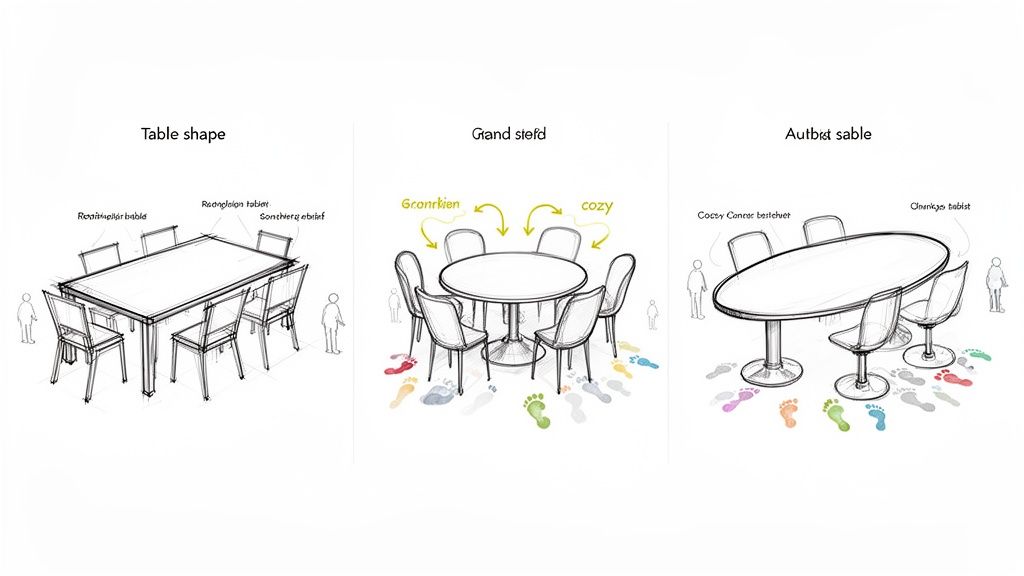
Think of it less like a rule to follow and more like matching the table to the life you live. Let's look at the most common shapes to see which one feels right for you.
Rectangular: The Timeless Classic
For a good reason, rectangular tables are the classic choice for formal dining rooms and large families. Their straight lines are incredibly efficient for seating a crowd, making them the go-to for those big family feasts and dinner parties. This shape is a natural fit in long, narrow rooms, echoing the room’s own dimensions to create a sense of harmony and order.
The numbers back this up. The dining table market is expected to hit USD 36.39 billion in 2024, and rectangular tables claim a massive 55% share of that. It's no surprise, as they're a perfect match for the common 12×10-foot dining spaces in many homes.
Round: The Social Hub
If you’re aiming for a cozy, conversational atmosphere, a round table is your best bet. With no head of the table, everyone feels like an equal part of the discussion. This makes them absolutely perfect for smaller family meals, game nights, and any gathering where connection is key.
Round tables are also brilliant space-savers. Without sharp corners to bump into, they’re easier to navigate in tighter spaces or square rooms. They improve traffic flow and make a room feel more open.
Oval: The Graceful Hybrid
Can’t decide between the roominess of a rectangle and the intimacy of a circle? An oval table beautifully splits the difference, offering the best of both worlds. You get the long, linear surface of a rectangle but with soft, curved corners that invite closeness.
This unique shape comes with some real advantages:
- Smarter Space: Those rounded ends take up less physical and visual space than sharp corners, making an oval a great solution for rooms that are a little on the snug side.
- Flexible Seating: You still get the long sides for seating plenty of guests, but the curved ends keep the conversation feeling more inclusive and connected.
- Visual Softness: An oval shape introduces a gentle, elegant curve to a room, which is a wonderful way to break up all the straight lines of walls, windows, and other furniture.
Our guide on maximizing your dining space dives even deeper into how the right shape can completely change how a room works for you.
Beyond just shape, consider the "visual weight" of a table. A glass-top table or one with a slender pedestal base will feel much lighter and more open than a chunky, solid wood trestle table of the exact same size.
This is where the power of true craftsmanship comes in. When you work with us and our premier brands like Bassett and Kincaid, you aren't just picking from a catalog. You’re designing a piece that’s a perfect fit for your LaGrange home through our custom furniture options.
You choose the exact size, shape, wood, and finish. This is how you get true customization that reflects your home, not a mass-produced catalog. It’s about creating furniture built for generations, not just a few seasons.
Putting the Sizing Rules into Practice
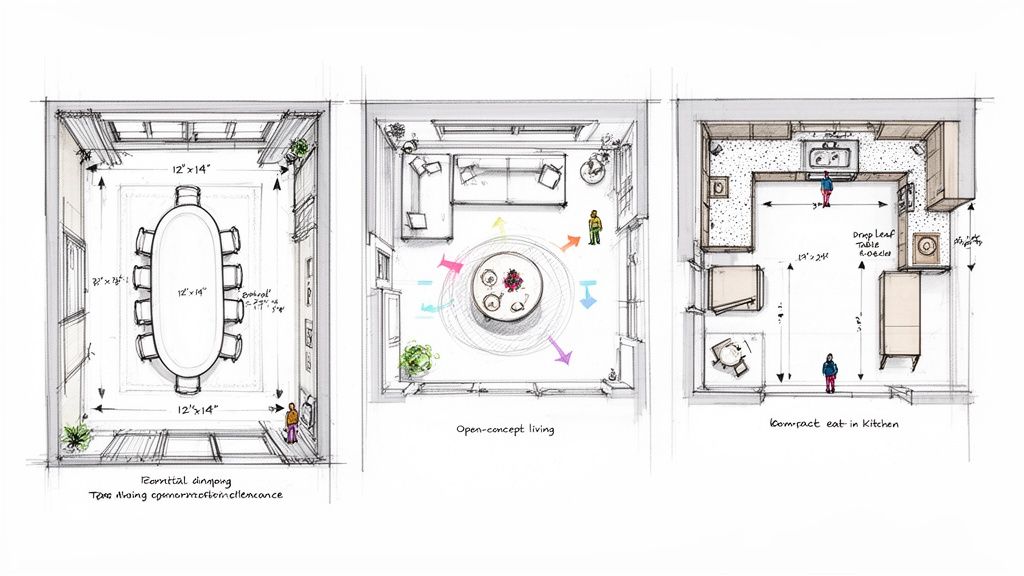
Theory is one thing, but seeing how a dining table actually fits and functions in a real home is where it all comes together. The rules of measurement are our foundation, but now it's time to see them in action. Let's walk through three common room layouts you might find right here in LaGrange, Hogansville, or Pine Mountain.
This is where abstract numbers become a tangible plan, giving you the confidence to find a table that feels made for your space.
Scenario 1: The Formal Dining Room
The formal dining room is the heart of holiday gatherings and special occasions—a space designed for creating memories. Imagine a dedicated room measuring 12 feet by 14 feet. It calls for a substantial table that commands attention while feeling warm and inviting.
For a room this size, a grand rectangular or oval table is the perfect anchor. After accounting for our 36-inch clearance rule, you have enough space for a table up to 48 inches wide and 96 inches long.
- Table Choice: A rectangular table that seats 8-10 people, like a solid wood masterpiece from Kincaid, creates a stunning focal point. Its straight lines beautifully complement the room's traditional structure.
- Layout Tip: Centering the table under a chandelier is a classic move for a reason. It creates a sense of balance and sophistication that naturally draws people in.
- Seating: This generous size allows for three chairs on each long side plus host chairs at either end, giving everyone plenty of room to dine in comfort.
Scenario 2: The Open-Concept Living Area
Many modern homes in Troup County do away with walls, blending the kitchen, living, and dining areas into one flowing space. Here, the goal isn’t just about fitting a table—it’s about using that table to define the dining zone without killing the open vibe.
In this kind of layout, a round table is often your best friend. With no sharp corners, it encourages movement and conversation, preventing it from feeling like a bulky barrier. Let's picture a 10-foot by 10-foot dining area just off the kitchen.
By placing a round table in an open-concept space, you create a natural gathering spot that encourages conversation and connection. It helps carve out a distinct "room" without building any walls.
For a 10'x10' area, a round table up to 54 inches in diameter is a fantastic fit, comfortably seating four to six people for daily meals. A pedestal base is an even better choice, as it opens up legroom and enhances the airy feel. This is a perfect example of where true customization that reflects your home—not just a generic catalog piece—can make all the difference. For ideas on seating even larger groups, you can learn more about finding the perfect 10-person table in our guide.
Scenario 3: The Compact Eat-In Kitchen
For smaller homes, apartments, or anyone who just loves a casual meal, the eat-in kitchen is the center of daily life. The challenge is clear: maximize function in a very limited footprint.
This is where smart, space-saving tables truly shine.
- Counter-Height Tables: These give off a relaxed, bistro-like vibe and can visually lift a room, making it feel taller and more open.
- Drop-Leaf Tables: The ultimate flexible friend. A drop-leaf table can sit snugly against a wall for one or two people, then expand in seconds when you have company.
- Banquette Seating: Building a bench along one wall is a brilliant space-saver. It allows the table to be pushed in closer than chairs would permit, instantly freeing up floor space.
In a small nook, a 36-inch round or square table is often just right for two to four people. It provides enough space for plates and glasses without overwhelming the path to the fridge.
Feeling stuck on your own unique layout? This is exactly why we offer our Premium Design Service. Our local team can create detailed space plans and mood boards to take the guesswork out of the process. Let us help you find a table that feels like it was designed just for you.
Advanced Tips for the Perfect Dining Setup
Once you’ve nailed down the right size and shape for your dining table, a few finishing touches can take your space from just functional to truly finished. These are the details that tie everything together, turning a collection of furniture into a polished, inviting dining area.
Let's start from the top—literally. A common mistake is hanging a light fixture, like a chandelier or pendant, in the center of the room. Instead, it should always hang directly over the center of your table. This simple change makes the whole setup feel balanced and intentional, even if your table isn't perfectly centered in the room.
The Foundation: A Perfectly Sized Rug
An area rug is the perfect way to anchor your dining set and define the space, especially in an open-concept home. But getting the size right is everything. A rug that’s too small is a constant hassle, causing chair legs to catch on the edge every time someone pulls out their seat.
As a rule of thumb, your rug should be large enough for all four chair legs to stay on it, even when the chairs are pulled away from the table. This usually means adding at least 24 inches of rug on all sides. So, for a 42" x 72" table, you’ll want a rug that’s at least 8' x 10' to give everyone enough room and prevent a tripping hazard.
The Power of Flexibility: Extendable and Multifunctional Tables
In modern homes, flexibility is king. An extendable table with a removable leaf is a brilliant investment, allowing your dining space to feel open for daily family meals while giving you the power to host a crowd during the holidays. This kind of adaptability isn't just a nice-to-have anymore; it's what homeowners are looking for.
Our homes have become hubs for eating, working, and entertaining, and the furniture market is reflecting that. The global dining table market is projected to hit USD 11.54 billion by 2032, driven by this shift. In fact, demand for modular, extendable designs has jumped 18% since 2021, with pieces like a 60-inch Kincaid table that expands to 96 inches leading the way. You can see more on how our habits are changing furniture in this in-depth dining table market report.
Investing in a high-quality, adaptable table means you're choosing furniture built for generations, not just a few seasons. This philosophy is at the heart of the American-made furniture we offer from brands like Bassett, where longevity is built into every piece.
Matching Aesthetics for a Cohesive Look
The material and finish of your table have a huge impact on the room’s atmosphere. A solid wood table from a brand like Bassett brings a warm, grounding presence, while a glass-top table can create an illusion of space, making it a fantastic choice for smaller rooms.
This is where our commitment to a "made-for-you" experience really shines. Instead of settling for a finish that’s just “close enough,” our custom furniture options let you pick the exact wood finish to match your existing cabinetry or flooring. It's this level of detail that makes your new table feel like it was always meant to be there. And when you’re ready for more, check out our guide on The Ultimate Guide to Dining Table Heights for even more expert tips.
Your Partner in Creating a Home You Love
Choosing a dining table is really about one thing: creating a warm, inviting space where your family can gather and make memories. Now that you’re armed with the right measurements and a clear vision, it’s time to bring that space to life.
Don't let the details overwhelm you. It all boils down to a few simple things. Get your room’s measurements right, leave that crucial 36 to 48 inches of breathing room, and pick a shape that works for your home and your life. Most importantly, choose quality that will see you through countless family dinners to come.
From Our Family to Yours
For over 65 years, our family has been helping our neighbors in LaGrange, West Point, Pine Mountain, and all across Troup County do just that. At Watts Furniture & Mattress, we’re more than a furniture store in LaGrange, GA; we’re a third-generation local business that believes in relationships and furniture built for generations, not just a few seasons.
We see this commitment to quality reflected everywhere. The U.S. dining table market is projected to reach USD 2.34 billion by 2032, driven by a growing demand for solid, customizable wooden tables. In fact, a recent survey found that 68% of homeowners now look for multifunctional tables with leaves—a perfect solution for a standard 12×12 foot room, where a 60-72 inch table provides the ideal balance for seating six. You can dive deeper into the trends in this dining table market report.
Your Local Design Experts
Even with the right numbers, we know that answering the question, "what size dining table for my room?" can feel like a big decision. That’s why we created our Interior Design Center—to take the stress out of decorating and help you get it right the first time.
We’re here to help as much or as little as you need.
- Complimentary In-Store Advice: Stop by anytime you need a second opinion on fabrics or want to confirm if a color choice works.
- Premium Design Service: For a bigger project, our designers will build a complete plan, from space planning to mood boards. And the best part? Your deposit is credited back toward your purchase.
When you work with us, you avoid the 'guesswork' of online shopping and gain a partner who is just as invested in your home as you are. We make sure every detail is perfect.
Our job isn't done when you leave the store. Our professional white-glove delivery and setup team takes care of all the heavy lifting, and our dedicated Service Request and Support Hub is always here to help long after your new furniture is settled in.
Ready to find the dining table that’s waiting for your family? Visit the Watts showroom at 212 Commerce Avenue in LaGrange and feel the difference that true quality makes. Or, if you’re ready to start a bigger project, book a consultation with our Interior Design Center today. Let us help you curate a home you’ll love.
Common Questions About Dining Table Sizing
Even after you’ve measured twice, some questions about getting the perfect dining table size can still pop up. With over 65 years of helping families in LaGrange find their fit, we’ve pretty much heard them all. Here are the answers we give our customers every day, right here in the showroom.
How Much Space Does Each Person Need?
The golden rule for happy dinners is giving each person 24 to 30 inches of elbow room. This isn't just about squeezing in another chair; it’s about creating the personal space everyone needs to eat comfortably without bumping into their neighbor.
Think of it this way: a 72-inch rectangular table gives you 144 inches of seating space along its sides. That’s a perfect, uncrowded fit for three people on each side, for a total of six.
Can I Use a Bench to Save Space?
Absolutely. Benches are a fantastic choice for a more casual, family-style vibe and are especially great for fitting more kids around the table. Their biggest superpower is the ability to tuck completely under the table when you’re done, freeing up precious floor space in a smaller room or an eat-in kitchen.
Just keep in mind that even though the bench itself saves space, your guests will still need that standard 36 inches of clearance behind them to get in and out easily.
Benches bring a brilliant mix of style and function to the table, but they work best when you’ve planned the layout. It’s a perfect example of how the right furniture choice can make a small space live large.
What Should I Do for an Awkwardly Shaped Room?
Dining rooms that are L-shaped, split by multiple doorways, or have other architectural quirks can feel like a real puzzle. This is where leaning on local expertise can make all the difference. An unconventional room often needs an unconventional solution, like an oval table to soften the corners or even a custom furniture piece designed to fit your unique space perfectly.
This is a challenge we love tackling at our Interior Design Center. We can help you avoid the ‘guesswork’ of online shopping and create a thoughtful plan that turns your room's quirks into its greatest assets.
How Do I Choose a Table for an Open Floor Plan?
In an open-concept home, your dining table does more than just host meals—it helps define the entire room. You can create a visual anchor for your "dining zone" by pairing a beautiful table with a properly sized area rug. This carves out a clear, intentional space without having to put up walls.
A round table is often a great choice here because it promotes a natural flow and defines the area without creating harsh visual lines. It’s all about finding true customization that reflects your home, not a mass-produced catalog.
Ready to stop guessing and start designing? The trusted local team at Watts Furniture & Mattress is here to help you find the perfect dining table for your home. Visit the Watts showroom at 212 Commerce Avenue in LaGrange to explore our collections from Bassett, Kincaid, and our authorized La-Z-Boy Comfort Studio, or book a consultation with our Interior Design Center today.